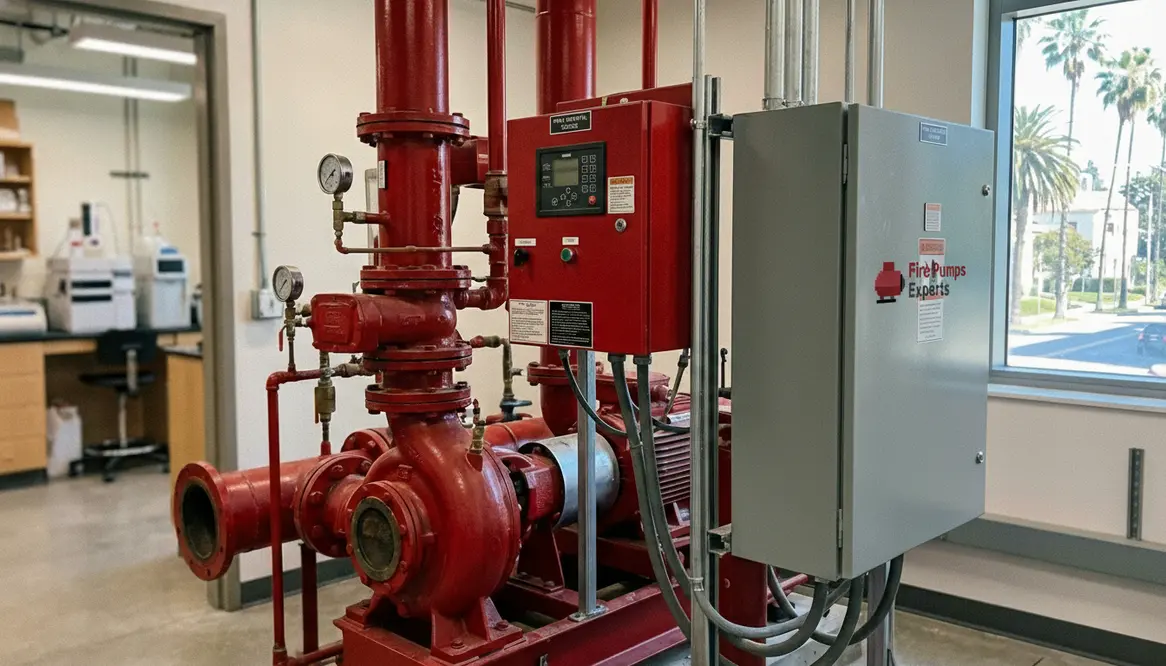
Laboratory Fire Pump Pasadena Design Guide
I have spent years around high stakes environments where one small oversight can turn into a headline. Laboratories are high on that list. Between volatile chemicals, sensitive equipment, and nonstop operations, fire protection is not just important, it is everything. When I talk about laboratory fire pump Pasadena systems, I am talking about precision, reliability, and a quiet kind of strength that stands ready without asking for applause. And honestly, if a fire pump could talk, it would probably say, “I’ve got this.”
Behind every reliable system is an unglamorous set of calculations, code checks, and design decisions that never make it into glossy brochures. That is where laboratory fire pump Pasadena projects are won or lost: in the planning, not the spotlight.
Why Fire Pump Design Matters in Pasadena Laboratories
Pasadena is not just sunshine and rose parades. It is home to advanced research facilities and industrial labs that operate around the clock. Because of that, fire pump design must meet a higher standard. I always approach these systems knowing that failure is not an option.
First, laboratories often store flammable liquids and pressurized gases. Therefore, the fire pump must deliver consistent pressure instantly. Second, many facilities run sensitive experiments. Even a brief interruption can cost millions. As a result, I design systems that respond faster than your favorite superhero cameo.
Moreover, Pasadena regulations demand strict compliance. So I make sure every system aligns with NFPA standards while still fitting the unique layout of each building. It is a balance of code and common sense.
When a laboratory fire pump Pasadena system is properly designed, it supports evacuation plans, suppression systems, and business continuity all at once. It is an invisible backbone that nobody notices until the worst possible day.
What Goes Into a Reliable Laboratory Fire Pump Pasadena System?
I get this question a lot, and the answer is not as simple as “just add water.” A proper system involves several moving parts working together like a well rehearsed band.
Core components I prioritize
- Fire pump unit that delivers consistent flow under pressure
- Backup power supply because outages do not wait for permission
- Jockey pump to maintain system pressure during idle times
- Controller systems that react instantly when demand spikes
In addition, I always consider system redundancy. If one component fails, another must step in without hesitation. Think of it like having a stunt double, except no one wants to see the stunt.
Designing for Complex Laboratory Layouts
Laboratories are not open warehouses. They are intricate spaces filled with corridors, containment zones, and specialized rooms. Because of that, I tailor each fire pump system to match the building’s personality.
For example, I account for vertical and horizontal distances. Water must travel efficiently without losing pressure. Meanwhile, I also factor in hazard classifications. A chemical lab requires a different approach than a biotech facility.
Additionally, I coordinate with engineers and facility managers. This ensures the fire protection system integrates smoothly with HVAC, electrical, and safety controls. It is a bit like directing traffic in Los Angeles, except everything actually needs to move on time.
A well planned laboratory fire pump Pasadena installation respects fire zoning, separation of incompatible hazards, and existing structural constraints so the system performs without getting in the way of science.
Balancing Performance and Efficiency
Now here is where things get interesting. A powerful system is great, but efficiency matters too. No one wants a fire pump that behaves like a muscle car stuck in rush hour.
Performance priorities
- High flow rates for immediate response
- Durable materials that handle constant demand
- Quick activation under emergency conditions
Efficiency priorities
- Energy conscious operation during standby
- Smart monitoring systems to reduce waste
- Long term maintenance planning
By balancing both, I create systems that are strong without being wasteful. And yes, even fire pumps can learn moderation.
How I Future Proof Fire Pump Systems
Technology changes fast. What works today might feel outdated tomorrow. So I design with the future in mind.
For starters, I include scalable components. This allows facilities to expand without replacing the entire system. Furthermore, I integrate smart monitoring tools that provide real time data. That way, issues are detected before they become problems.
Also, I consider evolving safety standards. Pasadena continues to grow, and regulations follow closely behind. Therefore, I build flexibility into every design. It is like leaving room for a sequel, because there is always one coming.
Connecting building management systems with laboratory fire pump Pasadena controls means data, alarms, and status updates are available before anyone smells smoke, not after.
Common Mistakes I Avoid in Laboratory Fire Pump Design
I have seen enough projects to know what not to do. Some mistakes are subtle, while others are about as obvious as a plot twist in a predictable movie.
- Undersizing the pump, which leads to weak performance
- Ignoring backup power, leaving systems vulnerable
- Poor layout planning that reduces water efficiency
- Skipping routine testing and maintenance planning
Because of this, I approach every design with careful analysis. Prevention is always cheaper than repair. And frankly, it is a lot less stressful.
FAQ About Laboratory Fire Pump Systems
Final Thoughts on Laboratory Fire Pump Pasadena Systems
When I design these systems, I am not just installing equipment. I am building a safety net that protects people, research, and investments. If you operate a commercial or industrial laboratory in Pasadena, now is the time to take a closer look at your fire protection strategy. Reach out, ask questions, and make sure your system is ready before it is ever needed. Because in this line of work, readiness is everything.