LPC Rules Fire Pump Testing Requirements Guide
LPC Rules Fire Pump Testing Requirements Explained
I have seen plenty of fire protection topics that sound dry enough to put a room to sleep, but LPC Rules testing deserves real attention. In commercial and industrial buildings, and in major property sites, fire pumps do not get to fail gracefully. They either perform when the pressure drops, or they become very expensive decorations. So, I want to walk through what the testing rules mean, why they matter, and how I keep the process simple, steady, and compliant.
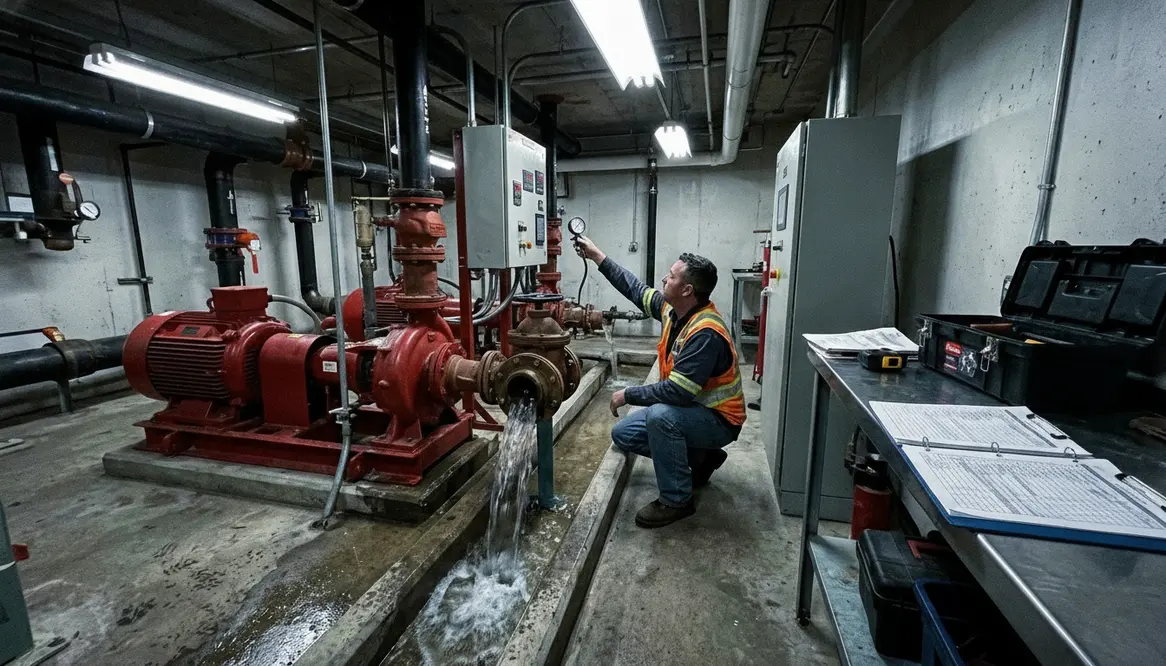
At the heart of LPC Rules fire pump testing requirements is one clear idea: the pump must prove it can deliver the water flow and pressure the site needs during a real fire event. That means regular checks, documented results, and proper response when something looks off. It sounds formal, yes, but the goal is plain enough. I verify the pump works before the building ever needs it. That is the whole game.
What LPC Rules Fire Pump Testing Means In Practice
When I follow LPC Rules testing, I am not just ticking boxes for the sake of paperwork. I am checking whether the fire pump still has the muscle to protect a large facility under real demand. These rules focus on reliability, flow, pressure, and routine inspection. Because commercial and industrial properties often carry bigger risks, the test process must stay disciplined and consistent.
In plain terms, I look at three things first. I confirm the pump starts when it should. Then I confirm it reaches the needed pressure. After that, I confirm it can keep working without acting like it wants a tea break. A pump that only performs on a good day is no better than a superhero who only shows up after the credits roll.
How I Set Up A Proper Test
A good test starts long before I open a valve. I make sure the system is ready, the site team knows the plan, and the test gear is in place. Since these properties often run critical operations, I also plan around uptime and safety. Nobody wants a surprise shutdown in the middle of a production shift. That kind of surprise belongs in movies, not plant rooms.
The Basic Test Flow I Use
- I inspect the pump, controller, and visible pipework
- I check power supply, fuel supply, and general condition
- I run the pump under test conditions
- I record pressure, flow, vibration, and start behavior
- I compare the results with the required standard
Because every site is different, I never assume one setting fits all. A warehouse, a data center, and a manufacturing plant each bring their own pressure points. So, I treat the test as a live health check, not a quick glance and a hopeful nod.
What LPC Rules Testing Checks During The Run
During LPC Rules fire pump testing requirements, I focus on performance that shows the pump can do its job under stress. That usually includes starting behavior, running stability, water delivery, and alarm response. In many cases, I also watch for leaks, odd noise, heat buildup, or shaky operation. These clues may seem small, but they often point to bigger problems hiding in the system.
Dual View Of Common Checks And Why They Matter
Start performance
It shows the pump can begin work without delay.
Pressure output
It proves the system can support fire demand across the site.
Flow delivery
It confirms the pump moves enough water at the right rate.
Mechanical condition
It helps me spot wear before it becomes failure.
Control response
It shows the pump and controller react as expected.
This part matters because a pump can look fine on the outside and still struggle under load. That is why I trust measured results more than guesswork. Guesswork is fine for guessing the ending of a thriller. It is not fine for fire protection.
How I Handle Records And Follow Up
After the test, I document everything. That includes readings, observations, faults, repairs needed, and the final status. Strong records matter because they show the building has stayed on top of the system and can prove compliance during an audit or review. Also, they help me spot patterns over time. If a pressure drop shows up again and again, I do not treat it like random bad luck. I treat it like a message.
I also make sure corrective action happens fast. If the pump fails any part of the test, I do not leave the issue hanging around like an unfinished box set. I identify the cause, schedule repair, and retest once the fix is in place. That cycle keeps the system honest and the site protected.
Why Commercial And Industrial Sites Need Strict Testing
Major properties carry more people, more equipment, more process risk, and usually more fire load. So, LPC Rules testing has real value here. A small fault in a fire pump can become a major risk when the building is large, busy, and full of critical operations. That is why I treat the pump as part of the site’s core safety system, not just another item on the maintenance list.
In many commercial and industrial settings, downtime costs money fast. Yet fire pump failure costs far more. Therefore, a steady test plan protects both life safety and business continuity. It keeps the site ready, the insurers happier, and the facilities team from getting that dreaded late Friday phone call. Nobody needs that energy.
For anyone building a structured approach, I often point to resources that break down LPC Rules fire pump testing requirements in a practical way, such as https://firepumps.org. Clear guidance, paired with disciplined site routines, keeps LPC Rules testing from turning into a guessing game.
FAQ
Conclusion
If you manage a commercial or industrial property, I recommend treating LPC Rules fire pump testing requirements as a priority, not a chore. A well tested pump gives you proof, confidence, and real protection when it counts. So, review your current test schedule, check your records, and fix any weak points before they grow teeth. If you want help keeping your fire pump system ready for the real world, now is the right time to act.