LPC Rules Maintenance for Fire Pumps Guide
Maintaining Fire Pumps Under LPC Rules: A Practical Guide for Commercial and Industrial Buildings
When I talk about LPC Rules maintenance, I mean one thing very clearly: keeping fire pumps ready to do their job when the pressure drops and the heat rises. In a commercial plant, a high rise, or a major property building, that is not a side task. It is part of life safety, business continuity, and plain old common sense. I have seen plenty of systems look fine on paper, then stumble in the real world like a movie hero who forgot the script. So in this guide, I will walk through how I approach fire pump care under LPC Rules, what matters most, and why disciplined checks save time, money, and trouble later.
What LPC Rules maintenance means in real life
I keep LPC Rules maintenance focused on readiness, not decoration. The pump must start when required, hold the right pressure, and stay reliable under demand. That means I look at the full setup, not just the pump itself. I review the driver, the controller, valves, suction line, power supply, cooling, and test records. Since commercial and industrial properties carry higher risk, I treat each inspection as a live safety check, not a box tick. That shift in mindset matters. Also, no one wants the fire pump acting like a diva on opening night.
In practice, I follow the rules through routine checks, recorded tests, and corrective action. If I find a leak, noise, vibration, heat issue, or weak pressure, I do not wait for a future surprise. I deal with it early. As a result, the system stays dependable and the facility stays compliant.
How I inspect a fire pump step by step
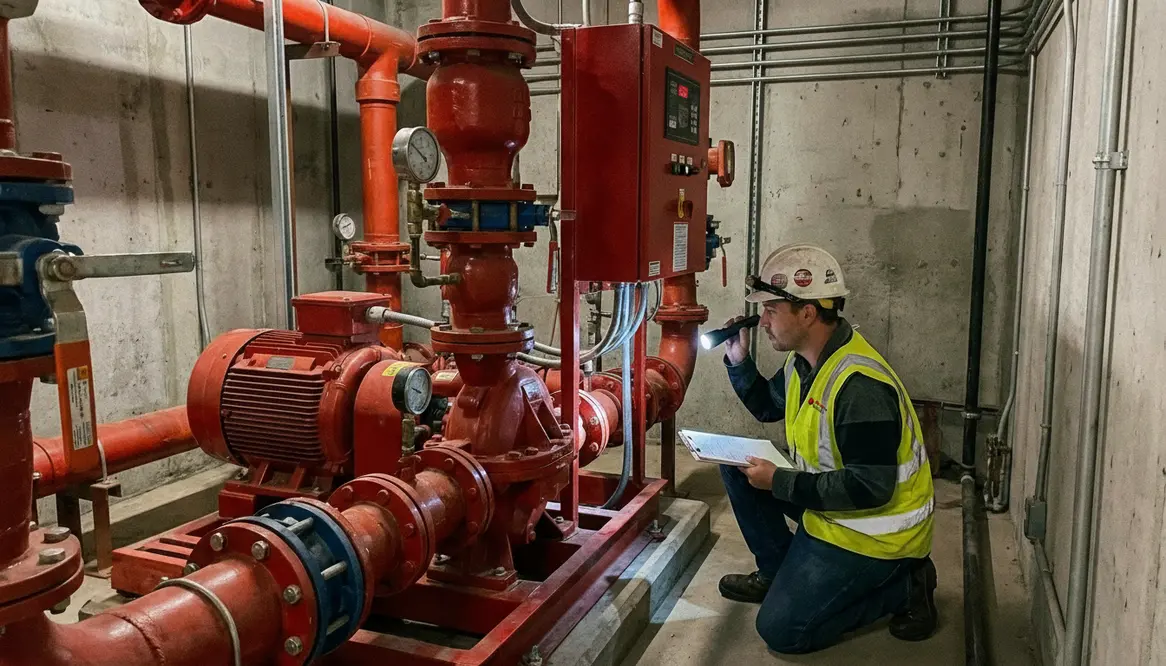
I start with the basics because the basics catch most problems. First, I check the pump room for access, heat, lighting, and clear space. Then I move to the pump casing, bearings, seals, and visible pipework. After that, I inspect the controller for alarms, selector settings, and signs of wear. I also confirm that valves sit in the correct position and that the suction line stays free of issues.
Next, I run the pump under test conditions. I watch start time, pressure rise, flow response, and shutdown behavior. If the pump hesitates, I treat that as a warning. Fire protection does not get points for trying hard; it gets credit for working fast. I also listen closely. A change in sound can tell me more than a page of records ever will.
What I check during routine LPC Rules maintenance
Here is the practical list I use for routine care:
Area
Pump body
Controller
Valves
Suction side
Discharge side
Records
What I look for
Leaks, corrosion, vibration, heat
Fault lights, power supply, start settings
Correct position, smooth operation, no tampering
Blockage, air entry, pressure loss
Stable pressure, signs of wear, flow issues
Test results, repair notes, service dates
After that, I compare the readings with past results. This helps me spot drift before it becomes failure. I also make sure the test history is complete, because missing records cause more headaches than a Monday morning meeting that should have been an email.
Common fire pump problems I watch for
I often see a few repeat offenders. Low battery power affects electric drivers. Fuel issues affect diesel units. Seal wear leads to leaks. Air trapped in the suction line reduces performance. Control faults can stop the pump from starting at the right time. In some buildings, poor housekeeping around the pump room also creates avoidable risk.
So I deal with the root cause, not just the symptom. If the pump overheats, I check ventilation and load. If pressure drops, I check the system layout and demand path. If vibration increases, I inspect alignment, mounting, and wear. This approach keeps LPC Rules maintenance useful rather than ceremonial. Nobody needs a fancy ritual when a simple fix will do.
How I keep records and compliance strong
Good records help me prove that the system stays in shape. They also help me track patterns over time. I log every test, fault, correction, part replacement, and follow up visit. I make sure the notes are clear enough for the next engineer, because hidden clues in maintenance files are about as helpful as a locked door during a fire drill.
In addition, I use the records to support planning. If I see repeated minor faults, I review whether a deeper service is due. If I see aging parts, I plan replacement before they fail. That keeps the site aligned with LPC Rules and reduces the chance of sudden downtime. For broader guidance, I also recommend reviewing the official LPCB fire protection standards overview at https://www.firepumps.org where relevant to system care and compliance planning.
Frequently asked questions on LPC Rules maintenance
These quick answers cover how often to test, what typically fails, and why disciplined LPC Rules maintenance matters for fire pump reliability.
Conclusion
If you want your fire pump system to stay ready, I would treat LPC Rules maintenance as a steady habit, not a last minute rescue mission. I inspect, test, record, and fix with discipline because that is how reliable fire protection works in real commercial and industrial settings. If your site needs a stronger maintenance plan, now is the time to review it, tighten it, and keep your pump ready for the moment that matters most.