Mexico Industrial Fire Pump Requirements Guide
When I look at fire protection in Mexico industrial sites, I see one simple truth: when a pump fails, the whole safety plan starts to sweat. And nobody wants that kind of drama in a plant full of people, machines, and inventory worth more than a small movie studio. So, if you run a factory, warehouse, logistics center, or major commercial property in Mexico, you need a fire pump setup that matches your risk, your water demand, and your local code duties. In this guide, I break down the main requirements in plain language, with enough detail to help you make smart decisions without needing a law degree or a fire helmet on standby.
What a fire pump must do in Mexico industrial sites
A fire pump boosts water pressure when the normal supply cannot meet the needs of the sprinkler or standpipe system. That matters a lot in large facilities, because gravity and city pressure do not always care about your emergency. In many Mexico industrial buildings, the pump supports fire sprinklers, hose systems, or both. Therefore, the pump must deliver the right flow and pressure during a fire event, not just look good on a spec sheet.
I always start with the hazard level. A light storage space and a heavy process plant do not need the same setup. For example, a high rack warehouse may need a stronger water supply than an office annex. Also, the pump must match the worst case demand from the system design. If it falls short, the sprinklers may only offer polite disappointment.
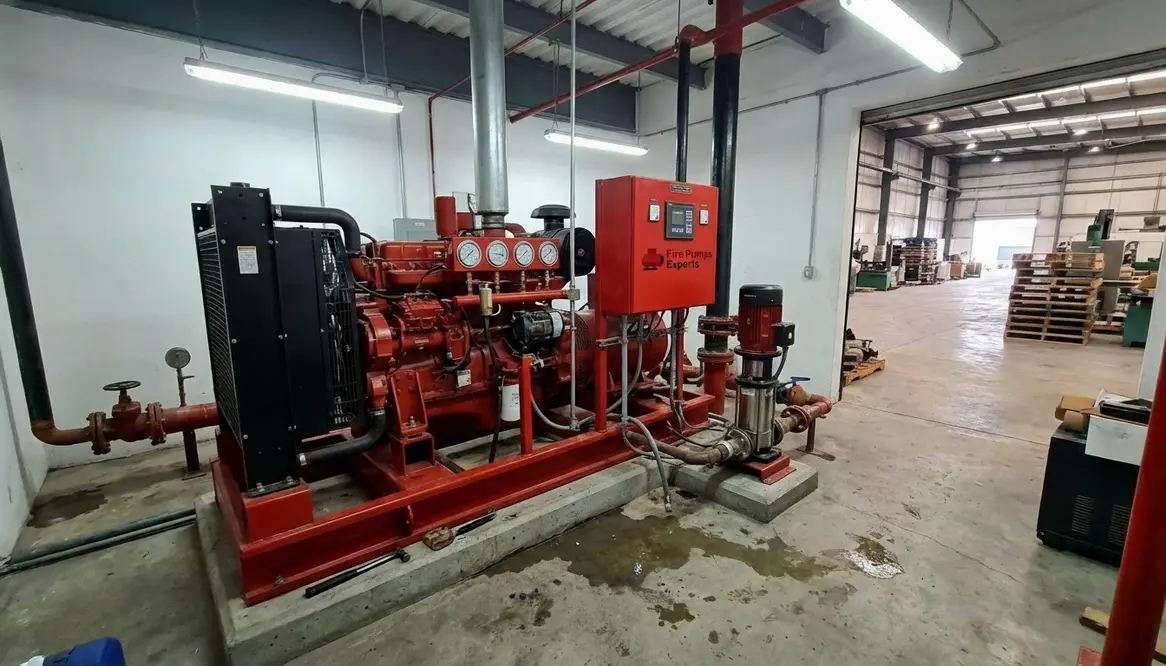
The pump room also matters. It should stay secure, dry, and easy to reach. In addition, it needs proper ventilation, drainage, and enough space for service. A pump hidden behind pallets and old boxes is not a fire protection plan. That is just a future maintenance headache with a badge.
Mexico industrial fire pump standards and code checks
In Mexico, many industrial and commercial projects follow a mix of local rules, fire authority reviews, and commonly used international standards. Because requirements can change by state, city, and project type, I always recommend checking the current local code early. Still, several basics stay the same across most projects.
What I check
- Water supply volume and pressure
- Pump type and rated capacity
- Jockey pump support
- Controller and power source
- Test arrangement and access
Why it matters
- It shows whether the system can perform under real fire demand
- It ensures the pump fits the building risk
- It keeps pressure steady and reduces pump wear
- It helps the pump start fast and run safely
- It makes inspection and routine testing easier
Usually, authorities want a reliable source of water, a listed or approved pump, and a system that can be tested. Furthermore, many industrial facilities use electric pumps with backup power or diesel pumps where power loss is a concern. If your site depends on one fragile utility line, that is not resilience. That is optimism wearing a hard hat.
For facilities with large water needs, the pump room should also include clear labels, proper piping support, check valves, pressure gauges, and flow test equipment. Likewise, the suction and discharge piping must be sized and installed so the pump can move water without trouble. A well built system acts like a strong rhythm section in a band. You may not notice it every day, but when the fire starts, the whole show depends on it.
How I choose the right fire pump for an industrial facility
I choose a pump by starting with the system design demand, not by picking the biggest unit and hoping for a heroic ending. First, I review the water supply source. Then I check the total flow and pressure needs for the sprinklers, standpipes, and any special protection areas. After that, I compare electric and diesel options.
Electric pumps work well when power is stable and backup power is available. On the other hand, diesel pumps fit sites where outages are a bigger threat. Some larger properties use both for added reliability. Also, a jockey pump often sits beside the main pump to hold pressure and prevent unnecessary starts. That small unit does quiet work, much like the best supporting actor in a good film.
I also look at the facility layout. Long pipe runs, tall racks, flammable storage, and hot process areas all change the risk profile. Therefore, the pump selection should reflect the actual building use, not a generic guess. This is especially true in Mexico industrial environments where operations can shift fast and expansion often happens before anyone updates the drawings. We have all seen that movie, and it rarely ends with a clean audit.
If you want a deeper technical baseline for commercial and industrial systems, reviewing fire pump standards for major properties as part of your planning process helps connect local expectations with design and maintenance best practice. One useful reference point is the guidance available at https://firepumps.org, which can provide additional context as you refine your Mexico industrial fire protection strategy.
Testing, inspection, and maintenance for Mexico industrial compliance
Once the pump is in place, the job is not over. In fact, that is when the real discipline begins. Fire pumps need regular inspection and testing to prove they will work under pressure. As a result, facility teams should track weekly or monthly checks, plus annual flow tests and full service reviews.
During routine checks, I look for pump status, controller alarms, pressure levels, fuel supply in diesel systems, and any leaks or vibration. In addition, I verify that the pump starts correctly and that the test flow matches expectations. If the pump sounds rough, that is not character. That is a warning.
Maintenance also includes battery care for controllers, engine checks for diesel units, and repairs to valves, gauges, and seals. Furthermore, a good service log helps during audits and insurance reviews. Clear records show that the facility treats fire safety like a real process, not a checkbox made in a hurry before lunch.
FAQ for Mexico industrial fire pump requirements
Conclusion
If I want a fire pump plan that protects people, limits damage, and passes review, I start with the building risk, the water supply, and the local rules. Then I match the pump to the real demand, not the wishful version. For Mexico industrial facilities, that careful work pays off every day. If you manage a commercial or industrial property, now is the time to review your system and tighten the gaps before fire does the review for you.