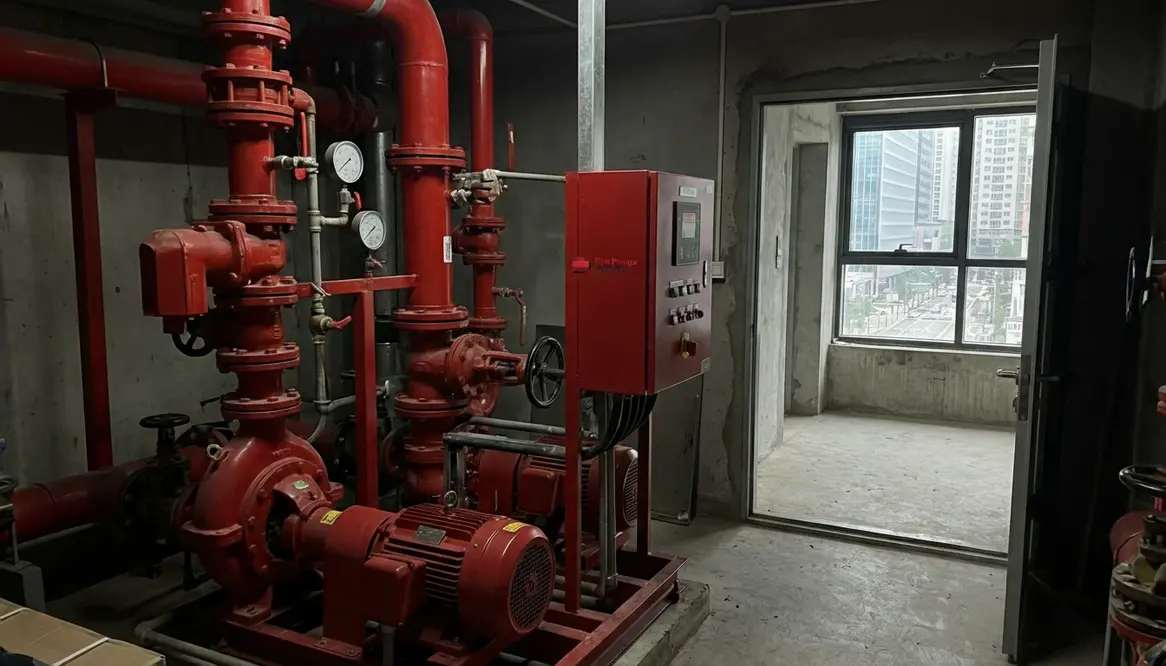
Mixed Use Building Fire Pump Requirements Guide
I’ve walked through enough commercial towers, hospitals, and industrial campuses to know one thing for certain: fire protection is not where you improvise. When we talk about mixed use building fire pump requirements, we’re stepping into a world where residential units, offices, retail, and sometimes even manufacturing all share the same structure. That’s like hosting a dinner party where your guests include a marathon runner, a toddler, and someone who thinks hot sauce is a beverage. Everyone has different needs, and the system has to satisfy them all without complaint.
So today, I’m going to walk you through how I approach fire pump design and compliance in complex, multi occupancy buildings. And yes, I’ll keep it grounded, practical, and just entertaining enough to keep you awake.
Understanding Mixed Use Building Fire Pump Requirements Without Losing Your Mind
First things first, I look at occupancy classifications. A high rise office floor does not behave like a restaurant kitchen, and neither behaves like a data center humming with servers. Therefore, fire pump systems must support the highest demand across all these uses.
In practice, this means I size and configure pumps based on the most demanding hazard, not the average. For example, if a portion of the building includes light industrial use, that requirement can drive the entire system design.
Additionally, codes such as NFPA 20 and NFPA 13 guide me, but they do not spoon feed solutions. I have to interpret them in context. And yes, sometimes that feels like trying to assemble furniture without the instructions, except the stakes are much higher than a wobbly bookshelf.
However, when done right, the system becomes a quiet guardian, ready but unobtrusive.
How I Apply Mixed Use Building Fire Pump Requirements
In mixed occupancy environments, the highest hazard space usually sets the tone for the entire design. That is where mixed use building fire pump requirements really show their teeth. Instead of treating each occupancy as a silo, I treat the building as one intertwined system that has to survive its worst day, not just its average one.
How Do I Size a Fire Pump for Multiple Occupancies?
I start with flow and pressure demand calculations across all zones. Then I identify the worst case scenario. That becomes my baseline.
Immediate Design Considerations
Here’s what I consider immediately:
- Hydraulic demand from sprinkler systems across different occupancies
- Standpipe requirements for high rise sections
- Elevation changes that impact pressure needs
- Simultaneous demand scenarios where multiple systems may activate
Then, I select a pump that can handle peak demand without flirting with its limits. Fire pumps are not gym enthusiasts. They should not be pushed to their max every day.
Moreover, I ensure redundancy when the building size or risk level demands it. Because if your only pump fails, you do not get a second chance. This is not a movie where someone dramatically fixes it in the final seconds.
Balancing Pressure Zones Across Complex Structures
Next, I focus on pressure zoning. Tall and large mixed occupancy buildings require multiple pressure zones to prevent over pressurization or underperformance.
In lower levels, too much pressure can damage pipes and fixtures. In upper levels, too little pressure means water never reaches where it is needed. So I divide the building into zones and use pressure reducing valves and sometimes multiple pumps.
Meanwhile, I coordinate closely with system designers to ensure smooth transitions between zones. If done poorly, you end up with weak coverage in critical areas. If done well, the system operates like a well rehearsed orchestra.
And honestly, when everything works in harmony, it is almost beautiful. Almost. Let’s not get carried away.
Mixed Use Building Fire Pump Requirements and Zoning
This is where mixed use building fire pump requirements blend with practical zoning strategy. By marrying pressure zones with occupancy risk, I avoid overbuilding in low risk areas while still delivering serious performance where the hazards live, like commercial kitchens, laboratories, or storage areas.
Key Components I Never Overlook in Mixed Use Systems
Core System Elements
- Fire pump and driver selection
- Reliable power supply or backup generator
- Controller with clear monitoring capabilities
- Proper suction and discharge piping design
Operational Safeguards
- Redundancy for critical facilities
- Testing and maintenance access
- Integration with fire alarm systems
- Compliance with local and national codes
Each of these components plays a role in meeting multi occupancy fire pump standards. Ignore one, and the whole system becomes unreliable.
Also, I always think about long term maintenance. A beautifully designed system that no one can service is like owning a sports car with no gas stations nearby. Impressive, but useless.
Common Pitfalls I See in Multi Occupancy Fire Pump Design
Design Mistakes That Refuse to Go Away
Let me save you some headaches. I have seen projects stumble in very predictable ways.
First, underestimating demand. Designers sometimes average out requirements instead of planning for peak conditions. That shortcut always comes back to haunt the building.
Second, poor coordination between disciplines. Mechanical, fire protection, and electrical teams must align. Otherwise, you end up with mismatched systems that fight each other.
Third, ignoring future expansion. Commercial and industrial facilities evolve. If your fire pump system cannot adapt, you are setting up a costly redesign later.
And finally, inadequate testing provisions. If you cannot test the system easily, you will not test it often enough. That is just human nature.
Designing for Reliability in Commercial and Industrial Facilities
When I work on large scale properties, I prioritize reliability above all else. That means dual power sources, robust controllers, and clear monitoring systems.
In addition, I consider environmental factors. Industrial facilities may have dust, heat, or corrosive conditions that impact equipment performance. Therefore, I select components built to withstand those environments.
At the same time, I ensure compliance with mixed use building fire pump requirements without overcomplicating the system. Complexity is not sophistication. It is often just a future maintenance problem waiting patiently.
Ultimately, a well designed fire pump system should be dependable, understandable, and ready at a moment’s notice. No drama required.
From Code to Confidence
Codes and mixed use building fire pump requirements create the floor, not the ceiling. The real goal is a system that gives owners and occupants confidence that, if something goes wrong at 3 a.m., the pump will start, the water will flow, and the design choices made years earlier will still stand up to the moment.
FAQ: Fire Pumps in Multi Occupancy Buildings
If you are trying to interpret mixed use building fire pump requirements for a specific project, some questions come up over and over again. Here are the ones I hear the most, along with straightforward answers you can actually use in design discussions or code reviews.
For deeper technical references, design teams often cross check their work with resources from organizations such as https://firepumps.org, in addition to the core NFPA and local code requirements.
Conclusion: Build It Right the First Time
If you are managing or developing a commercial or industrial property, do not treat fire pumps as an afterthought. I have seen what happens when corners are cut, and it is never pretty. Instead, invest in a system designed around real world demands and future growth. Work with specialists who understand the nuances of multi occupancy environments. When you get it right, you gain more than compliance. You gain confidence, reliability, and peace of mind that quietly does its job every single day.