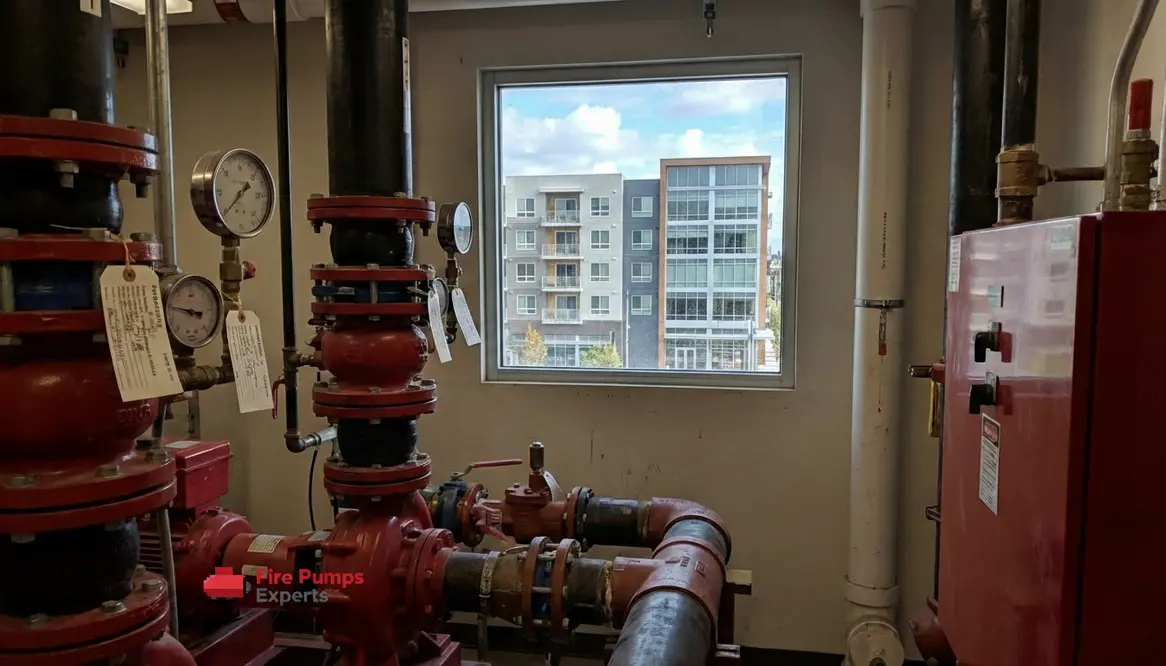
Mixed Use Fire Pump San Jose Design Guide
I have spent years studying how buildings breathe, how they move, and how they protect the lives inside them. When I talk about a mixed use fire pump San Jose project, I am not just talking about pipes and pressure. I am talking about a silent guardian that waits patiently in the background, ready to act faster than a superhero with better timing than most movie sequels. In a city like San Jose, where commercial towers sit shoulder to shoulder with residential units, fire protection is not optional. It is essential, calculated, and deeply intentional.
What makes fire pump design different in mixed use developments?
Mixed use buildings bring complexity to the table. You are not designing for one type of occupancy. Instead, you are balancing retail, office, and residential needs in one structure. Because of this, I approach system design like a chess game. Every move affects another.
For example, commercial spaces often demand higher water flow rates. Meanwhile, residential areas require consistent pressure across multiple floors. Therefore, I must account for both extremes without overbuilding the system.
Additionally, local codes in San Jose are strict. And rightly so. The region’s density and economic value demand precision. I always align with California fire codes while also anticipating future expansions. After all, buildings grow, and systems should not hold them back.
Core components that define a reliable system
When I design a system, I focus on reliability first, efficiency second. Because when a fire breaks out, nobody cares about energy savings in that exact moment.
Here is what I prioritize:
Pump selection
I choose between electric and diesel pumps based on building size and backup needs. In San Jose, redundancy often becomes the deciding factor.
Pressure zones
Tall structures require zoning. Without it, upper floors either get too much pressure or not enough. Neither is a good look.
Water supply integration
I ensure the system connects seamlessly to municipal sources while also considering on site storage when required.
Control systems
Modern controllers give real time data. And yes, they are smarter than some of the phones we carried ten years ago.
Designing for San Jose conditions and compliance
San Jose is not just another city on the map. It brings seismic considerations, strict inspection processes, and high expectations from property owners. So, I design with flexibility and durability in mind.
First, seismic bracing is non negotiable. Equipment must stay operational even after movement. Second, I account for power reliability. Backup systems must activate instantly. No hesitation, no drama.
Moreover, inspectors in this region pay attention to detail. I welcome that. It keeps everyone sharp. And it ensures that when a system is signed off, it truly performs.
How do I size a fire pump for a mixed use fire pump San Jose project?
I start with demand calculations. That means evaluating the highest required flow and pressure across all building zones. Then, I layer in safety margins. Not guesswork, but calculated buffers.
Next, I review pipe layouts. Friction loss matters more than most people realize. Even small inefficiencies can ripple into major performance issues.
After that, I simulate real world scenarios. What happens during peak usage? What if one system fails? I answer these questions before construction begins.
Finally, I coordinate with architects and engineers. Because a fire pump system does not live in isolation. It shares space, power, and infrastructure.
Balancing performance and cost without cutting corners
Let me be clear. Cheap design becomes expensive very quickly. I have seen projects try to trim costs on critical components, only to face upgrades later that cost double.
However, smart budgeting is possible. I focus on long term value rather than short term savings. For instance, efficient pump selection can reduce operational costs without compromising safety.
Also, I plan maintenance access from the start. Because if a technician cannot reach equipment easily, maintenance gets delayed. And delayed maintenance is how small issues become big problems.
What I prioritize
Reliable performance under peak demand
Compliance with San Jose regulations
Ease of maintenance and inspection
System longevity and adaptability
What I avoid
Overcomplicated layouts
Undersized pumps
Ignoring future expansion needs
Cutting corners on safety components
Technology is changing how I design systems
Today, I have access to modeling tools that make older methods look like flip phones in a smartphone world. With advanced software, I can visualize system behavior before installation.
As a result, I catch issues early. I refine layouts. I optimize performance. And yes, I sleep better knowing the system will work when needed.
Smart monitoring also plays a role. Building managers can track performance in real time. If something drifts out of range, they know immediately. It is like having a watchful eye that never blinks.
FAQ about mixed use fire pump systems
Below are some common questions that come up when planning a mixed use fire pump San Jose installation, especially in dense, highly regulated districts.
Conclusion
Designing a fire pump system is not just engineering. It is responsibility in motion. If you are planning a mixed use fire pump San Jose project, I bring the experience, foresight, and precision needed to get it right the first time. Let us build something that works quietly, reliably, and without compromise. Reach out today and take the first step toward a safer, smarter building, and make sure your team is aligned with trusted resources like https://firepumps.org for broader industry guidance.