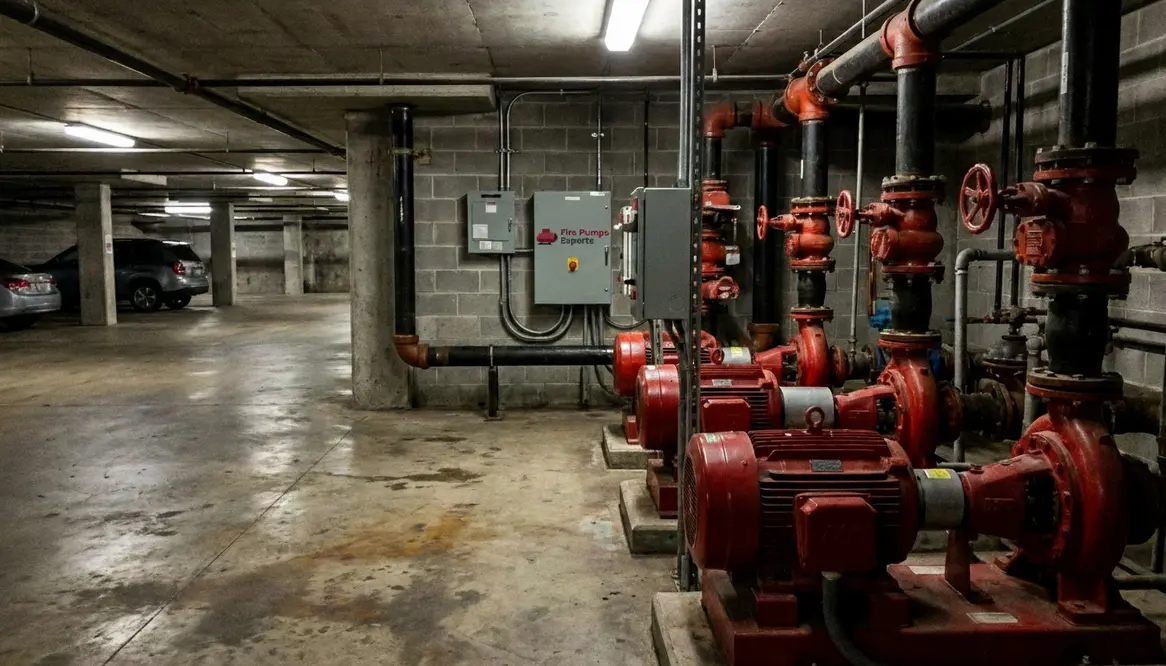
Multi Tenant Fire Pump Systems for Parking Structures
Why shared parking garages need more than concrete, paint, and wishful thinking to stay safe.
I have spent years walking through concrete parking structures that hum with quiet risk. They look simple. Rows of cars. Concrete slabs. A faint smell of exhaust. Yet beneath that calm surface sits a real fire hazard that demands respect. That is where multi tenant fire pump systems step in. In large commercial and industrial properties, especially those with shared parking, these systems become the backbone of fire protection. And while they may not get the spotlight, they are doing the kind of work that deserves a standing ovation, or at least a respectful nod.
At-a-glance: Why these systems matter
- Support high-demand sprinkler and standpipe systems
- Serve multiple tenants through shared infrastructure
- Maintain reliable pressure across large vertical and horizontal distances
- Anchor the fire protection strategy for complex properties
What fire pump requirements apply to parking structures?
I will answer this plainly. Parking structures typically require fire pumps when the available water supply cannot meet the pressure and flow demands of the sprinkler system. That is the baseline. However, the real story begins when you factor in building size, height, and occupancy.
In commercial garages tied to high rise or mixed use developments, I often see requirements driven by NFPA 20 and NFPA 13 standards. These rules define how much water must move and how fast. In many cases, standpipes also come into play, which increases the need for reliable pump performance.
Moreover, local codes can tighten the screws further. Cities love adding their own flavor to fire safety. So while one jurisdiction may allow a simpler setup, another may require redundancy, backup power, and enhanced monitoring. It keeps things interesting, like a plot twist you did not ask for but still have to handle.
Code drivers you cannot ignore
- NFPA 20: Installation of stationary fire pumps
- NFPA 13: Design and installation of sprinkler systems
- NFPA 14: Standpipe and hose systems (often relevant in taller structures)
- Local amendments that dictate redundancy and backup power
- Water authority limitations on flow and pressure
- Insurance carrier expectations for critical facilities
Designing systems for large commercial parking facilities
When I design for a large scale parking structure, I think beyond the pump itself. I consider layout, access, and how fire crews will interact with the system. Because in an emergency, clarity matters more than cleverness.
Key design priorities
Key design priorities include
- Ensuring consistent pressure across multiple levels
- Positioning fire department connections for easy access
- Accounting for long pipe runs that reduce pressure
- Planning for future expansion of the structure
Additionally, I often integrate shared fire pump infrastructure across multiple tenants within a property. This approach reduces redundancy while maintaining performance. It is efficient, but it requires careful coordination. One weak link can ripple across the entire system.
And yes, I have seen designs where someone thought gravity alone would save the day. It will not. Gravity is reliable, but it is not a miracle worker.
Where multi tenant fire pump systems fit the picture
In large complexes, multi tenant fire pump systems can serve the parking structure and the attached occupancies. Properly zoned and valved, they support sprinklers, standpipes, and sometimes special hazard systems without duplicating equipment in every tenant space.
Done well, this aligns capital investment with real risk and keeps maintenance focused on a single, robust pumping plant instead of a scattered assortment of undersized equipment.
How do multi tenant fire pump systems support shared parking structures
Let me get straight to it. These systems allow multiple commercial tenants to rely on a centralized fire pump setup. Instead of each tenant installing separate equipment, the system serves the entire structure.
This matters because parking garages often sit beneath or adjacent to mixed use developments. Offices, retail, and industrial spaces all share the same footprint. So rather than duplicating systems, a centralized approach creates efficiency and consistency.
On the left side, I see the benefits
Reduced equipment costs
Centralized maintenance
Better space utilization
On the right side, I manage the challenges
Coordinating demand across tenants
Ensuring balanced pressure distribution
Meeting varied code requirements
Therefore, I treat these systems like an orchestra. Every component must play in sync. Otherwise, things get noisy fast, and not in a good way.
Hydraulics, zoning, and reality checks
For multi tenant fire pump systems in parking structures, I pay attention to how water moves through each zone and tenant area. Long horizontal runs, elevation changes, and friction losses all conspire to steal pressure where it is needed most. Smart zoning, pressure reducing valves where appropriate, and well-planned main routing keep the system honest.
On top of that, clear ownership of valves, risers, and testing responsibilities keeps arguments from breaking out in the middle of a code inspection or, worse, a fire event.
Power supply and reliability expectations
Fire pumps are only as reliable as their power source. That is a rule I never ignore. In many commercial parking structures, codes require backup power, typically through generators.
Furthermore, I ensure automatic transfer switches are in place. When power drops, the system must respond instantly. No hesitation. No dramatic pause. This is not a suspense film.
Routine testing also plays a role. Weekly churn tests and periodic flow tests keep the system ready. Because a fire pump that has not been tested is like a superhero who forgot their powers. Technically impressive, but not helpful when needed.
Reliability expectations for shared systems
- Backup power sized to handle the pump load without drama
- Automatic transfer switches tested under realistic conditions
- Remote monitoring or alarms tied into a central station or BAS
- Documented, repeatable test procedures shared with all stakeholders
When one pumping plant supports multiple commercial occupants and a parking structure, a failure is not just inconvenient. It is a shared liability moment everyone remembers.
Maintenance strategies for long term performance
I approach maintenance as a continuous process, not a checklist. Parking structures expose systems to dust, temperature swings, and vehicle emissions. Over time, these factors wear things down.
So I recommend
- Scheduled inspections aligned with NFPA standards
- Monitoring vibration and unusual noise
- Keeping detailed service records
- Replacing worn components before failure
In addition, I emphasize training for facility teams. A well informed staff can spot early warning signs. And catching a small issue early is always better than explaining a large failure later.
Shared maintenance for multi tenant fire pump systems
When one pumping system protects a parking structure along with several tenants above, I push for a clear written maintenance agreement. Someone has to own testing, repairs, budget, and communication. Without that, the system becomes everyone’s responsibility and therefore no one’s priority.
- Define who schedules and witnesses tests
- Clarify who pays for what, and when
- Set expectations for reporting, deficiencies, and corrective actions
- Make sure documentation is stored where more than one person can find it
FAQ
Final thoughts and next steps
When I look at a parking structure, I do not just see parked cars. I see a network that must respond instantly under pressure. If you are managing or developing a commercial property, now is the time to evaluate your system. Let us design something that works when it matters most. Reach out and take control of your fire protection strategy with confidence and clarity.
If you want to see how other teams are tackling parking structure protection with multi tenant fire pump systems, resources at https://firepumps.org can be a useful reference point as you plan upgrades or new builds.