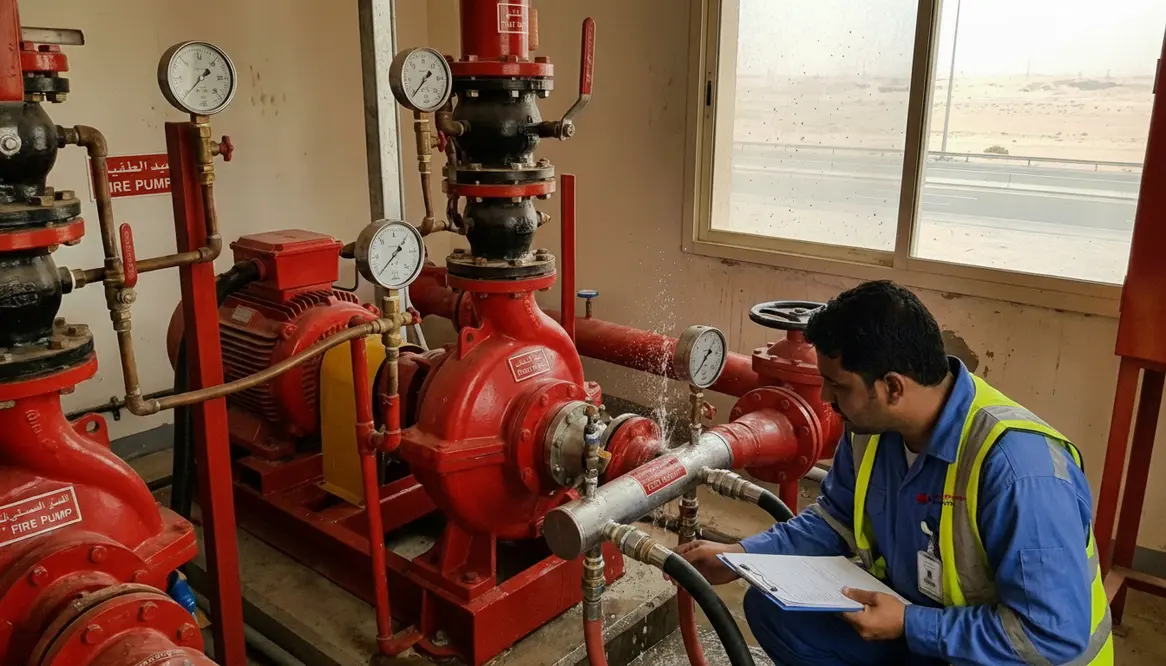
Saudi Fire Pump Testing Requirements Explained
I have seen plenty of building owners relax the moment a fire pump gets installed, as if the job ends there. It does not. In Saudi commercial and industrial facilities, Saudi testing for fire pumps keeps the system ready when pressure drops and the real trouble starts. That matters because a fire pump can sit quiet for months, then suddenly become the hero of the day. And like any hero, it needs training, checkups, and a proper stage to perform on.
What I Need to Know About Saudi Fire Pump Testing
I always start with one simple idea: the fire pump must work under real conditions, not just look impressive in a mechanical room. Saudi fire pump testing checks that the pump, driver, controls, and pressure levels all perform as expected. In commercial towers, factories, warehouses, and major properties, this is not a nice extra. It is part of keeping life safety systems honest.
First, I look at the installation type. Diesel driven pumps need fuel, battery, and engine checks. Electric pumps need power supply, control settings, and motor health verified. Then, the test must confirm that the pump can deliver the required flow and pressure. If it cannot, the system may fail when everyone needs it most. That is the part nobody wants to explain during an emergency meeting with a very unhappy client.
Also, I make sure the testing follows local authority expectations and the project specs. In Saudi Arabia, that usually means a mix of code based checks, manufacturer guidance, and site specific records. So yes, the paperwork matters. A fire pump may not care about forms, but regulators do.
How I Check Fire Pump Performance Step by Step
When I perform fire pump testing, I follow a clear process. This keeps the results reliable and helps spot weak points before they become expensive problems.
Dual column overview
What I Test
- Pump start and stop response
- Suction and discharge pressure
- Flow rate at set points
- Relief valve and jockey pump behavior
- Controller alarms and signals
- Diesel engine or electric motor condition
Why It Matters
- Confirms the pump can serve the building
- Exposes pressure loss or mechanical wear
- Helps avoid surprise failures
- Supports compliance records
- Protects large assets and business operations
Next, I run the pump under test conditions and compare the readings to the expected curve. This tells me whether the pump still performs like the one that left the factory, or whether time has been quietly doing its thing. Then I watch for vibration, unusual noise, leaks, overheating, or unstable pressure. Small issues often show up first in the sound. A healthy pump has a steady voice. A tired one sounds like it needs a long weekend and a vacation playlist.
Saudi Testing Schedule for Commercial and Industrial Sites
Timing matters just as much as the test itself. For large buildings and industrial sites, I usually follow a routine that includes weekly, monthly, and annual checks. Weekly checks often cover visual inspection, controller status, and basic readiness. Monthly testing may include start up runs and more detailed observation. Annual flow testing gives the clearest picture of true performance.
However, I never treat all sites the same. A high rise in a dense city, a logistics hub, and a heavy industrial plant each carry different risks. Therefore, I adjust the testing plan based on water demand, occupancy, and system design. If the building has critical operations, I tighten the schedule. If the site uses a diesel fire pump, I pay extra attention to fuel quality, battery health, and cooling.
In addition, I recommend keeping records for every test. That history helps me track trends. For example, if discharge pressure drops little by little, I can catch the issue before a failure turns into a headline nobody wants. Think of it like keeping score in a long game. You may not notice the drift today, but the numbers never lie. This is where disciplined Saudi testing routines really start paying off for long term reliability.
Common Problems I Find During Fire Pump Inspections
Over time, I see the same problems repeat across many properties. Some are small. Others can stop the system cold.
Here are the most common issues:
- Worn pump bearings that cause noise and vibration
- Air leaks or suction problems that reduce flow
- Controller faults that delay start up
- Low fuel or weak batteries in diesel units
- Closed valves or blocked strainers
- Corrosion, scale, or poor maintenance around the pump set
Sometimes the problem is not the pump itself. Instead, I find poor housekeeping around the pump room, missing labels, or access blocked by storage. That may sound minor, but in an emergency, a blocked pump room becomes a plot twist no one asked for. I also see systems that passed a past test but slowly drifted out of shape because nobody followed up.
For that reason, I always connect testing with maintenance. Testing tells me what the system can do. Maintenance makes sure it keeps doing it. Both matter, and neither likes to be ignored.
Why I Rely on Saudi Testing Experts
When I work with a specialist team, I get more than a checkbox result. I get proper measurements, better fault finding, and cleaner reports that building managers can trust. For commercial and industrial facilities, that saves time and lowers risk. It also helps align the site with local fire safety expectations.
If a facility needs support, I look for a team that understands major properties, critical assets, and system performance under Saudi conditions. For more details on service support, I would point readers to fire pump testing services for Saudi commercial and industrial properties. That kind of help can turn a stressful compliance task into a controlled process. And honestly, that is the kind of calm every facility manager deserves. The right Saudi testing partner can turn vague worries into clear data and a practical plan.
FAQ
Conclusion
I treat fire pump testing as essential protection, not a formality. If your commercial or industrial property in Saudi Arabia needs reliable fire pump performance, now is the time to act. Schedule a proper inspection, review the results, and keep your system ready before a small fault becomes a big problem. I can help you stay compliant, protect your assets, and keep your building prepared for the moment that truly counts.