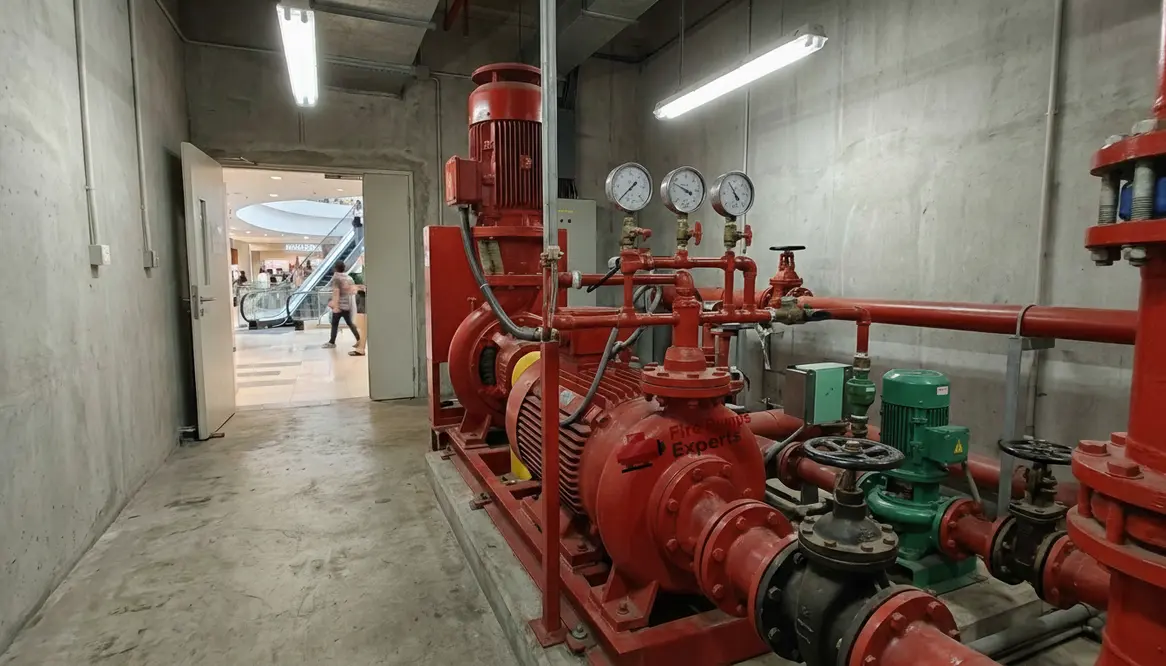
Singapore Fire Pump Standards for Shopping Centres
Singapore Fire Pump Requirements for Shopping Centres
When I look at a shopping centre, I see more than retail, food courts, and weekend crowds with too many shopping bags. I also see a serious fire safety system that must work without drama. In Singapore, fire pump standards matter because they support the sprinkler and hose reel systems that protect large commercial buildings when every second counts. For shopping centres, the rules focus on reliability, water pressure, and proper backup so the system keeps working even when the main source fails. That is not glamorous, but then again, fire protection rarely gets a red carpet moment.
Shopping centres move huge numbers of people through one building, often across multiple floors. So, I always treat fire pump planning as a core part of the building’s safety setup, not a box to tick at the end. The pump must supply enough pressure and flow to feed the fire protection system during an emergency. If the demand rises and the supply drops, the whole system can wobble like a sitcom character on roller skates.
In Singapore, the fire pump setup usually supports the sprinkler system, hydrants, and other suppression equipment. Therefore, the building design must match the risk level, floor size, layout, and water demand. Large atriums, basement car parks, food zones, and storage rooms can all affect the final design. I also keep in mind that shopping centres often change over time, so the system must stay strong even after tenants move in and start building walls where they once had open space. Classic mall behaviour.
Singapore fire pump standards for commercial buildings
For commercial and major property buildings, the fire pump system must meet local fire code needs and industry best practice. I always focus on four main parts: pump type, water source, backup power, and control reliability.
Pump arrangement
First, the pump set often includes a main duty pump, a standby pump, and a jockey pump. The duty pump handles normal fire demand. The standby pump takes over if the main pump fails. Meanwhile, the jockey pump keeps pressure stable and stops the system from switching on for tiny pressure drops. That small unit does a lot of quiet work. It is the unsung hero of the system, like the stagehand who keeps the show alive.
Reliable water supply
Second, the water supply must support the full system demand. I make sure the tank or other source holds enough water for the required duration. In a shopping centre, this matters because a weak supply can turn a strong system into a fancy pipe sculpture.
Backup power and controls
Third, backup power is essential. If the main power fails, the fire pump must still run. So, the building usually needs an emergency power source or another approved backup arrangement. Without it, the system may look ready on paper but fail when the lights go out. And that is not the kind of plot twist anyone wants.
Across all of this, I track how Singapore fire pump standards apply to the site, the design assumptions, and the actual way the mall operates from day to day. A system that merely passes a checklist is not enough; it has to make sense for how the building really works.
How I check shopping centre fire pump setup
I usually break the review into practical checks that help me see whether the system will actually perform under stress. The aim is to match the intent of Singapore fire pump standards with what is bolted to the floor in the pump room.
Fire pump checklist for shopping centres
- Confirm the pump can meet the required flow and pressure
- Check that the tank or water source can support the design demand
- Verify the duty pump, standby pump, and jockey pump all work as intended
- Test the automatic start function and alarm signals
- Inspect the power supply and emergency backup arrangement
- Review valve positions, suction layout, and pipe condition
- Make sure access for inspection and maintenance stays clear
Next, I look at the installation area itself. A pump room should stay dry, secure, well ventilated, and easy to reach. If people use it as a storage spot, the system may end up buried under forgotten cartons and old Christmas décor. I also check whether the room allows safe maintenance work. Good access matters because a fire pump only helps if someone can inspect and service it properly.
What matters during testing and maintenance
Routine testing
Testing tells me whether the fire pump can do its job when pressure drops and real demand begins. However, one test is never the full story. I also look at long term maintenance because even a strong system can weaken if nobody gives it proper care.
During routine testing, I check start up response, running pressure, vibration, noise, and the pump’s ability to hold stable output. I also watch for leaks, overheating, and signs of wear. If a shopping centre has changed its layout, I want to know whether the fire protection system still matches the current load. After all, a mall today can be very different from the one that opened ten years ago. That is why fire pump standards should stay tied to real building use, not old drawings in a dusty file cabinet.
Maintenance and records
Maintenance should include the pump, motor, controller, batteries if used, valves, suction lines, and tanks. In addition, I recommend keeping clear records of every test and repair. When the authority, consultant, or facility team asks for proof, clean records make life easier. Nobody enjoys searching for missing paperwork at 5 p.m. on a Friday. That is how legends are made, but not the good kind.
If you want a deeper technical reference on how fire pump standards evolve internationally, you can explore resources at https://firepumps.org, then relate that back to Singapore’s local requirements and the specific risk profile of your shopping centre.
Done well, testing and maintenance keep the spirit of Singapore fire pump standards alive through the entire life of the building, instead of freezing them at the moment the occupancy permit was issued.
Frequently asked questions on Singapore fire pump standards
These are the questions I hear most often from shopping centre managers and owners trying to line up their systems with current fire pump standards and practical operations.
Conclusion
If you manage a shopping centre, I recommend treating fire pump compliance as a living system, not a one time approval. The right design, strong testing, and steady maintenance protect people, property, and business continuity. So, if your commercial building needs a review, upgrade, or compliance check, act early and keep the system ready before trouble shows up uninvited. I can help you stay aligned with Singapore fire pump standards and keep your fire protection setup working with calm, reliable strength.