Singapore Fire Pump Standards for Data Centres
Singapore Fire Pump Requirements for Data Centres
When I look at a data centre in Singapore, I see more than racks, cables, and cooling systems. I see a building that cannot afford a bad day. That is why fire pump standards matter so much. They help keep water supply ready when a fire breaks out, and in a place packed with expensive gear, that readiness is not optional. It is the quiet bodyguard in the background. In this guide, I will walk through the fire pump rules that matter for data centres, how they shape design, and why getting them right keeps both compliance and uptime on speaking terms.
What I check first in a Singapore data centre fire pump design
I always start with the building risk. Data centres are not your friendly neighbourhood office tower. They run hot, they run nonstop, and they hold assets that can vanish faster than a plot twist in a Marvel film. So I look at the fire load, the floor layout, the water source, and the protection method for each area. In Singapore, the fire pump setup must support the sprinkler or hydrant system with enough pressure and flow to do its job under real fire conditions. If the pump cannot deliver, the rest of the system becomes decorative, and nobody wants an expensive metal statue in a crisis.
Next, I check the water supply arrangement. The pump must be able to draw from a reliable source, whether that comes from tanks, reservoirs, or another approved supply. In commercial and industrial sites, the supply path must stay clear, protected, and ready. I also look at redundancy. Data centres often use more than one pump because downtime loves weak links. One main pump and one standby pump give the site a better chance of staying protected when one unit needs attention.
Singapore fire pump standards for pump type and backup
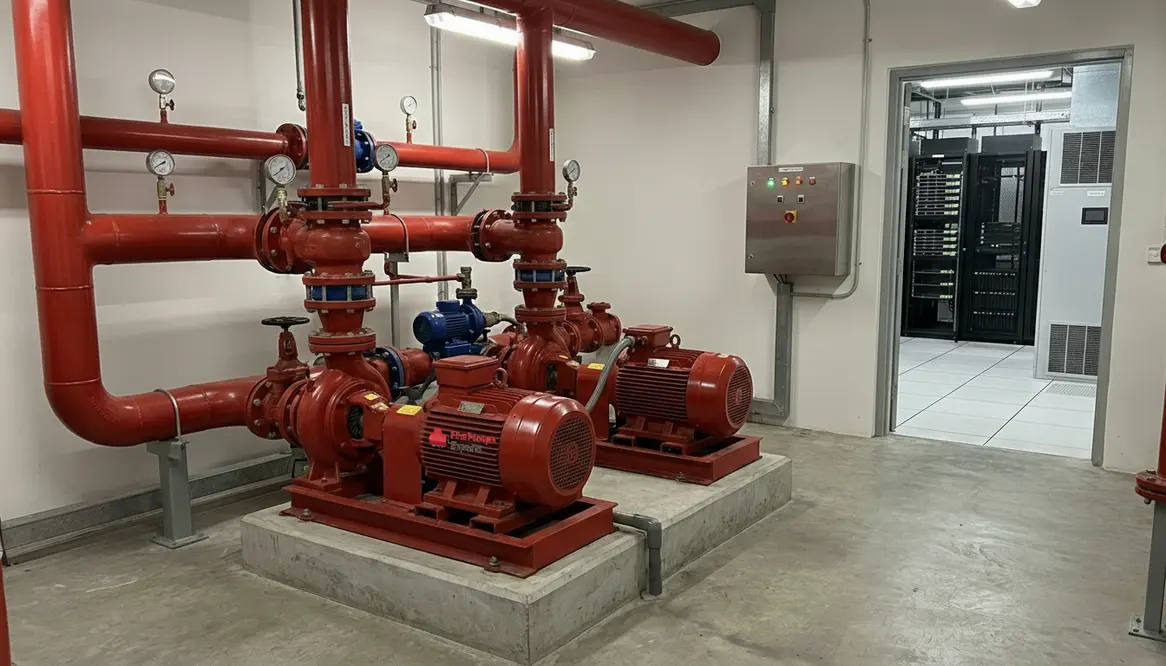
Singapore fire pump standards usually call for a system that matches the building’s risk and fire protection demand. For data centres, I focus on the main pump, standby pump, and jockey pump. The jockey pump holds system pressure so the main pump does not keep cycling for small drops. It is the calm one in the group, the intern who actually knows what is happening.
The main pump must activate when pressure falls too far. Meanwhile, the standby pump must step in if the primary unit fails or cannot meet demand. That backup layer matters because data centres need strong protection without constant human babysitting. I also make sure each pump has its own power source or approved backup arrangement. If the building loses normal power, the fire protection system should not shrug and quit like it missed the season finale.
How I size the system for data centre protection
Proper sizing is where good design turns into real protection. I do not guess. I check the required flow rate, pressure demand, and the worst case fire scenario for the protected area. Then I match the pump capacity to the sprinkler or hydrant network. If the network needs more pressure than the pump can deliver, the water arrives late and weak. That is not protection. That is optimism.
Fire pump design checks for data centres
Water flow: I confirm the pump can meet the full system demand.
Pressure: I make sure pressure stays high enough at the farthest outlet.
Tank supply: I verify the storage holds enough water for the required duration.
Power backup: I confirm the pump can still work during a power loss.
Control panels: I check for clear status, alarm, and fault signals.
Testing access: I leave room for inspection, service, and flow testing.
That simple checklist saves headaches later. It also helps the design team, contractor, and facility manager stay on the same page. And in a data centre, that harmony can feel as rare as a quiet Monday in a server room.
How I keep compliance practical during installation
Compliance sounds boring until it fails, then suddenly everyone cares. I make sure the pump room has proper ventilation, safe access, good drainage, and enough space for maintenance. I also look at pipe routing, valve placement, and clear labeling. These details matter because staff need to inspect and operate the system without turning the room into a puzzle box.
For Singapore projects, I also pay attention to local approval steps and the fire safety review process. The design must align with the site use, the protection class, and the authority requirements. For major commercial and industrial properties, that means careful documentation and a tidy installation. A neat pump room does not just look good. It helps with inspection, troubleshooting, and long term reliability.
I also like to verify testing records. Regular flow tests, pressure checks, and alarm tests prove the system still works after months of quiet duty. Fire protection equipment does not improve through wishful thinking. It improves through maintenance, and a little respect never hurts.
Why data centres need stronger maintenance discipline
Keeping fire pump standards alive after handover
Data centres live and die by uptime, so I treat maintenance as part of the protection plan, not an afterthought. A fire pump can sit idle for long stretches, but it still needs inspection, test starts, battery checks, valve checks, and signs of corrosion or leakage. If I ignore that schedule, I turn a reliable system into a mystery box.
Furthermore, data centres often have high-value electrical and cooling spaces where water control and fire suppression must work together. That means the fire pump system should support the broader safety plan, not fight it. I want the pump, tank, sprinklers, alarms, and emergency procedures to act like a good ensemble cast. No divas. No improv.
Connecting Singapore fire pump standards to real data centre risk
For data centres, the most useful part of fire pump standards is how they turn vague fear into clear design rules. They shape choices on tank sizing, pump capacity, redundancy, and room layout. When those pieces follow a consistent rule set, it becomes much easier to explain to owners, operators, and authorities why certain costs, layouts, and maintenance tasks are non-negotiable.
They also create a common language between project teams. When I say that a design aligns with fire pump standards for a high-value facility, everyone at the table understands that means reliable water supply, proven performance, and a realistic plan for failure scenarios. That shared understanding is worth a lot more than a glossy brochure.
FAQ
Conclusion
If I want a data centre in Singapore to stay safe, I do not treat fire protection like a side quest. I build the fire pump system with care, verify the water supply, test the backup, and keep maintenance tight. If you manage a commercial or industrial property and need a better handle on fire pump standards, now is the time to review your setup. A strong design today can save equipment, time, and a very bad week tomorrow. For more insights on how specialists approach this, resources such as https://firepumps.org can help frame the conversation around realistic risk and resilient protection.