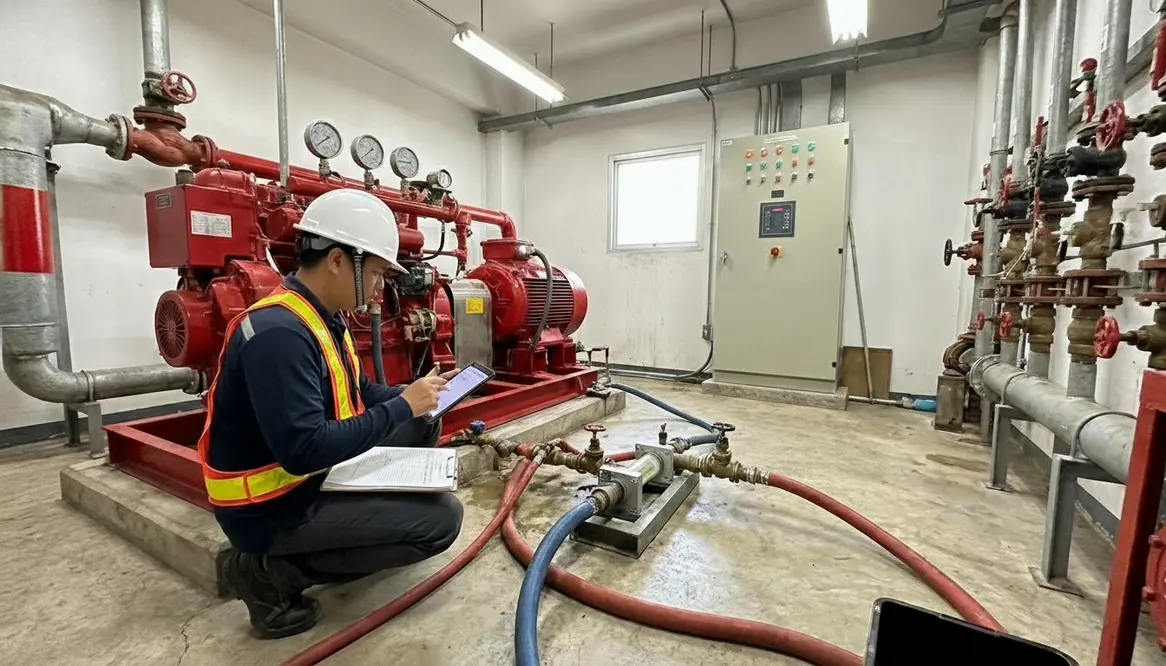
UL Fire Pump Testing and Documentation Guide
UL Listed Fire Pump Testing and Documentation Guide
When I talk about UL testing for fire pumps, I am talking about more than a box to check. I am talking about proof. Proof that a commercial or industrial fire pump will do its job when the pressure drops, the heat rises, and nobody has time for drama. In a major property, that matters. A lot. I have seen building teams treat testing like a yearly chore, but the smartest ones treat it like part of their life safety playbook. And yes, the pump may sit there looking calm and silent, but so did every villain before the action scene started.
In this guide, I will walk through how I approach fire pump testing, what I document, and how I keep the process clean, clear, and ready for inspection. The goal is simple: protect the property, protect the people, and keep the records tight enough to stand up when the questions start coming.
This is the part of the fire protection story that rarely gets headlines but quietly keeps entire properties from starring in news footage. UL testing is not a favor to the code book. It is the one time you ask the pump to prove it can actually back up the promises written in the design documents and equipment labels.
When the sprinklers open up, there is no pause button, no warmup, no rehearsal. Either the system delivers the right flow and pressure or it does not. UL testing is where that question gets answered, with a pen, a gauge, and a test header instead of flashing lights and smoke.
What UL testing means for a fire pump
UL testing confirms that the fire pump performs to recognized standards. I use it to verify capacity, pressure, and reliability under real operating conditions. For commercial and industrial facilities, that is not optional theater. It is the backbone of a serious fire protection system.
UL listed fire pumps must meet strict performance expectations, and I never assume a pump is fine just because it looks fine. A polished pump room can still hide weak suction, bad alignment, worn packing, or a motor that is one bad day away from making everyone sweat. So, I focus on performance, not appearances.
How I prepare for fire pump testing
Pre-test review
I start by checking the basics. First, I review the last test report. Then I confirm the pump type, driver type, test method, and any open repair items. After that, I make sure the system is ready for a proper run.
System readiness checks
I usually verify:
- Water supply is stable
- Test header or flow meter setup is ready
- Suction and discharge gauges are accurate
- Controller alarms are clear and working
- Power source or fuel supply is available
- No active maintenance issue will skew the results
Coordination with the site team
Because this work serves major properties, I also coordinate with facility staff, security, and any monitoring service before I begin. That keeps the process smooth. It also keeps surprise phone calls to a minimum, which is a gift to humanity.
A quiet, predictable UL testing schedule makes everyone happier: the control room, the insurance carrier, the AHJ, and the people who just want to get through their day without sirens, alarms, and unexplained pressure drops.
Fire pump test steps I follow in commercial facilities
I like a process that stays steady from one visit to the next. So, I follow the same path each time and adjust only when the system design demands it.
Step-by-step process
Step one: I inspect the pump room and surrounding equipment. I look for leaks, rust, loose fittings, overheating, and signs of wear.
Step two: I record starting conditions. That includes suction pressure, discharge pressure, controller status, ambient temperature, and any visible issues.
Step three: I run the pump and monitor performance at churn and flow points. I watch how the system responds, not just the final number.
Step four: I compare results to expected performance. If I see a pressure drop, unstable speed, or slow recovery, I flag it right away.
Step five: I shut down safely, inspect again, and note anything that changed during the run.
Snapshot of the items I track during UL testing
| Test item | Why I record it |
| Churn pressure | Shows how the pump holds pressure with no flow |
| Flow pressure | Shows how the pump performs under demand |
| Driver status | Confirms the motor or diesel unit ran as expected |
| System notes | Documents anything that may affect future performance |
What I include in UL fire pump documentation
Good records save time, money, and a fair amount of eye rolling during reviews. I make sure every report tells a complete story. That means I do not just write “passed” and call it a day like I am texting a friend.
Core report details
- Facility name and address
- Fire pump make, model, and serial number
- Driver type and controller details
- Test date and time
- Technician name and qualifications
- Starting and ending readings
- Observed issues and corrective actions
- Parts replaced or repairs needed
- Any follow up testing required
Writing for real people, not just files
I also keep the language plain. Clear notes help facility managers, inspectors, and engineers understand what happened without needing a decoder ring. That matters when a report gets pulled months later during a review, a repair, or a compliance check.
Why documentation matters after UL testing
Testing without documentation is like bringing a flashlight with no batteries. It looks useful until you need it. Strong documentation helps me show compliance, track pump health over time, and spot trends before they turn into failures.
Trend tracking and preventative decisions
For commercial and industrial sites, this history is especially valuable. If a pump starts losing pressure across several tests, I can catch the pattern early. That lets the facility act before the issue becomes a shutdown, a failed inspection, or a very expensive surprise. And nobody wants that sequel.
Maintenance planning that actually uses the data
Proper records also support maintenance planning. They help me and the property team decide whether a seal needs replacement, a driver needs service, or a system needs deeper review. In other words, the paperwork does real work. Rare, but beautiful.
Done right, UL testing becomes more than a yearly ritual. It turns into a running health record for the fire pump and the system it protects, tying together inspections, repairs, and upgrades into one clear story.
FAQs about UL fire pump testing and records
Conclusion
If I want a fire pump system to stay ready, I do not treat testing and documentation as separate tasks. I treat them as one job done well. That is how I protect commercial and industrial facilities from avoidable risk. If you manage a major property and want reliable UL fire pump support, now is the time to tighten your testing routine, clean up your records, and keep your system ready for the moment that matters.
Treat every round of UL testing as a chance to prove, in writing and in data, that the pump can carry its weight. When the questions eventually come from an inspector, an insurer, or a post-incident review, you will not be guessing. You will be opening a file that tells the story, line by line, of a system that was tested, documented, and ready to work.