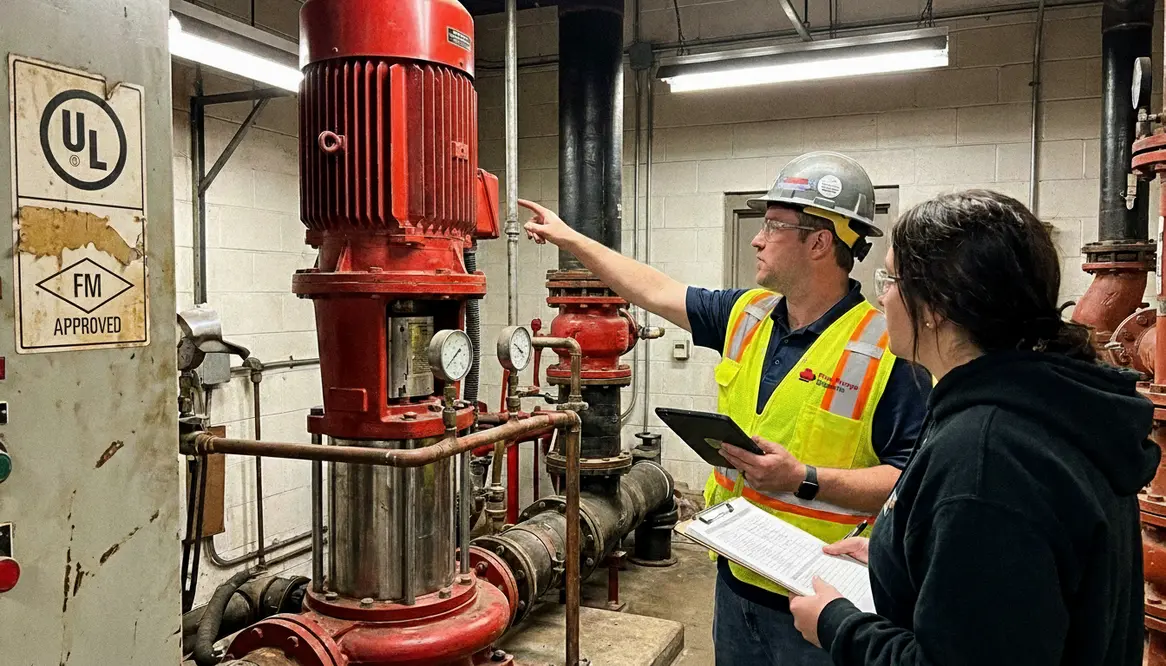
UL FM Fire Pump Compliance for Global Facilities
UL FM Fire Pump Compliance Guide for Multinational Facilities
When I look at fire protection in a multinational facility, I do not see just pumps, pipes, and test logs. I see business survival in steel and water. And yes, UL/FM compliance sits right at the center of that picture. If a site spans countries, time zones, and local codes, one weak link can turn a well built system into a very expensive lesson. So, in this guide, I will break down what matters, why it matters, and how I keep the process simple enough for real teams to use without needing a heroic soundtrack.
At a glance
- Global facilities multiply risk and complexity
- UL/FM compliance anchors performance expectations
- Alignment across teams matters more than heroics
- Clear records save time when audits arrive uninvited
Why fire pump compliance matters in global facilities
I always start here because the reason drives the work. A fire pump is not just another asset on the maintenance list. It supports sprinkler systems, standpipes, and critical water demand when the building needs it most. In multinational facilities, the stakes rise fast. One plant may follow local code, while another must also meet insurer rules, owner standards, and project specs from a different country.
That is where UL/FM compliance gives order to the chaos. It helps me verify that the pump, driver, controller, and accessories fit the performance level expected in major commercial and industrial properties. Moreover, it gives owners, insurers, and facility teams a common language. Without that, everyone starts speaking their own dialect of “it should be fine,” which is not a compliance strategy. That is a wish with paperwork.
What is at stake?
- Life safety for people on site
- Continuity of operations for global supply chains
- Insurance expectations and coverage conditions
- Reputation when something goes wrong on the news cycle
How I check UL/FM compliance on fire pumps
I use a simple sequence, because fire protection work rewards discipline more than drama.
- Confirm listing and approval for the pump package, not just the pump alone
- Review the full submittal for pump, driver, controller, jockey pump, and trim
- Match the rated duty point to the actual system demand
- Check installation space for service access, ventilation, and safe operation
- Verify power source and driver type against the project design and site limits
- Document acceptance and testing so the record survives the next audit, the next manager, and probably the next “urgent” email at 6:00 a.m.
In practice, I also watch for changes during construction. A pump may arrive fully compliant, then lose that edge when someone swaps a controller, changes the suction piping, or adds parts without review. Compliance is not a trophy you hang on the wall. It is a condition you keep alive.
Typical warning signs
- “Like-for-like” controller swaps without checking listings
- Field changes to suction or discharge piping that were never re-calculated
- Missing or edited nameplates that no longer match submittals
- Acceptance tests that happened but never made it into a permanent record
What multinational teams must align before installation
Here, the work becomes more strategic. Global facilities often deal with different voltage standards, climate conditions, water supply quality, and code expectations. Therefore, I make sure the engineering, procurement, construction, and operations teams all agree before the equipment lands on site. Otherwise, the project can drift into a familiar office tragedy: one team buys, another installs, and a third team discovers the mismatch during startup. Classic sequel nobody asked for.
Technical items
- Pump curve and rated flow
- Driver type and power source
- Controller features and alarms
- Suction conditions and pipe layout
Operational items
- Local code and insurer needs
- Spare parts and service access
- Training for site staff
- Inspection schedule and records
This is the point where strong coordination pays off. When the technical side and the operational side move together, the system does not just pass review. It also runs with less stress after handover, which is exactly what a serious facility wants.
How I handle testing, records, and audits
Testing tells the truth. Paper can be polite. Equipment is not. I focus on acceptance testing, flow testing, alarm checks, and controller functions because those steps show how the system behaves under real demand. In multinational facilities, I also make sure the record set is clean and easy to trace. That means test reports, correction logs, inspection dates, and approval documents all stay organized in one place.
Why does that matter? Because an audit may come from a local authority, a corporate risk team, or an insurer that wants proof fast. If the documentation is scattered across inboxes and shared drives like a lost Avengers script, delays follow. So I build records that someone else can read months later without calling three countries and a retired engineer.
Record-keeping that actually works
- Standard templates for test reports across all sites
- Central index that lists where every record lives
- Version control so “final” does not secretly mean draft three
- Clear notes when a test finding links to a later repair
Where FirePumps.org fits into commercial and industrial projects
For major properties, I look for partners that understand commercial and industrial fire protection from the start. That matters because the needs of a warehouse, data center, manufacturing plant, or large office tower are not the same as a small building. FirePumps.org focuses on those larger facilities, which makes the guidance more useful for owners who need the right system, the right review, and the right outcome.
If I want deeper support, I use a clear resource like UL FM fire pump compliance support for commercial facilities to help guide planning and review. That kind of reference helps owners and facility teams stay aligned with project goals and risk needs. It also keeps the process practical, which I always prefer. Nobody wakes up excited for a compliance binders marathon.
Connecting UL/FM compliance to strategy
In global portfolios, UL/FM compliance is not just a checkbox; it is a way to keep standards consistent when people, languages, and local codes change. When every project speaks that same technical language, it becomes much easier to compare sites, plan upgrades, and explain risk decisions to leadership without needing a translator in the room.
FAQ for multinational facility teams
Conclusion
If I want a fire pump program that holds up across borders, I start with clear design review, strong installation control, and clean testing records. Then I keep every team aligned from purchase to startup to maintenance. That is how I protect major commercial and industrial facilities without creating extra risk or confusion. If your next project needs a sharper path to UL/FM compliance, now is the time to review the system, tighten the process, and get expert support before the next deadline shows up smiling.