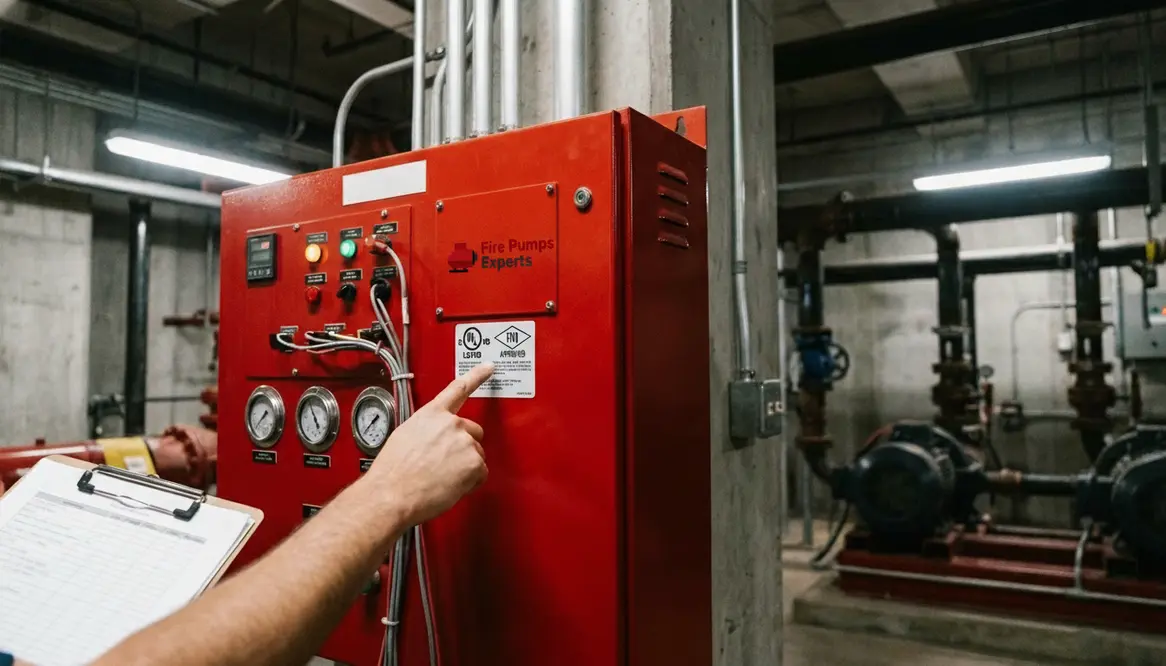
UL FM Fire Pump Controller Requirements Checklist
UL FM Fire Pump Controller Requirements: What I Check Before I Call a System Ready
When I look at a UL/FM controller for a fire pump, I do not see a box of wires and switches. I see the nerve center of a system that may need to perform under pressure, heat, and a very bad day. In commercial and industrial facilities, and in major property buildings, that controller must do one job well: start the fire pump fast, keep it reliable, and meet the rules that matter. That is where UL and FM requirements step in, quietly but firmly, like the security guard who somehow knows everyone’s name.
In this guide, I will walk through the key requirements I check, how they affect installation and operation, and why they matter for larger facilities. I will keep it practical, because fire protection already has enough drama without adding confusion.
What a UL FM fire pump controller must do
A UL FM fire pump controller must start the fire pump automatically when system pressure drops, and it must also allow manual start when needed. It needs to support the pump during a fire event, which means it must stay dependable even when normal building power gets shaky. In addition, it must match the pump type, voltage, phase, and site conditions.
Here is the simple truth: the controller is not there to look impressive. It is there to act fast and act right. If it hesitates, the rest of the system feels it. That is why I always check that the controller matches the fire pump listing and the overall design of the fire protection system. When the UL/FM controller lines up with the pump and power, the entire system has a much better chance of doing its job when it is needed most.
Key compliance points I review on site
I start with the listing and labeling. The controller must be UL listed and FM approved for fire pump use. Next, I check the electrical service, because the controller must fit the available supply and the pump’s starting method. For example, across the line starting, reduced voltage starting, and electric motor drives each bring their own requirements.
Controller and pump matching
The controller must match the motor horsepower, voltage, phase, and frequency. If the match is off, the system can fail when it matters most. That is not a plot twist anyone wants. A properly selected UL/FM controller keeps the motor starting sequence clean and predictable instead of turning it into guesswork.
Pressure sensing and start logic
The controller must respond to pressure drop in the correct range. Therefore, I verify the pressure switch or transducer setup and make sure the start point fits the design. Bad pressure logic can turn a solid system into a moody one: false starts, late starts, or no starts at all.
Power and transfer rules
If the controller uses normal and emergency power, I confirm the transfer arrangement, source capacity, and disconnect rules. Also, the controller must protect against a shutdown that would stop the pump during a fire event. A UL/FM controller handling transfer correctly can ride through ugly power conditions while the pump keeps pushing water.
Alarm and signal features
The controller should send clear signals for power loss, phase reversal, pump running, and fault conditions. As a result, operators can see problems early instead of learning about them during a midnight surprise. Tied into the building’s monitoring, a good UL/FM controller becomes the narrator of what the pump is doing, not a silent mystery box.
How I verify installation details without missing the fine print
I always say that compliance lives in the details. The controller may be top tier, but sloppy installation can still cause trouble. So I check the mounting location, working space, ventilation, and environmental protection. Also, I confirm that the controller sits in a dry, accessible place with enough room for service.
Wiring matters just as much. Conductors must be sized correctly, and the grounding must be solid. In addition, I review short circuit protection, disconnect means, and alarm connections. If the system includes multiple pumps, I make sure each controller follows the right sequence and does not step on the other pump’s toes like a bad dance scene from an old movie.
UL FM controller checks in a dual column view
What I check
- Listing and approval
- Motor and voltage match
- Pressure settings
- Power source and transfer
Why it matters
- Proves the controller belongs in fire pump service
- Keeps the pump start reliable
- Ensures the system responds at the right time
- Supports operation during emergency conditions
How UL FM fire pump controller requirements affect commercial and industrial properties
In large commercial and industrial facilities, the fire pump system often protects high value assets, long operations, and dense occupant loads. Because of that, the controller has to support continuous reliability, clear monitoring, and fast response. I pay extra attention to facilities with tall buildings, warehouses, manufacturing areas, data heavy spaces, and major mixed use properties.
Here, the controller becomes part of a bigger life safety plan. It does not work alone. It works with the pump, the water supply, the alarm system, and the building’s emergency controls. Therefore, if one piece falls short, the whole chain weakens. I like to think of it as the Avengers, but with more testing and less capes.
For these properties, I also look at maintenance access and testing needs. The system should allow routine inspection without turning every service visit into a small engineering expedition. That saves time, lowers risk, and keeps the system ready for the real event. A well laid out UL/FM controller with clear labeling and room to work around it turns future maintenance from a headache into a scheduled task.
Why I treat testing and documentation as non negotiable
Testing proves the controller works as intended, but documentation proves it can stay trusted over time. I review factory data, installation records, acceptance test results, and service logs. Then I check that the settings and labels remain clear. If a technician arrives months later, they should not need a treasure map to figure things out.
Regular testing also helps catch issues before they become failures. For example, weak batteries, loose signals, worn contacts, or bad pressure settings can all show up during inspection. As a result, the team can fix small issues before they turn into expensive chaos. That is a lot cheaper than explaining to management why the pump had a bad day.
In many facilities, the test records for the UL/FM controller become the quiet proof that the fire protection strategy is not just paperwork. When auditors, insurers, or consultants ask for evidence, those logs show a pattern of care instead of a long stretch of “we meant to.” If you ever need to justify upgrades, a solid paper trail helps build your case quickly.
Putting the UL/FM controller in context
The UL/FM controller is not the hero of the story, but it is the one character that cannot miss a cue. It connects NFPA 20 design choices, utility power quirks, emergency generation, and field wiring realities into one box that must perform flawlessly. If any single part of that chain is weak, the controller will show it on test day or on the worst possible day.
I also look at how the controller and pump sit within the larger site layout. Long feeder runs, tight pump rooms, combined mechanical and electrical spaces, and shared emergency power can all complicate what seemed simple on paper. Walking the space with the drawings in hand turns theoretical UL FM fire pump controller requirements into real yes-or-no observations.
UL/FM controller checklist mindset
When I walk up to a UL/FM controller, I treat it like a checklist wrapped in steel. Listing marks, voltage labels, torque labels, and wiring diagrams tell me whether the installation followed the intent of the manufacturer and the standard. I do not assume anything just because the enclosure looks new or the paint still shines.
- Does the nameplate line up with the pump data?
- Do the pressure settings align with the design documents?
- Is the emergency power sequence documented and tested?
- Are alarms clearly landed in the monitoring system?
If these basics check out, I can move on to the subtler details with confidence. If they do not, the system goes back into the “not ready” column until the gaps are closed.
Conclusion
If I want a fire pump system to serve a commercial or industrial property with confidence, I start with the controller. I check the listing, the installation, the logic, and the test records, because each one protects the next. If you manage a major property building, now is the time to review your system and make sure it meets the right standard. A reliable fire pump controller is not optional. It is the quiet backbone of a serious safety plan, and when that backbone is a properly selected UL/FM controller, the rest of the fire protection strategy has a much better chance of standing strong.
If you are unsure where your current installation stands, start by pulling the controller nameplate data, the fire pump test reports, and the latest maintenance records. That small stack of paperwork will tell you more about your real readiness than any glossy brochure. When in doubt, bringing in a specialist with deep experience in UL FM fire pump controller requirements can turn guesswork into clear next steps. For more technical resources, a good starting point is https://firepumps.org, paired with your local standards and authority expectations.