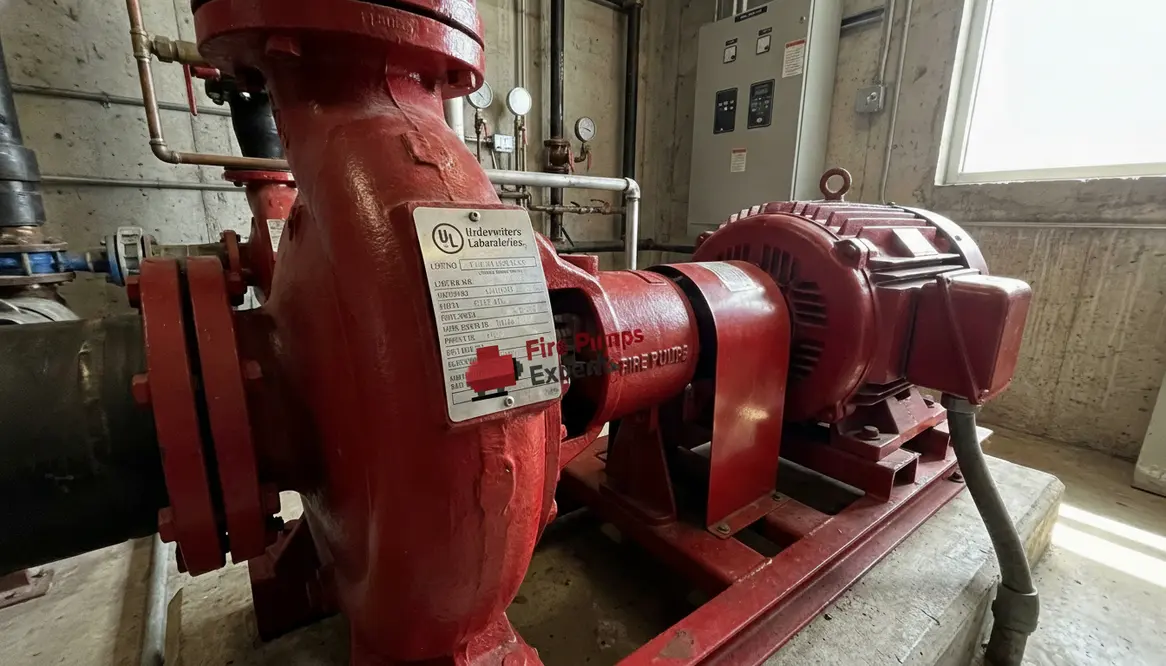
UL Listed Fire Pump Guide for Commercial Buildings
UL Listed Fire Pumps Explained
When I talk about fire protection for commercial and industrial buildings, I always start with the same hard truth: water pressure does not care about your schedule, your budget, or your feelings. That is why a UL fire pump matters. It steps in when a building needs reliable water flow for sprinklers, standpipes, and fire hoses. In large facilities, major property buildings, and heavy duty operations, that kind of backup is not a luxury. It is the difference between a controlled incident and a very bad day with flashing lights.
Why “UL Listed” Changes the Stakes
A UL Listed fire pump has been tested by Underwriters Laboratories and approved for use in fire protection systems. In plain language, it means the pump meets strict safety and performance standards. I see this as a trust signal for building owners, engineers, and facility managers who need equipment that will work when the pressure drops and the heat rises.
UL listing matters because it confirms the pump can deliver the needed water flow under real fire conditions. Therefore, it helps support code compliance, insurance needs, and system reliability. Also, it gives decision makers a clear benchmark when they compare equipment. Nobody wants to play guess who with fire protection. That is a game nobody wins.
How UL Fire Pumps Support Large Facilities
In commercial and industrial buildings, water demand can get intense fast. Tall buildings need pressure to reach upper floors. Warehouses need wide coverage across long open spaces. Manufacturing plants often need systems that can handle high hazard zones. As a result, a fire pump becomes the muscle behind the sprinkler system.
Here is the basic job of a fire pump: when incoming water pressure is too low, the pump boosts it. That boost helps sprinklers and hoses do their work. However, the pump does not act alone. It works with the fire protection system, the water supply, the controller, and the test setup. When all of that comes together, the building gets a stronger safety net. Think of it like the Avengers, but with less spandex and far more paperwork.
Where a UL fire pump fits in your strategy
In large or high‑risk properties, a UL fire pump is not simply another mechanical device in the basement. It is part of the life safety strategy, alongside alarms, detection, compartmentation, and trained staff. When the public water supply cannot guarantee the flow and pressure the system demands, the pump fills that gap.
UL Listed Fire Pump Features to Check
When I review equipment, I always look beyond the label. A UL listing is important, but it is only one part of the picture. The pump still needs to match the building size, water demand, and system design. Otherwise, you may end up buying a racehorse for a cart path. It looks strong, but it is solving the wrong problem.
| Key Feature | Why It Matters |
| UL listing | Shows the pump meets fire protection standards |
| Flow performance | Confirms the pump can move enough water during an event |
| Pressure rating | Helps water reach the full building coverage needed |
| Controller compatibility | Supports smooth startup and system control |
| Testing access | Makes inspection and maintenance easier for facility teams |
How to choose the right pump for your site
I start with the building type. Next, I look at water supply, system demand, and the pressure needed at the most remote point in the system. Then I check whether the site needs an electric or diesel driven setup. Each option has a role, and each one fits different risk levels and power conditions.
For example, electric pumps often work well where reliable power is available. Diesel units can offer stronger backup where outages are a concern. Meanwhile, the installation space, access for testing, and maintenance needs also shape the final choice. Since no two facilities are the same, the best pump is the one that fits the site, not the one with the loudest sales pitch.
Matching a UL fire pump to building risk
High‑rise buildings, data centers, manufacturing plants, and dense mixed‑use properties often need greater reliability from their fire protection systems. In those cases, choosing a UL fire pump that aligns with hazard classification, redundancy expectations, and long‑term maintenance capability is far more effective than simply chasing peak horsepower.
When in doubt, a qualified fire protection engineer or specialist can help interpret codes, site conditions, and insurance requirements so the UL fire pump you choose is a fit instead of an expensive guess.
Why installation and testing matter
Even the best pump can fail its mission if the installation is weak. That is why I treat layout, alignment, venting, suction supply, and controller setup as serious work. A fire pump must be installed by people who understand the system, the building, and the code requirements tied to fire protection in major properties.
Testing matters just as much. Regular flow tests, inspections, and maintenance help confirm that the pump still performs as designed. Over time, wear, corrosion, and system changes can affect output. Therefore, testing gives you proof, not hope. And hope is lovely, but it is not a maintenance plan.
UL Listed fire pump FAQ
Conclusion and next step
If you manage a commercial or industrial property, I would treat fire pump selection like a core safety decision, because it is one. A UL Listed fire pump gives your building a tested layer of support when water pressure matters most. If you need help choosing the right system for a major property or large facility, I recommend taking the next step now and reviewing your site’s fire protection needs with a qualified specialist.
For more technical background and reference material, resources such as https://firepumps.org can help you ask better questions and understand how your UL fire pump fits into the broader protection strategy for the building you are responsible for.