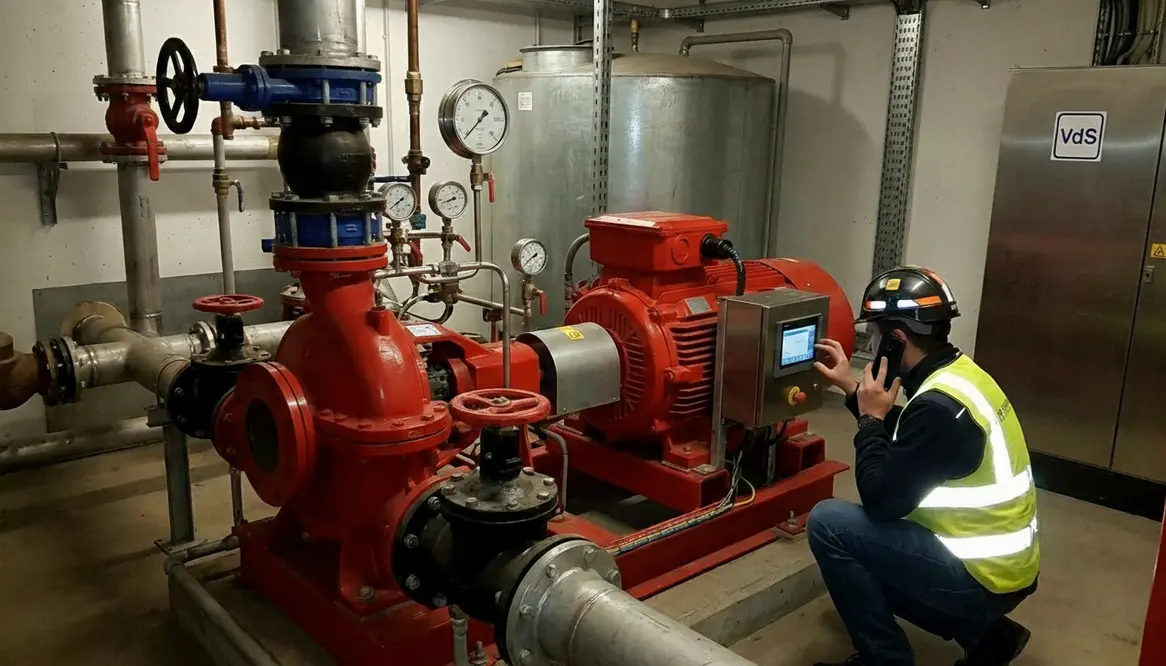
VdS CEA 4001 Fire Pump Testing Requirements Guide
VdS CEA 4001 Fire Pump Testing Requirements may sound like a dry rulebook topic, but I treat it as the heartbeat check for a fire protection system. In commercial and industrial buildings, a fire pump has one job: wake up fast and deliver water when the pressure drops. If it hesitates, the whole system starts acting like a blockbuster hero who forgot the script. I have seen how proper testing keeps major properties ready, compliant, and far less likely to fail when the pressure gets real.
Why I Treat Fire Pump Testing as a Critical Routine
I do not see fire pump testing as a box to tick. I see it as proof that the system can still perform under stress. For major properties, that matters because a fire pump often protects large floor areas, high risk operations, and busy plant spaces where water demand can change fast. Therefore, each test gives me real data on pressure, flow, starting behavior, and overall health.
VdS CEA 4001 testing sets a clear standard for how I check that the pump, controller, and support equipment work together. As a result, I can spot wear, blocked valves, weak batteries, or bad suction conditions before they become a very expensive surprise. And yes, surprises are fun at birthday parties, not in pump rooms.
What I Check During VdS CEA 4001 Testing
When I follow VdS CEA 4001 testing, I focus on the parts that tell the truth. The pump may look fine from the outside, but the numbers never lie. I check startup response, pressure buildup, flow performance, power supply, and the condition of the driver system. I also watch for vibration, noise, leaks, and strange changes in the gauge readings.
Dual column view of the main checks
Item
Start test
Pressure test
Flow check
Driver review
Support systems
What I look for
The pump starts on demand without delay
The system reaches the needed pressure range
Water delivery matches the design need
Electric motor or diesel engine performs well
Batteries, fuel, cooling, and valves stay ready
Also, I pay close attention to the controller and alarm signals. If the controller does not respond correctly, the whole setup loses trust fast. That is why I treat each test as a full health check, not a quick glance and a hopeful nod.
How I Plan the Test Around Facility Operations
In commercial and industrial facilities, I plan testing with care because uptime matters. I coordinate with building teams so the test does not interrupt key operations, safety coverage, or production schedules. Moreover, I choose a time that allows enough room for a full run, corrections, and retesting if needed.
I also make sure the test setup matches the real duty of the pump. That means I verify suction sources, discharge paths, and any bypass lines before I start. If I test a pump in a weak setup, I may get weak results. That is simple logic, but it saves a lot of trouble. After all, a fire pump should not perform like a backup singer when it needs to lead the show.
For teams that need a deeper compliance reference, I recommend reviewing the official VdS standards guidance alongside local fire protection rules and maintenance records.
What Good Results Look Like in Fire Pump Testing
Good results give me confidence, but I still read them carefully. A healthy fire pump starts quickly, holds pressure, and delivers stable flow. In addition, the controller should show clean operation with no fault alerts, and the driver should run smoothly without overheating or abnormal sound.
Key signs the system is truly ready
Here is what I want to see most often:
- First, the pump starts without hesitation when the system calls for it.
- Second, the pressure rises to the needed level and stays steady.
- Third, the water supply supports the test without cavitation or drop off.
- Finally, all readings match the expected design values closely enough to show real readiness.
However, I never stop at the good news. I compare today’s result with past reports so I can catch slow changes over time. That trend view often tells me more than one happy test ever could. Over multiple years of VdS CEA 4001 testing, those trends become a living history of how the pump, the water supply, and the site conditions are aging together.
How I Handle Failures and Follow Up
When a test shows a problem, I move fast and stay methodical. First, I identify whether the issue comes from the pump, the controller, the power source, the fuel system, or the water supply. Then I document the fault clearly so the repair team knows where to begin. This saves time and keeps the fix focused.
I also treat repeat failures as a warning sign. If a pump fails again after a repair, I do not shrug and hope for the best. Instead, I look deeper at maintenance history, installation conditions, and any hidden system stress. In many cases, the real issue sits one layer below the obvious fault, waiting patiently like a villain in a sequel.
Why fast follow up protects the whole site
For commercial and industrial buildings, that follow up matters because fire pump downtime can affect coverage across a large site. So I make sure the final retest confirms the system is back in proper working order. Consistent VdS CEA 4001 testing, quick investigation, and clear documentation turn a single failure into a useful lesson instead of a long-term weakness.
How VdS CEA 4001 Testing Fits Into Your Risk Plan
In real facilities, paperwork does not stop fires. Performance does. Repeated VdS CEA 4001 testing gives me proof that the pump, the alarms, the power, and the water supply still act like a single team. When test data shows drift in pressure, rising start times, or strange flow behavior, I know the risk curve is bending the wrong way.
That is why I fold test results into broader conversations about impairment plans, maintenance budgets, and upgrade priorities. A clear testing history can justify replacing a driver, revising suction piping, or upgrading controls long before a real emergency exposes the weakness.
FAQ
Conclusion
If you manage a commercial or industrial property, I urge you to treat fire pump testing as a serious part of your risk plan. VdS CEA 4001 testing helps you prove performance, protect people, and keep your system ready for the moment that matters. So, do not wait for trouble to introduce itself. Review your pump testing program, verify your records, and make sure your fire protection team stays ahead of the next challenge.