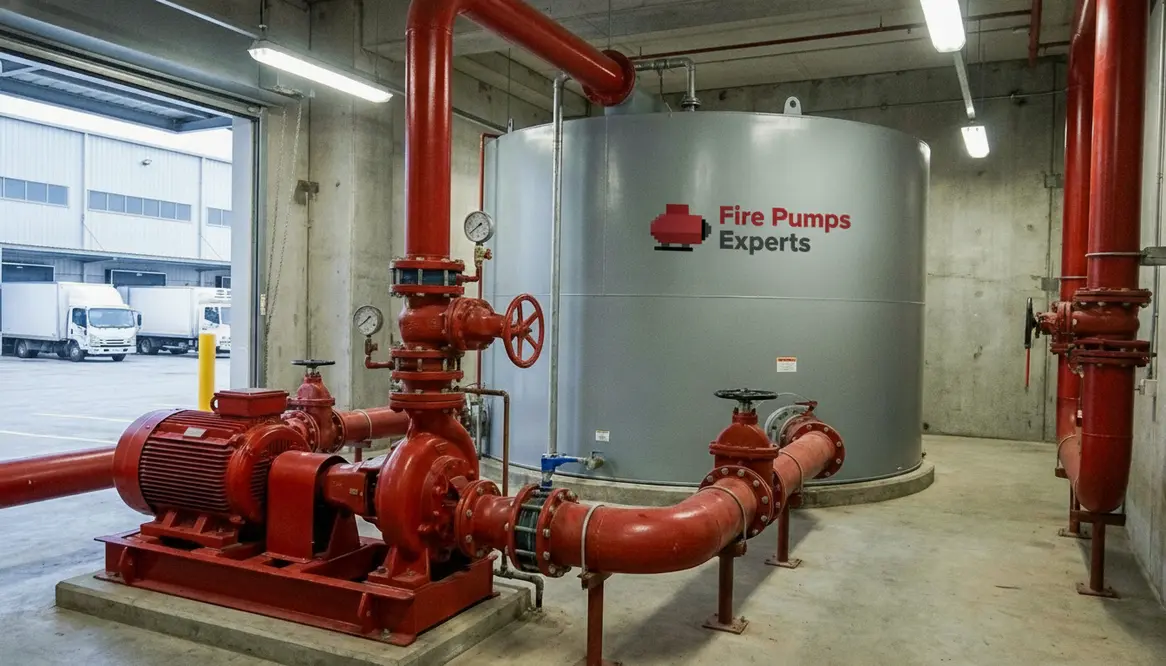

VdS CEA 4001 Water Supply for Fire Pumps Guide
Why the strongest fire pump in the room still fails without the right water behind it.
VdS CEA 4001 Fire Pump Water Supply Guide
I have spent enough time around fire protection systems to know one thing for sure: the pump is only as strong as the water behind it. That is where the VdS CEA 4001 water supply comes in. It gives commercial and industrial buildings a clear path for keeping fire pumps ready when the pressure is on, and yes, I mean pressure in the literal sense, not the kind that shows up when a client calls five minutes before a site inspection. In major properties, this guide helps me line up supply, reliability, and flow so the system can do its job without drama.
In this article, I will walk through what the guide means, why it matters, and how I use it to shape a dependable setup for large facilities. If you manage a plant, warehouse, tower, or other major property, this is the kind of detail that saves headaches later. And as we all know, later is when the trouble likes to show up wearing a fake mustache.
Quick snapshot
- Audience: commercial and industrial properties
- Focus: VdS CEA 4001 water supply for fire pumps
- Goal: reliable pressure, flow, and duration when it counts
- Best use: planning or upgrading major sites
What the guide means for major buildings
The VdS CEA 4001 water supply standard focuses on one simple truth: a fire pump needs a stable water source, not a hopeful one. In commercial and industrial sites, I look at this as the backbone of the whole fire protection system. If the supply cannot support the pump demand, then the rest of the design starts to wobble.
The guide helps me check whether the source can deliver enough water for the required time and pressure. It also pushes me to think about risk, site use, and building size. A small office and a busy logistics hub do not belong in the same conversation here. One stores paper clips, the other may store enough goods to make a dragon jealous.
Where this really matters
- High-rack warehouses and logistics hubs
- Manufacturing plants and processing lines
- Data centers and mission-critical sites
- Mixed-use towers with complex occupancies
In these buildings, the VdS CEA 4001 water supply approach turns “we think it’s fine” into “we know it will hold.”
How I check water supply capacity
When I review a fire pump setup, I start with flow, pressure, and duration. Those three numbers tell me if the source can keep up under demand. First, I confirm the needed flow for the system. Then, I check available pressure at the pump inlet. After that, I look at how long the water source can sustain the required output.
I also pay attention to the type of supply. A public main, tank, reservoir, or combined source each brings different limits. However, the goal stays the same: keep the pump fed without a drop in performance when the system needs to wake up and do its job. Nobody wants a fire pump with stage fright.
Core capacity questions I always ask
- Can the source meet the maximum fire pump flow?
- Does the inlet pressure stay within safe limits across that flow range?
- Is the duration aligned with the site’s fire risk profile?
- What happens if a second risk event overlaps with recovery time?
VdS CEA 4001 water supply design factors
Here is where the real planning starts. I do not treat water supply as a box to tick. Instead, I look at a few core design factors that shape long term reliability.
Common design checks
Source stability: I verify that the supply stays steady during peak demand.
Storage size: I confirm that tank volume or source reserve matches the duty time.
Refill ability: I check whether the supply can recover fast enough after use.
Temperature and exposure: I look at freeze risk, heat, and site conditions.
Maintenance access: I make sure teams can inspect and service the system without a circus act.
Why these checks matter
These checks matter because even a strong fire pump cannot fix a weak source. Also, if the water supply sits too close to the edge of the requirement, small changes in demand can turn into big problems. That is not engineering. That is gambling with a fire hose.
How I match the pump and source
I always match the pump curve to the real supply data, not wishful thinking. If the source gives less pressure than the pump expects, the system can suffer cavitation, flow loss, or poor performance. On the other hand, if the source is strong but the tank or line design is poor, I can still end up with a weak result.
So I review the full chain. I look at the intake, pipe size, valves, storage, and any possible restriction. Then I make sure the pump can pull from that supply under the right conditions. This is where a smart design saves money, time, and future “emergency meetings” that could have stayed in the calendar graveyard.
Using VdS CEA 4001 water supply principles in practice
- Start with verified test data from the actual water source.
- Overlay demand from sprinklers, hydrants, and special systems.
- Check that suction conditions stay inside pump manufacturer limits.
- Run scenarios for partial outages or maintenance states.
Why commercial sites need careful planning
Commercial and industrial facilities face a different level of risk. They often have bigger floor areas, higher occupant loads, heavier equipment, and more valuable stock. Because of that, the water supply must do more than look good on paper. It must hold up during the exact moment when life and property depend on it.
For this reason, I treat the VdS CEA 4001 water supply as part of the wider life safety plan. It works best when I align it with building use, fire load, and local site demands. If the building changes over time, I revisit the design. Growth is great for business, but it can quietly stress a fire system like a villain in the background of a superhero movie.
Typical pressure points in big properties
- Expanding storage height without revisiting supply capacity
- Changing processes that increase fire load in production areas
- Adding mezzanines, offices, or labs that strain existing systems
- Relying on outdated test data for critical water sources
Working checklist for a reliable water supply
I use a practical process when I review a project:
- Confirm the site risk and building type.
- Measure the required pump duty.
- Check the source flow and pressure data.
- Review storage volume and refill rate.
- Inspect piping, valves, and access points.
- Test the system and record results.
- Recheck after any site change or expansion.
This process keeps the design grounded in real conditions. It also helps me spot weak points before they turn into costly fixes. Good fire protection rarely happens by accident. It happens because someone did the patient work up front.
Putting VdS CEA 4001 water supply guidance to work
At large sites, this guidance does more than check a compliance box. It brings structure to conversations between owners, insurers, and fire protection teams. That structure is what turns a rough pump room sketch into a system that still performs years later, after the building has grown, tenants have changed, and everyone has forgotten the original design meeting.
FAQ
Conclusion
If you want your fire pump system to perform with confidence, I recommend treating the water supply as the first priority, not the last afterthought. The VdS CEA 4001 water supply helps me build systems that support real commercial and industrial risk, not just theory. If you are planning a new project or reviewing an existing one, take the next step now and make sure your supply can back up your pump when it matters most.
Used well, the VdS CEA 4001 water supply approach turns the pump room from an afterthought into a strategic asset. It protects people, operations, and everything stacked high on those racks that would otherwise keep you awake at night.