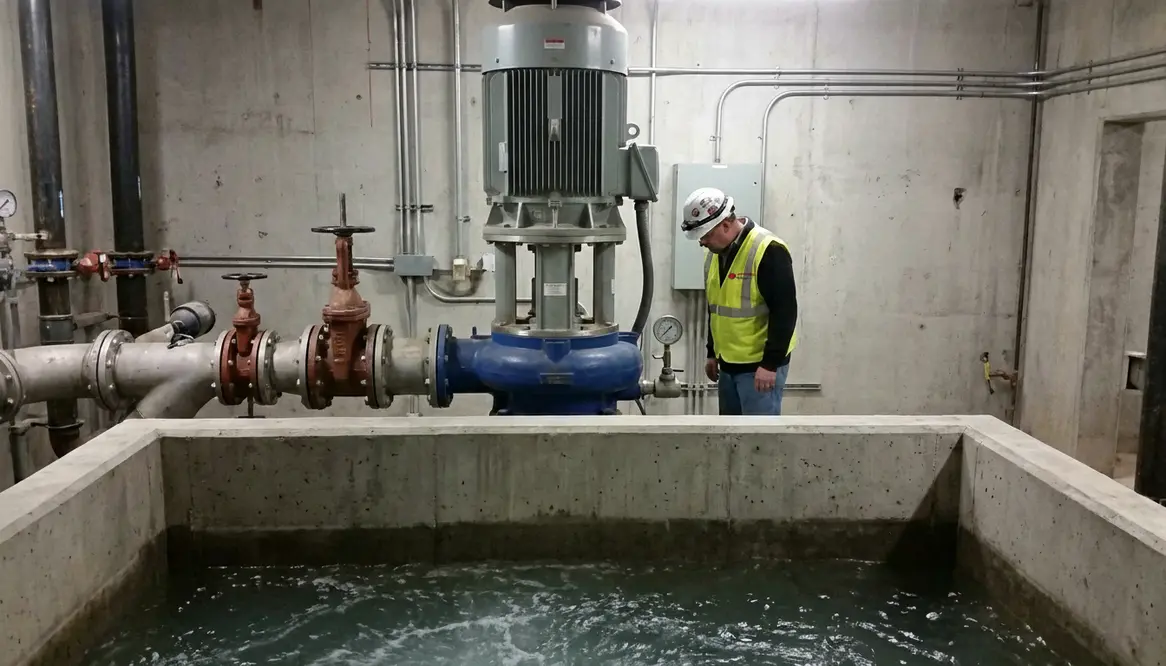
Vertical Turbine Pump Suction Requirements Guide
I have spent enough time around pumps to know one simple truth. Ignore suction conditions, and even the best equipment will act like a diva on opening night. When we talk about vertical turbine pump suction requirements, we are really talking about the foundation of performance, reliability, and long term cost control. In commercial and industrial facilities, where downtime feels like money slipping through your fingers, getting suction right is not optional. It is essential. So let me walk you through it in a way that is clear, practical, and just engaging enough to keep you awake through your next design review.
Understanding Vertical Turbine Pump Suction Requirements in Real World Systems
First, I like to ground things in reality. A vertical turbine pump does not behave like your average centrifugal pump sitting comfortably on a pad. Instead, it works with a submerged intake, often pulling water from wells, tanks, or large reservoirs. Because of this, suction conditions are less about piping and more about fluid behavior at the source.
However, that does not mean you get to relax. In fact, the margin for error shrinks. You must ensure proper submergence, stable water levels, and minimal turbulence. Otherwise, you invite cavitation, vibration, and that unmistakable sound of a system begging for mercy.
And yes, cavitation sounds exactly like a pump chewing gravel. Not exactly the soundtrack you want in a high value facility.
What Submergence Depth Do I Actually Need?
This is the question I hear most often, and for good reason. Submergence directly affects whether your pump operates smoothly or struggles like it skipped its morning coffee.
In simple terms, submergence is the vertical distance between the liquid surface and the pump intake. Too little, and air enters the system. Too much, and you may be overdesigning without benefit.
So what works? I always look at these factors:
- Pump flow rate which increases required submergence
- Intake diameter which affects velocity
- Fluid conditions including temperature and viscosity
Additionally, industry guidance suggests maintaining enough depth to prevent vortex formation. Those swirling surface funnels may look cool, but they pull air straight into your system. Think of them as tiny whirlpools of bad decisions.
Flow Conditions That Make or Break Performance
Now, let us talk flow. Because even if your depth is perfect, poor flow conditions can quietly sabotage everything.
I always aim for uniform, steady flow entering the pump. That means avoiding sharp turns, uneven tank geometry, or anything that creates turbulence. Smooth entry equals efficient operation. Turbulent entry equals problems that show up later and cost more to fix.
Comparing Stable vs Problematic Intake Conditions
Stable Intake Conditions
- Uniform velocity distribution
- Minimal surface disturbance
- Proper spacing between pumps
- Consistent water levels
Problematic Intake Conditions
- Swirling or vortex formation
- Air entrainment
- Crowded pump layouts
- Rapid level fluctuations
On the surface, this seems straightforward. However, I have seen beautifully designed systems fail because someone underestimated how water actually behaves. Water, much like people in a crowded elevator, does not always move politely.
Design Considerations for Commercial and Industrial Facilities
When I work with large buildings and industrial sites, the stakes rise quickly. Fire protection systems, cooling operations, and process water all rely on dependable pump performance.
Intake Structures and System Reliability
Therefore, I pay close attention to intake structure design. This includes basin size, pump spacing, and approach velocity. Each element plays a role in meeting vertical turbine pump suction requirements without compromise.
For facilities focused on fire protection, aligning with standards becomes critical. I often reference guidance similar to what you can find through fire pump system design best practices at https://firepumps.org, which helps ensure systems perform under real emergency conditions.
Additionally, redundancy matters. In major properties, I never assume perfect conditions. Instead, I design for variability. Because when demand spikes, the system must respond without hesitation.
Why Suction Requirements Belong in Early Design
In complex facilities, vertical turbine pump suction requirements influence everything from structural layout to electrical planning. Getting them right early saves redesigns, retrofit costs, and those late-night calls when a system refuses to cooperate.
Common Mistakes I See Again and Again
Even experienced teams slip into patterns that create long term issues. So let me call out a few mistakes I actively avoid.
- Ignoring minimum submergence guidelines which leads to air ingestion
- Overcrowding pumps which disrupts flow patterns
- Neglecting intake design assuming the pump will compensate
- Failing to account for fluctuating water levels
Moreover, one of the biggest missteps is treating suction as an afterthought. It is not. It is the opening act that determines whether the rest of the system performs like a symphony or a garage band on its first rehearsal.
FAQs About Vertical Turbine Pump Suction Requirements
These questions come up constantly whenever vertical turbine pump suction requirements are part of a project review or troubleshooting session. A clear understanding here saves both time and hardware.
Final Thoughts and Next Steps
If you take one thing from this, let it be this. Suction conditions are not a detail. They are the backbone of pump performance. When I design or evaluate systems, I treat vertical turbine pump suction requirements as a priority from day one.
If you are managing a commercial or industrial facility, now is the time to review your setup, correct weak points, and ensure long term reliability. Validate that your intake structure, submergence, and flow approach all align with the published vertical turbine pump suction requirements, not just with rough rules of thumb passed around the office.
Because when everything is on the line, your pump should not hesitate. And neither should you.