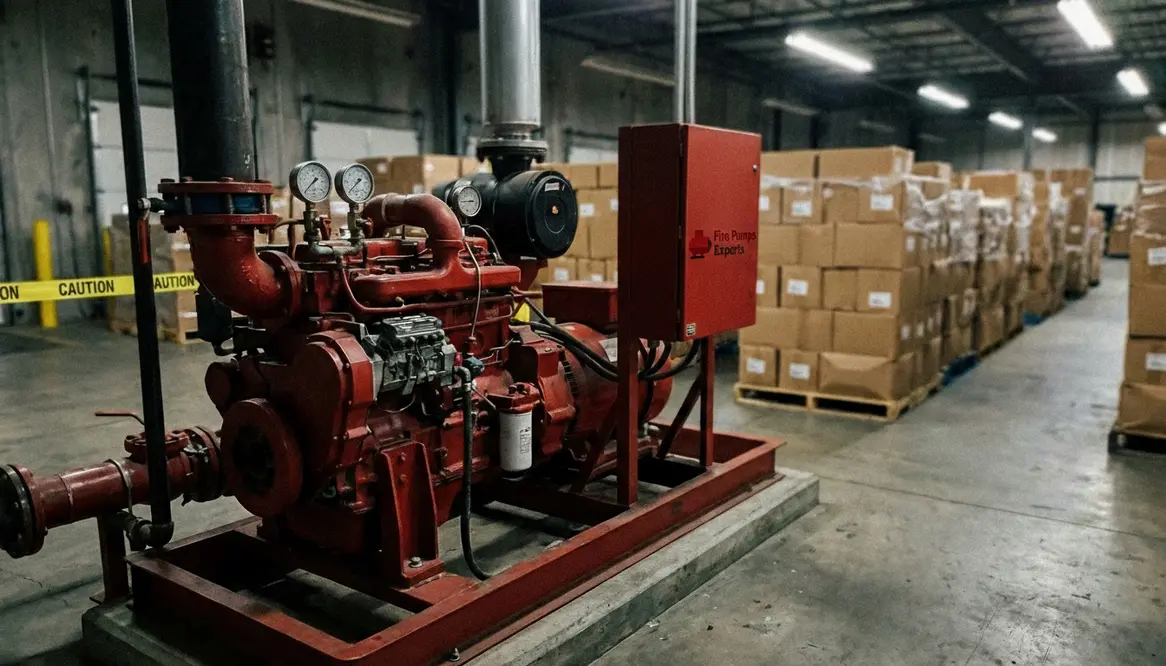
Why Distribution Centers Need Reliable Fire Pumps
Fast-moving inventory, towering racks, and nonstop schedules demand fire protection that responds as quickly as your fastest picker — and with far better accuracy.
I have walked through enough distribution centers to know one thing for certain. They are the beating heart of modern commerce. Pallets move like clockwork, forklifts hum, and timelines leave no room for error. Yet beneath all that motion sits a quieter truth about Why distribution centers often need reliable fire pumps. When inventory stacks high and operations run nonstop, fire protection cannot afford hesitation. It must respond instantly, every time. And yes, even faster than your warehouse manager chasing a delayed shipment.
There is a very specific reason Why distribution centers often need reliable fire pumps: speed, scale, and the sheer volume of combustible material under one roof. The right system is the difference between a controlled incident and a catastrophe that makes the evening news.
Why distribution centers often need reliable fire pumps
First, let me answer it plainly. These facilities hold massive amounts of goods, often tightly packed and highly combustible. Therefore, when a fire starts, it spreads fast and feeds on everything in sight.
Moreover, municipal water pressure rarely keeps up with the scale of these buildings. A fire pump steps in to deliver the pressure and flow needed to control or suppress a fire before it escalates. Without it, even the best sprinkler system becomes a garden hose trying to stop a bonfire.
Additionally, distribution centers operate around the clock. That means risk never sleeps. Because of this, fire protection systems must remain dependable under constant demand.
What type of fire pump system works best for large facilities?
I get this question often, and the answer depends on the facility layout, hazard level, and water supply. However, most large scale distribution centers lean toward electric or diesel driven fire pump systems.
Electric fire pumps
Electric pumps offer clean operation and lower maintenance when reliable power is available. They tend to start quickly, integrate well with building automation, and avoid the exhaust and fuel handling that diesel systems require.
Diesel fire pumps
On the other hand, diesel pumps provide independence from the grid, which can be critical during outages. Think of diesel as the action movie hero who keeps going when everything else fails. As long as fuel is available and maintained, the pump will not care what the utility company is doing.
Why redundancy matters
In many cases, I recommend a combination approach. For instance, pairing a primary electric pump with a diesel backup creates redundancy. As a result, the system remains operational even when one component falters. That kind of resilience is a core part of Why distribution centers often need reliable fire pumps designed with layered protection in mind.
How do I size a fire pump for a distribution center?
Start with risk, not guesswork
Let me keep this simple. Sizing a fire pump is not guesswork. It is based on hydraulic calculations tied to sprinkler design, building height, and storage type.
First, I evaluate the hazard classification. High pile storage demands greater flow and pressure than standard storage. Next, I calculate system demand at the most remote sprinkler location. Then, I account for friction loss across piping.
Consequently, the pump must meet or exceed that demand at peak conditions. Oversizing might seem safer, but it can create pressure issues and inefficiencies. In other words, bigger is not always better. Just ask any superhero sequel.
Key components that keep systems dependable
Controller
Acts as the brain of the system. It ensures automatic startup when pressure drops.
Jockey pump
Maintains system pressure during minor fluctuations. It prevents unnecessary starts of the main pump.
Relief valves
Protect the system from overpressure conditions.
Fuel supply or power source
Keeps the pump running under all conditions.
Test headers
Allow regular performance verification without disrupting operations.
Piping network
Delivers water where it is needed, without delay.
Each component plays a role. Remove one, and the system weakens. Together, they create a dependable defense line. This interconnected design is at the core of Why distribution centers often need reliable fire pumps backed by thoughtful engineering instead of bare-minimum setups.
Why distribution centers often need reliable fire pumps for compliance
More than a checkbox
Beyond safety, compliance drives many decisions. Fire codes and insurance requirements demand proven performance. Therefore, installing a properly designed fire pump system is not optional in many cases.
Authorities Having Jurisdiction expect systems to meet standards such as NFPA guidelines. Additionally, insurers often require testing records and system certifications. Because of this, regular inspection and maintenance become just as important as the initial installation.
I have seen facilities treat compliance like a checklist. That approach rarely ends well. Instead, I advise treating it as a living system that evolves with operations. After all, inventory changes, layouts shift, and risks grow over time.
When you understand Why distribution centers often need reliable fire pumps to satisfy both code and insurer expectations, you start to see the system as essential infrastructure, not a grudging expense.
Maintenance strategies that actually prevent failure
Let me be blunt. A fire pump that is not maintained is a liability, not an asset.
Testing, monitoring, and people
Weekly churn tests, annual flow tests, and routine inspections keep systems ready. Moreover, monitoring vibration, temperature, and pressure trends can reveal issues before they become failures.
Additionally, trained personnel make a difference. Automated alerts help, but human oversight ensures nothing slips through the cracks. Think of it as having both a smart assistant and a seasoned operator. One tracks data, the other understands it.
Because distribution centers rarely pause operations, maintenance must fit seamlessly into schedules. Planned downtime beats unexpected failure every single time.
FAQ
Bringing it all together
When I look at modern logistics operations, I see precision, speed, and scale. However, none of that matters if fire protection falls short. Investing in the right system is not just about meeting codes. It is about protecting people, inventory, and business continuity.
If you are evaluating fire pump systems for your facility, now is the time to act. Reach out, assess your risks, and make sure your protection works as hard as your operation does. For more technical guidance and resources, you can explore organizations such as https://firepumps.org and align your approach with recognized best practices.