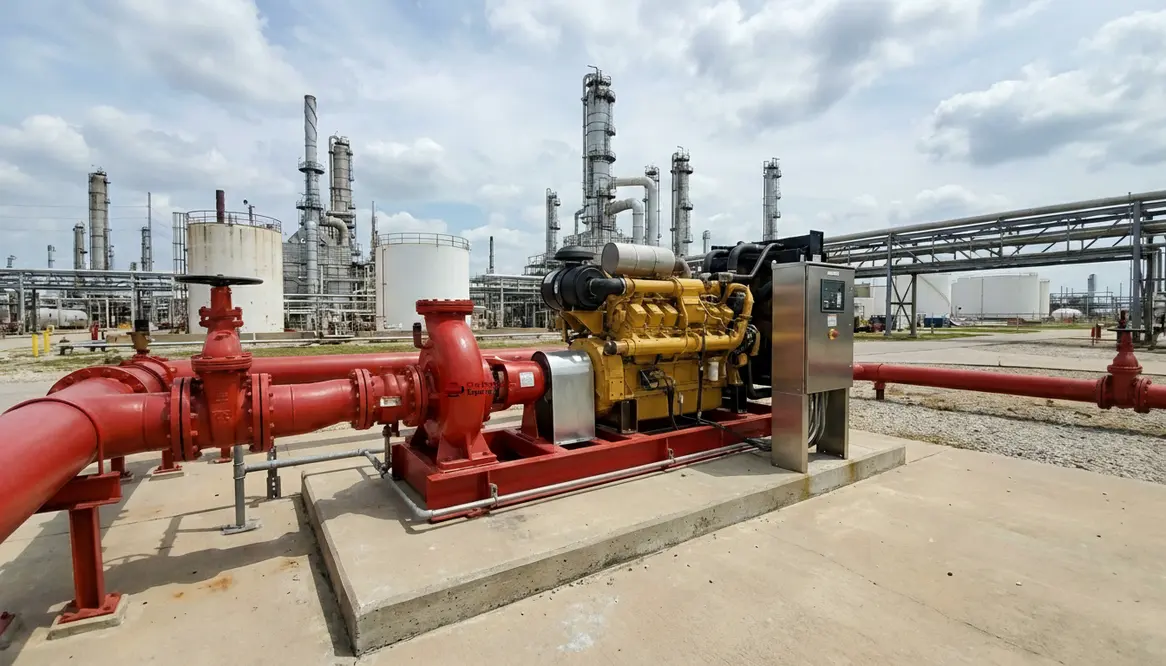
Houston Industrial Fire Pump Systems for Refineries
I have spent years around industrial safety systems, and if there is one piece of equipment that quietly carries the weight of an entire facility’s survival, it is the fire pump. In places like Houston, where refineries, chemical plants, and large manufacturing campuses stretch for acres, a fire can escalate fast. That is why houston industrial fire pump systems sit at the center of serious fire protection strategies. They are not flashy. They do not make headlines. But when a sprinkler network suddenly demands massive water pressure, these systems respond like a calm professional who has seen every disaster movie and knows exactly how it ends.
And trust me, in petrochemical environments, reliability is not just nice to have. It is the difference between a small incident and a scene that looks like it belongs in a Michael Bay movie.
The Reality of Fire Risk in Houston Petrochemical Facilities
Houston’s industrial corridor is one of the largest petrochemical zones in the world. Massive storage tanks, processing units, and pipeline networks operate around the clock. Because of this, the fire risks here behave very differently from what you would see in an office tower.
For example, petrochemical fires can grow quickly due to flammable liquids and gases. Furthermore, these facilities often spread across hundreds of thousands of square feet. As a result, water supply must travel long distances while maintaining pressure strong enough to feed monitors, hydrants, and sprinkler systems at the same time.
I often explain it like this. A sprinkler system without a proper pump is like trying to fight a dragon with a garden hose. Technically water is involved, but nobody feels confident about the outcome.
Therefore industrial fire pump systems must deliver three things simultaneously.
- High pressure water delivery that supports large suppression networks
- Instant startup during emergencies without manual delays
- Reliability under extreme conditions including power failures or mechanical stress
Because Houston facilities handle hazardous materials, fire pump performance is not just about compliance. It protects workers, assets, and entire surrounding communities.
Designing Houston Industrial Fire Pump Systems for High Risk Facilities
When I approach system design, I start with a simple truth. Industrial environments punish weak designs. Therefore every component must work as part of a coordinated defense.
Houston industrial fire pump systems in petrochemical settings often rely on several pump configurations. Each design solves a different problem.
Horizontal split case pumps
These pumps move huge volumes of water efficiently. Because of their design, maintenance teams can access internal parts quickly. That matters in plants where downtime costs serious money.
Vertical turbine pumps
Facilities near ship channels or storage basins often pull water from deep sources. Vertical turbines handle these conditions well, lifting water from underground reservoirs or tanks.
Diesel driven fire pumps
Electric power can fail during major incidents. Diesel engines step in as the dependable backup. They start fast and operate independently from the facility grid.
Electric motor fire pumps
These pumps provide clean and efficient operation for daily readiness. When paired with diesel backups, they create a balanced system that keeps protection active even during disruptions.
Additionally, designers must calculate water demand across the entire suppression network. This includes hydrant flow, foam systems, sprinkler density, and monitor towers. If the pump cannot support peak demand, the system simply will not perform when pressure spikes.
Think of it like assembling the Avengers. Every hero has a role. But if someone forgets to invite Thor, things get awkward quickly.
What Makes an Industrial Fire Pump System Reliable in a Petrochemical Plant
In my experience, reliability does not happen by accident. It comes from deliberate engineering and strict adherence to recognized standards.
First, system layout must follow NFPA guidelines for industrial fire protection. These standards define pump sizing, suction conditions, driver requirements, and controller operation. However, compliance alone does not guarantee real world performance.
Therefore I always look at operational realities inside Houston facilities.
- Redundant power sources keep pumps running during electrical failures
- Proper suction design prevents cavitation and water flow disruption
- Dedicated fire water storage ensures supply remains available even if plant systems shut down
- Protected pump rooms shield equipment from heat and structural damage
Moreover, automation plays a growing role. Modern pump controllers constantly monitor pressure levels. When a sudden drop occurs, the system activates within seconds. Operators do not need to run across the plant like an action hero.
And honestly, in a refinery emergency, fewer dramatic sprints usually mean better outcomes.
How Maintenance Keeps Industrial Fire Pumps Ready at All Times
A fire pump that fails during an emergency usually did not fail suddenly. It failed slowly during months of neglected inspections.
That is why routine testing forms the backbone of any serious fire protection program. For major facilities, these tests verify performance under real operating conditions.
Weekly and monthly checks typically include:
- Automatic start testing
- Pressure monitoring
- Fuel level checks for diesel drivers
- Controller alarm verification
However, annual flow testing is where the truth appears. During this process, technicians measure pump output across multiple pressure points. This confirms that the pump still meets its rated performance.
Facilities running houston industrial fire pump systems often schedule these tests during controlled windows. Because the systems protect high value assets, accuracy matters more than speed.
Additionally, corrosion control and mechanical inspection play major roles in long term reliability. Houston’s humid environment and industrial air can wear down equipment faster than many people expect. Therefore preventive service protects both performance and lifespan.
For facility teams that want a deeper look at inspection best practices, resources like routine fire pump inspection guides from experienced service providers such as Kord Fire’s fire pump services can reinforce internal maintenance programs.
Can Modern Technology Improve Industrial Fire Pump Protection
Short answer. Yes, and the improvements are impressive.
Modern monitoring tools now allow facilities to track system health continuously. Sensors measure pressure, vibration, temperature, and motor status. Because of this data, maintenance teams can identify small problems before they grow into expensive failures.
Furthermore, remote dashboards allow engineers to review system conditions from centralized control rooms. If pressure drops or alarms trigger, alerts appear instantly.
This level of visibility adds confidence to facilities that operate nonstop. When a refinery processes thousands of barrels per hour, nobody wants to wonder whether the fire protection system is ready.
Another emerging trend involves integration with plant wide safety systems. Pumps can communicate with detection networks, foam systems, and emergency shutdown controls. As a result, the entire response becomes faster and more coordinated.
It is not science fiction. Although if Tony Stark wanted to upgrade the controller interface, I would not complain.
Maintaining Houston Industrial Fire Pump Systems That Never Blink
Industrial fire protection is not about installing equipment and walking away. It is about building systems that stay ready every minute of every day.
Houston industrial fire pump systems operate in some of the most demanding industrial environments in North America. Because of this, success depends on careful engineering, proper installation, and disciplined testing.
When these elements work together, something remarkable happens. A massive facility filled with flammable materials suddenly gains a powerful safety net. The pumps wait quietly in the background, calm and patient, until pressure drops and the system calls their name.
And when that moment arrives, they deliver water with the confidence of someone who has practiced the job a thousand times.
For refinery and chemical plant operators, investing in robust houston industrial fire pump systems is ultimately an investment in stability, continuity, and community safety.
FAQ
Protecting Your Facility Starts With the Right System
When I evaluate fire protection in large industrial environments, one truth always stands out. A well designed pump system turns a sprinkler network into a powerful defense. If your facility relies on complex processes or valuable infrastructure, the right engineering matters. Our team specializes in commercial and industrial protection strategies built for demanding environments. Let us help you design, upgrade, or maintain a system that keeps your operation protected and prepared.