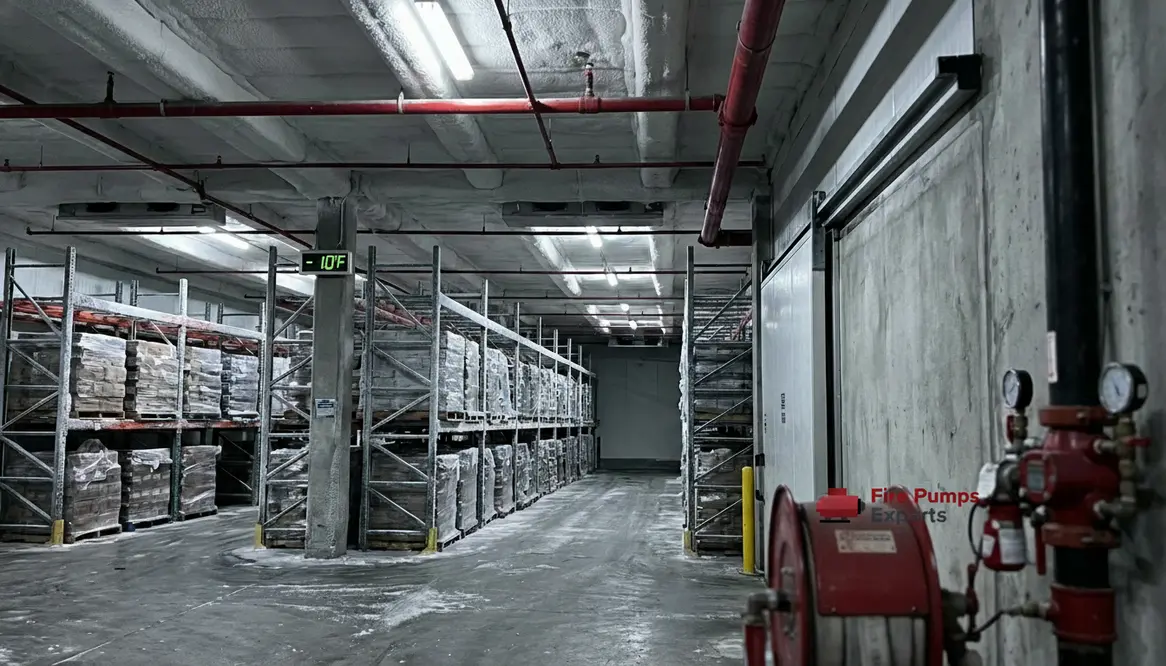
Cold Storage Fire Protection Water System Commerce CA
Why Cold Storage Facilities in Commerce Need Their Own Fire Water Systems
Cold storage buildings are a different animal. The moment those massive insulated doors close behind you, the air shifts, the sound softens, and everything feels engineered for one purpose: keep things cold and keep them cold for a very long time. However, while temperature control gets the spotlight, fire protection quietly carries the heavier responsibility.
That is where a cold storage fire protection water system commerce ca becomes critical. In large commercial warehouses, food distribution hubs, and refrigerated logistics centers, a normal water supply arrangement simply does not cut it. Ice, insulation, high stacked commodities, and specialized building layouts create unique fire risks. Consequently, these facilities require a dedicated and carefully engineered fire water system that works when everything else freezes, literally.
The Collision of Fire and Freezing Temperatures
Fire and freezing temperatures sound like the start of a strange superhero movie. Yet in the real world of industrial facilities, those two forces collide more often than people think. Inside a cold storage facility, everything about the building is optimized for temperature, not for fighting fast-moving fires. That is why fire protection must be intentional, not an afterthought.
In Commerce, CA and similar industrial hubs, operators juggle perishable goods, tight shipping windows, and strict regulatory expectations. When you add freezing air, tall rack storage, and complex refrigeration equipment, your fire protection strategy has to be just as sophisticated as your cold chain logistics.
Cold Storage Fire Protection Water System Commerce CA Explained for Large Facilities
When I talk about a dedicated fire protection water system for cold storage, I mean a system built specifically for refrigerated industrial environments. Not modified. Not improvised. Designed from the ground up.
First, let us consider the environment. Cold storage warehouses often operate well below freezing. Some rooms run at temperatures that could make a penguin reconsider its life choices. Standard fire protection piping exposed to those conditions can freeze solid. Once water freezes, the system fails before the fire even starts.
Therefore, engineers design these systems with specialized approaches such as dry pipe sprinkler systems, preaction systems, heated valve rooms, and insulated water delivery lines. Additionally, dedicated fire pumps ensure water pressure stays consistent even during peak demand.
Large commercial cold storage buildings also store high value inventory. Food products, pharmaceuticals, and temperature sensitive materials often stack 40 feet high or more. Consequently, a fire can spread rapidly through packaging materials and pallet loads.
Three Essential Protections Your System Must Deliver
A properly designed cold storage fire protection water system commerce ca delivers three essential protections that go far beyond basic code compliance.
- Reliable water pressure across massive floor areas
- Freeze resistant system design from riser rooms to remote branch lines
- Rapid suppression for high piled storage fires before they escalate
Without those elements, a facility may technically meet minimum code requirements while still facing significant operational risk. And in the world of commercial distribution, downtime is not just inconvenient. It is expensive enough to make accountants visibly nervous.
Why Standard Fire Water Systems Struggle Inside Refrigerated Warehouses
At first glance, many facility managers assume a typical fire sprinkler system will perform just fine in a cold warehouse. After all, water is water, pipes are pipes, and gravity still works. However, cold storage environments quickly expose the limits of traditional systems.
First, freezing temperatures create constant pressure on piping infrastructure. Even small temperature variations inside insulated structures can lead to condensation, frost buildup, and eventually ice blockage. Consequently, water filled sprinkler lines become unreliable in areas that drop below freezing.
Second, cold storage buildings often include thick insulated panels and sealed vapor barriers. While these materials keep temperatures stable, they also trap heat and smoke differently during a fire event. Fire behavior changes, and suppression must respond faster.
Third, large distribution centers frequently rely on towering rack storage systems. Flames can move vertically through these rack structures like a ladder made of cardboard and plastic. Therefore, water delivery must reach high elevations quickly and with enough pressure to penetrate dense storage configurations.
This is where dedicated fire pumps and purpose built water supply infrastructure come into play. A specialized cold storage fire protection water system commerce ca ensures water reaches every corner of the building with the force required to stop a fire before it grows into a six o’clock news headline.
Key Engineering Challenges in Commercial Cold Storage Fire Protection
I often explain cold storage fire protection like building a safety system inside a giant freezer that never sleeps. The engineering team must plan for environmental extremes while still delivering dependable fire suppression.
Several technical challenges shape system design, from the way ice forms around equipment to the way forklifts interact with piping at all hours of the night.
Environmental Challenges
- Subzero temperatures affecting water supply lines from mains to branch piping
- Ice buildup around sprinkler heads and valves
- Condensation inside insulated ceiling cavities leading to hidden ice
- Limited mechanical space within refrigerated structures for pump and riser rooms
Operational Demands
- High rack storage heights that push sprinkler performance to its limits
- Large floor plate distribution centers with long pipe runs
- Continuous operations with minimal downtime for maintenance
- Protection of high value inventory that cannot simply be replaced tomorrow
Because of these conditions, engineers often integrate fire pumps with heated enclosures, insulated riser rooms, and dedicated water storage tanks. Moreover, designers carefully balance system pressure to support long pipe runs that stretch across football field sized warehouses.
Meanwhile, facility owners expect the system to remain invisible during daily operations. Nobody wants forklifts dodging complicated pipe layouts while moving pallets at three in the morning.
So yes, the system must perform flawlessly without getting in the way. Think of it like the stage crew in a Broadway show. If you notice them during the performance, something probably went wrong.
How Dedicated Fire Pumps Protect High Value Cold Chain Operations
Cold chain logistics facilities represent a massive investment. Food distribution centers, pharmaceutical storage warehouses, and temperature controlled supply hubs often hold millions of dollars in inventory at any given moment.
Therefore, water supply reliability becomes a cornerstone of fire protection strategy. A dedicated fire pump plays a central role. It guarantees consistent water pressure across the entire building, even if municipal supply fluctuates. Additionally, it supports the higher flow rates required for modern high density storage protection.
In large refrigerated warehouses, water must travel long distances through complex piping networks. Consequently, without pump support, sprinkler discharge may fall below the levels needed to suppress a rapidly growing fire.
A properly engineered cold storage fire protection water system in a city like Commerce, CA integrates fire pumps, backup power sources, and supervisory monitoring. Together, these components create a dependable response system ready to activate within seconds.
And let us be honest. In facilities storing perishable goods, speed matters. A fire that damages refrigeration equipment can trigger a cascade of problems. Inventory loss, operational shutdowns, and regulatory complications can pile up faster than pallets in peak shipping season.
Which is why industrial property owners increasingly prioritize robust fire water infrastructure. It protects not just the building, but the entire logistics ecosystem connected to it. Partnering with specialists who understand fire pump design and maintenance, such as the team at Kord Fire’s fire pump services, helps ensure those pumps perform when the alarm sounds.
What Should a Cold Storage Fire Protection Water System Include?
When commercial property developers plan new refrigerated distribution centers, I always recommend focusing on several core components. Together, they form the backbone of a dependable system that does more than check boxes on a plan review.
- Dedicated fire pumps sized for large warehouse demand
- Freeze protected sprinkler configurations such as dry pipe or preaction systems
- Heated valve and riser rooms to shield sensitive equipment from subzero air
- Backup power for pump reliability during utility interruptions
- Monitoring systems connected to building management infrastructure and fire alarm panels
Each component supports the others. Remove one, and the entire protection strategy weakens. Consequently, integrated design becomes essential, especially when your operation depends on uninterrupted cold chain performance.
A complete cold storage fire protection water system commerce ca does not rely on improvisation. It relies on planning, testing, and specialized equipment designed for extreme environments.
In other words, this is not the place for guesswork. Or duct tape. Definitely not duct tape.
Operational Benefits of a Purpose Built System in Commerce, CA
When you step back and look at the big picture, a well engineered cold storage fire protection water system commerce ca does more than protect against worst case scenarios. It supports everyday operations.
- It allows higher storage densities with confidence that fire protection keeps pace.
- It reduces unplanned outages from frozen piping and emergency repairs.
- It helps maintain code compliance and insurance requirements without constant firefighting of paperwork.
- It reassures customers and regulators that your cold chain is protected end to end.
In a commerce hub where schedules are tight and margins are thin, that reliability becomes a competitive advantage, not just a line item on the construction budget.
FAQ About Cold Storage Fire Protection Systems
Facility teams tend to ask the same practical questions when they first confront the realities of fire protection inside a freezer. Here are some of the most common concerns and straightforward answers.
Conclusion
Cold storage facilities operate in one of the most demanding environments in commercial construction. Freezing temperatures, high stacked inventory, and nonstop logistics activity create fire risks that standard systems simply cannot manage. A purpose built cold storage fire protection water system commerce ca ensures reliable suppression when seconds matter most.
If you operate or develop a large refrigerated facility, investing in specialized fire pump infrastructure is not optional. It is the quiet guardian protecting your entire operation, from the frozen aisles and pallet racks to the loading docks and boardroom. Getting that system right today is what keeps your product, your people, and your reputation safe tomorrow.