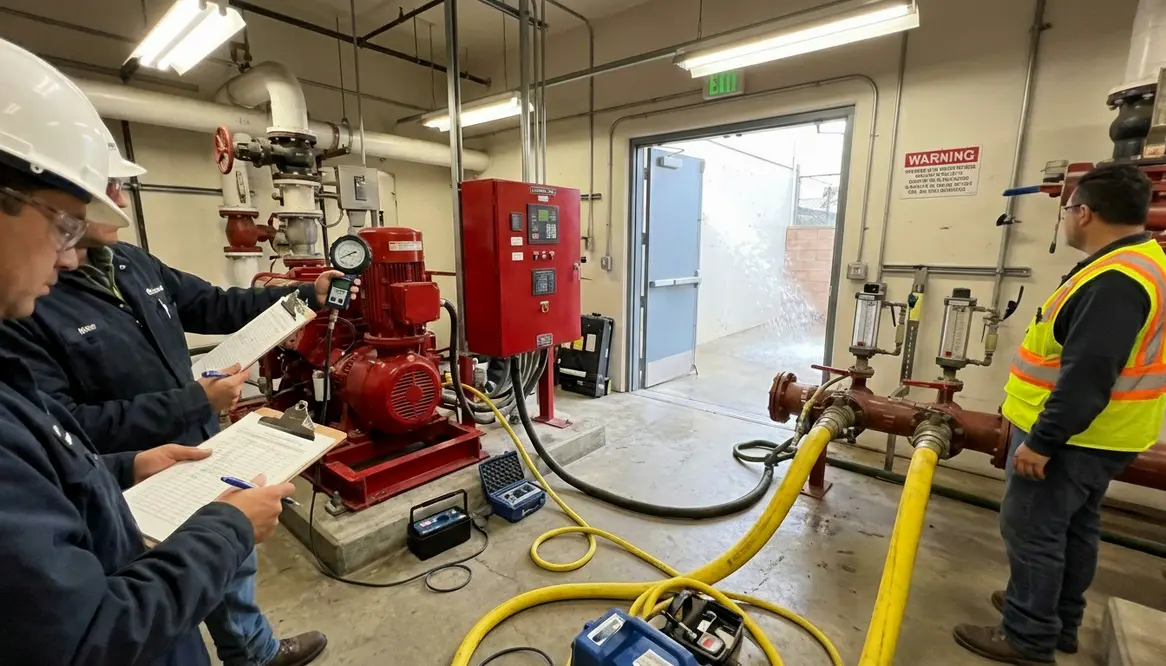
Fire Pump Acceptance Test Checklist Los Angeles
Get your fire pump ready for inspection day in Los Angeles with a field-proven, practical checklist that keeps nerves low, pressure high, and retests off the calendar.
Fire Pump Acceptance Test in Los Angeles: A Field Checklist for Passing on the First Try
I have walked through enough mechanical rooms in Los Angeles to know one universal truth. When the fire pump acceptance test day arrives, the room fills with a strange mix of nerves, clipboards, and quiet prayers to the engineering gods. The pump sits there like a silent bodyguard waiting to prove it can actually do its job.
That is exactly why I rely on a fire pump acceptance test field checklist los angeles professionals trust. In a city packed with high rise offices, distribution hubs, hospitals, and massive commercial campuses, passing this test the first time matters. Inspectors expect precision. Owners expect protection. And frankly, nobody enjoys scheduling a retest.
So today I am walking through the exact field approach I use. Think of it as a calm voice beside you in the pump room, helping you prepare before the inspector even opens the door.
Quick Objective
Use this practical field checklist to:
- Prepare the pump room before the inspector arrives
- Verify documentation, mechanical, electrical, and water supply items
- Run a smooth, data-driven flow test with no drama
- Turn your fire pump acceptance test field checklist los angeles teams use into a repeatable, reliable standard
Why Acceptance Testing Matters for Large Los Angeles Facilities
First, let me set the stage. Fire pumps are not decorative equipment. They are the beating heart of a commercial fire protection system. When sprinklers call for water, the pump must respond instantly and deliver pressure without hesitation.
In Los Angeles, acceptance testing confirms that a newly installed or modified pump system performs exactly as designed. The Authority Having Jurisdiction and the fire department rely on these results before approving occupancy for major commercial and industrial buildings.
However, this is not just about paperwork. A proper test proves three critical things.
- The pump reaches rated flow and pressure
- The controller responds correctly to system demand
- The entire water supply network works together under real conditions
Because of that, inspectors take the process seriously. And honestly, they should. If a warehouse the size of a football stadium catches fire, that pump becomes the first line of defense.
Therefore preparation is everything. A structured field checklist prevents surprises, delays, and the awkward moment when twenty people stare at a pump that refuses to start.
Fire Pump Acceptance Test Field Checklist Los Angeles Inspectors Expect to See
Whenever I prepare for an inspection, I follow a practical sequence. The goal is simple. By the time the inspector arrives, the system should already behave like a well rehearsed orchestra.
Here are the essential checkpoints I verify.
Documentation and Drawings
- Approved plans and hydraulic calculations on site
- Pump curve documentation
- Controller wiring diagrams
- Manufacturer installation instructions
Inspectors often start here. If documentation is missing, the whole test slows down before anyone even touches the pump.
Mechanical Installation
- Pump anchored and aligned properly
- Couplings installed and guarded
- Suction piping sized correctly with eccentric reducer
- No unnecessary valves between water source and pump
Even small mechanical mistakes can create performance issues during flow testing.
Electrical and Controller Checks
- Controller labeled and energized
- Phase rotation verified
- Pressure sensing lines connected properly
- Emergency power connected if required
One time I watched a perfectly installed pump fail a test because the phase rotation was backwards. The motor tried to run like it was moonwalking. Funny for five seconds. Not funny when the inspector is waiting.
Water Supply Verification
- Water storage tank level confirmed
- City supply valves fully open
- Backflow preventer inspected
- Suction pressure measured
Without adequate water supply, even the best pump behaves like a sports car with no fuel.
All of these checkpoints form the backbone of a reliable fire pump acceptance test checklist for Los Angeles commercial buildings.
How I Prepare the Pump Room Before the Inspector Arrives
Now here is the part many teams overlook. The pump room itself must be inspection ready.
First, I make sure the space is clean and accessible. That means no stacked boxes, no construction debris, and definitely no mystery tools lying around. Inspectors should be able to move safely around the pump.
Next, I confirm that gauges are installed and calibrated. During testing, pressure readings at suction and discharge points tell the whole story. If gauges are missing or inaccurate, the test becomes guesswork.
Then I verify the circulation relief valve and test header piping. These components allow the system to flow water safely during testing without damaging the pump.
Finally, I stage the test equipment. That includes hoses, calibrated pitot gauges, flow meters if used, and communication between team members. In larger commercial facilities, multiple technicians may coordinate the test.
Preparation might feel slow in the moment. However, it saves hours later. As my old mentor used to say, slow preparation creates fast inspections.
What Happens During the Actual Flow Test
This is where the real show begins.
The acceptance test measures pump performance at several points along its curve. Typically we verify churn, rated flow, and 150 percent flow conditions.
Here is the simplified sequence I follow.
Operational Steps
- Record static water pressure
- Start pump automatically through pressure drop
- Verify controller response
- Stabilize churn condition
- Gradually open test header valves
Data Collected
- Suction pressure
- Discharge pressure
- Total flow rate
- Motor amperage
- Vibration or unusual noise
As flow increases, the pump should follow its manufacturer curve. If pressure drops too quickly or flow falls short, something in the system needs attention.
Still, when everything runs smoothly, it is a beautiful thing to watch. Water roars through the header. Gauges stabilize. The inspector nods. And for a moment, everyone in the room breathes easier.
What Are the Most Common Reasons Fire Pumps Fail Acceptance Tests?
Even experienced contractors run into problems. Over the years, I have seen a few repeat offenders.
- Improper suction piping that causes cavitation
- Closed or partially closed isolation valves
- Controller wiring errors
- Insufficient water supply from tanks or mains
- Air trapped in sensing lines
However, the most common issue is simple preparation failure. Someone assumed a component was ready when it was not.
This is precisely why I always bring a structured Los Angeles fire pump field inspection checklist. It keeps everyone honest and focused.
Think of it like a pilot’s preflight checklist. No matter how many times you have flown, you still check the instruments before takeoff.
Working with Inspectors and Authorities in Los Angeles
Los Angeles inspectors know their systems well. They see hundreds of installations across hospitals, airports, office towers, logistics centers, and manufacturing campuses.
Because of that experience, they quickly notice shortcuts.
Therefore I treat the inspection as a collaboration rather than a showdown. When the documentation is ready and the system performs correctly, the process moves quickly.
Additionally, clear communication helps. I walk the inspector through the pump configuration, water supply source, and test plan before starting the pump.
This small step builds confidence. It also signals that the team has done its homework using a reliable fire pump acceptance test field checklist los angeles professionals respect.
And when the test finishes successfully, everyone walks away satisfied. The building gains approval. The owner gains protection. And the pump room returns to its quiet watch.
FAQ: Fire Pump Acceptance Testing in Los Angeles
For a deeper technical overview of code requirements behind many of these tests, you can review NFPA 20 guidance on fire pump design and performance at Kord Fire’s NFPA 20 fire pump systems resource.
Below are quick answers to questions owners, engineers, and facility teams often ask when building out their own fire pump acceptance test field checklist los angeles projects depend on.
Conclusion
Passing a fire pump acceptance test should never feel like rolling dice in Las Vegas. With preparation, discipline, and the right field strategy, commercial and industrial facilities can pass the first time. If your property team is preparing for inspection, start with a proven fire pump acceptance test field checklist los angeles specialists rely on. The right preparation today protects your building tomorrow and makes the inspector’s visit feel less like an interrogation and more like a victory lap.