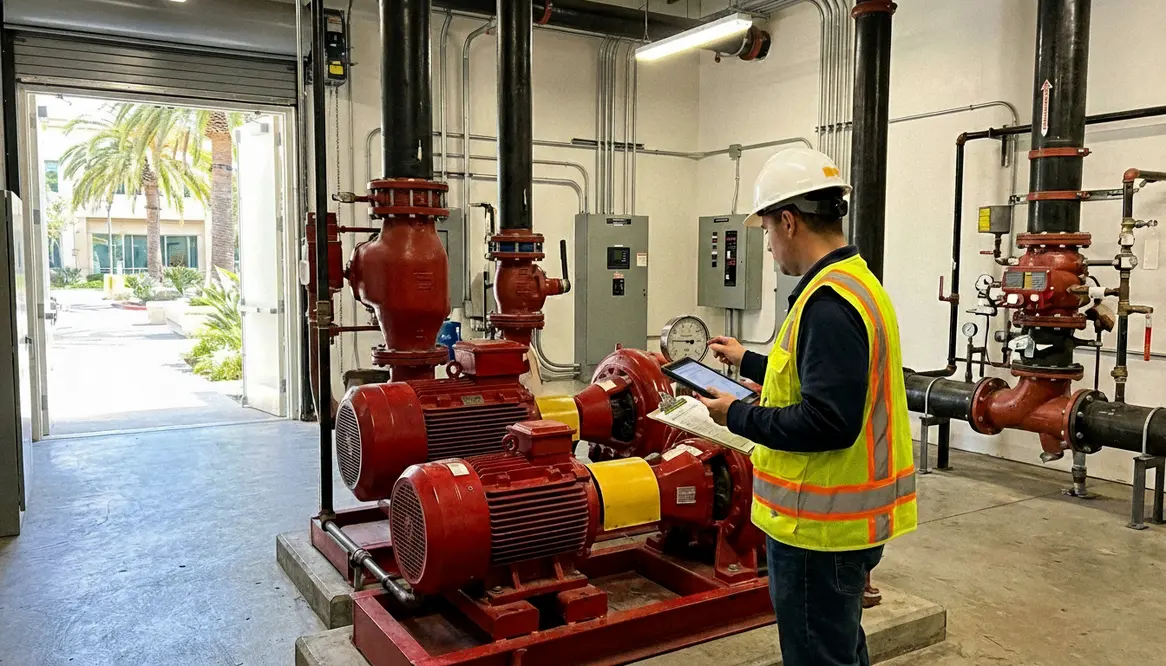
Fire Pump Inspection and Testing Requirements San Jose
How San Jose facilities can keep their fire pumps compliant, documented, and ready for the moment that matters.
In a city like San Jose, where innovation rises beside glass towers and massive tech campuses hum day and night, fire protection cannot be left to chance. I have spent years walking mechanical rooms, reviewing pump controllers, and flipping through inspection logs thicker than a Hollywood script. And one truth always stands out. A strong system means nothing without a clean record behind it.
That is why understanding fire pump inspection and testing requirements san jose matters so much for commercial and industrial properties. Local authorities expect proof that your fire pump performs when the moment calls. Not guesses. Not memories. Documented evidence.
So today I am pulling back the curtain on how I build a clean ITM record for major facilities. Because when inspectors arrive, you want your documentation to read like a well rehearsed symphony, not like a garage band warming up for the first time.
Why Clean ITM Records Matter for Large San Jose Facilities
First, let me set the stage. A fire pump is the heart of a building’s fire protection system. Sprinklers depend on it. Standpipes rely on it. When pressure drops during a fire event, the pump steps in like the hero in the third act of an action movie.
However, even the best equipment needs consistent oversight. Therefore inspection, testing, and maintenance records become the proof that everything works exactly as designed.
In San Jose, the Authority Having Jurisdiction expects detailed documentation aligned with national standards like NFPA 25, along with local fire code enforcement. For large commercial properties and industrial campuses, that expectation becomes even stricter.
I have seen two buildings with identical pump systems receive very different inspection outcomes. The difference was not hardware. It was paperwork.
How Clean ITM Records Protect Your Facility
A clean ITM record helps facility managers:
- Demonstrate regulatory compliance during inspections
- Track system performance over time
- Identify mechanical issues early
- Protect occupants and assets
- Reduce liability during incidents
And frankly, it also saves you from that awkward moment when a fire inspector asks for last year’s test results and everyone suddenly studies the ceiling like they are searching for divine guidance.
Understanding Fire Pump Inspection and Testing Requirements San Jose
When I walk a new client through fire pump inspection and testing requirements san jose, I start with a simple idea. Consistency beats complexity.
Most large facilities follow a layered schedule of checks. Each one plays a role in confirming system readiness.
Weekly visual inspections
I begin with basic observations. Operators verify pump room conditions, controller status, and suction pressure. These checks confirm the system sits ready to respond.
Weekly churn test
Next comes the weekly run test. The pump runs without flowing water to confirm the motor starts and operates properly. Think of it as stretching before a workout.
Monthly component checks
Monthly inspections go deeper. Technicians review valves, batteries, controller indicators, and fuel systems for diesel pumps.
Annual flow testing
This is the big moment. During an annual test, the pump must demonstrate full performance at rated capacity. Flow readings, pressure measurements, and controller responses all get documented.
In large San Jose buildings such as data centers, manufacturing facilities, and high rise campuses, this testing requires careful planning. Flow testing can involve thousands of gallons of water per minute. That is enough to make even seasoned engineers double check every hose connection.
Therefore proper preparation matters just as much as the test itself.
How I Build a Clean ITM Record From Day One
A clean ITM record does not happen by accident. It happens because someone designs a process that removes confusion.
Over time, I have developed a method that works particularly well for complex commercial properties.
Step one: standardize inspection forms
First, I make sure every inspection follows the same format. Each form captures identical data points. Pressure readings, pump run times, controller status, valve positions, and technician notes.
Consistency means the record tells a story over time.
Step two: document immediately
Next, I record results during the inspection itself. Waiting until later invites mistakes. Memory fades fast, especially when a technician handles multiple buildings in a single day.
Step three: include corrective actions
Every anomaly must trigger a follow up record. If a gauge reads incorrectly or a battery fails a test, the documentation shows both the issue and the resolution.
Step four: maintain digital archives
Finally, I keep digital copies organized by year and system. When inspectors ask for documentation, the records appear instantly.
After all, nothing impresses an inspector more than organized documentation. Well, maybe donuts. But documentation comes close.
What a Clean ITM Record Looks Like vs a Messy One
| Clean ITM Record | Messy ITM Record |
| Consistent inspection forms | Different forms used each month |
| Clear pressure and flow data | Missing readings or blank fields |
| Corrective actions documented | Problems noted but never resolved |
| Digital records organized by year | Paper logs scattered across offices |
| Easy to review during inspections | Requires detective work worthy of Batman |
Notice the pattern. A clean record removes friction. Anyone reviewing it can quickly understand the system’s history.
Meanwhile messy documentation creates doubt. And doubt makes inspectors look closer.
What Do Inspectors Actually Look For During a Pump Record Review?
I get this question often from facility engineers.
The truth is simple. Inspectors look for patterns that confirm reliability.
- First, they check that required inspections occur at the correct intervals. Missing weeks or months immediately raise red flags.
- Next, they review performance trends. Pressure readings should stay within expected ranges. Large fluctuations suggest mechanical issues.
- They also examine corrective actions. If a controller alarm appears repeatedly without repair documentation, inspectors assume the issue remains unresolved.
- Finally, they verify annual flow test results. For major commercial facilities in San Jose, this test serves as the ultimate proof that the system performs under real demand.
In other words, inspectors read ITM records like doctors reading medical charts. They want to see a healthy history.
Common ITM Mistakes I See in Large Buildings
Even experienced teams make mistakes. However, most problems follow predictable patterns.
Incomplete test documentation
Sometimes technicians perform the test but record only partial data. Without full readings, the test loses value.
Uncalibrated gauges
Pressure gauges drift over time. If calibration dates are missing, inspectors question every recorded reading.
Poor record organization
Facilities often store pump records across multiple systems or departments. During inspections, gathering those records becomes a scavenger hunt.
Delayed maintenance follow up
If a weekly run reveals a vibration issue but repairs take months, documentation must explain the delay.
Fortunately, these problems disappear once a structured ITM process takes hold.
San Jose Fire Pump Records and Real-World Testing
Across Silicon Valley, large campuses rely on fire pumps that must be ready for data centers, labs, and high occupancy spaces. The backbone of that readiness is disciplined testing and documentation that tracks against local interpretations of NFPA 20 and NFPA 25, along with all applicable fire pump inspection and testing requirements san jose teams must follow.
Many owners in California partner with specialists for annual flow testing, churn tests, gauge calibration, and suction piping evaluations. For example, regional providers like fire pump suction piping experts help ensure the pump has the water it needs before performance testing even begins. The same disciplined mindset should guide how San Jose facilities handle records, corrections, and follow up work.
FAQ About Fire Pump Records in San Jose
Before looking at a final checklist for keeping your documentation inspection ready, it helps to clear up some of the most common questions about fire pump inspection and testing requirements san jose facility teams ask.
Keeping Your Pump Records Inspection Ready
Managing fire pump systems across large facilities requires more than basic maintenance. It demands discipline, documentation, and a clear understanding of fire pump inspection and testing requirements san jose. When records stay organized and testing stays consistent, inspections become smooth and predictable instead of stressful and chaotic.
Start by standardizing your forms, logging results in real time, and closing the loop on every deficiency with documented corrective actions. Build digital archives that anyone on your team can access quickly. Treat weekly churn tests, monthly checks, and annual flow tests as nonnegotiable appointments with your building’s life safety system, not as tasks to squeeze in when things get quiet.
If your commercial or industrial facility wants reliable testing, accurate documentation, and expert oversight, connect with a specialized fire pump provider. Teams like those at FirePumps.org help major properties keep systems compliant, dependable, and always ready when it matters most, transforming what used to be a stack of dusty binders into a clear, confident record of protection.