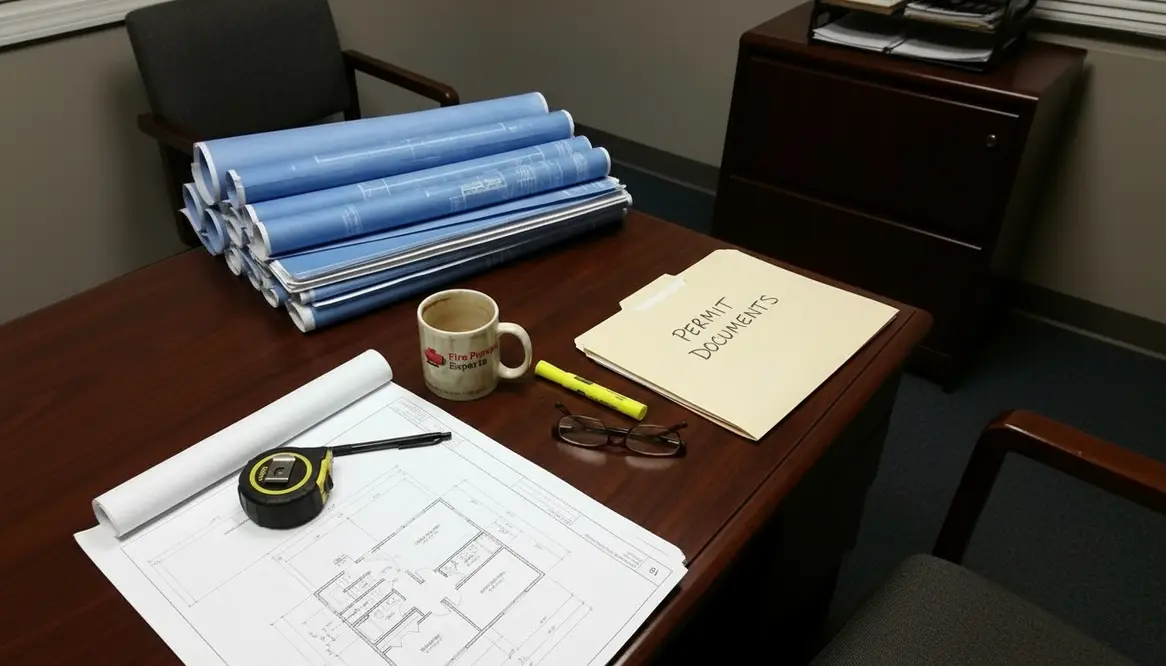
Charlotte Fire Pump Permit Process Review Timeline
I have spent many years around mechanical rooms, fire protection drawings, and more than a few cups of strong coffee while reviewing permits. If you work with large commercial or industrial buildings in Charlotte, you already know that fire pumps are not just pieces of equipment. They are the heartbeat of a building’s fire protection system. And before that heartbeat ever starts, the fire pump permit process Charlotte submittal checklist review timeline becomes the roadmap everyone must follow.
Now, I will be honest. Permit paperwork rarely inspires standing ovations. However, when you understand how the system works, the whole journey becomes smoother, faster, and far less frustrating. So let me walk you through the path the way I have seen it unfold across countless commercial properties, high rise facilities, and industrial campuses throughout Charlotte.
Why This Permit Timeline Matters
For many owners, the fire pump is out of sight and out of mind until a project or renovation suddenly puts it on the critical path. That is when deadlines, inspections, and construction schedules all start depending on one thing: how well you handle the fire pump permit process Charlotte submittal checklist review timeline from day one.
Whether you are upgrading a tired mechanical room or building a new tower from the ground up, understanding what reviewers expect saves time, money, and quite a few late-night emails.
Understanding the Fire Pump Permit Process Charlotte Submittal Checklist Review Timeline
When I talk with facility engineers or project managers, the first question usually sounds something like this: how long will this take? That question sits at the center of the fire pump permit process Charlotte submittal checklist review timeline.
In Charlotte, the permitting authority reviews fire pump systems as part of the broader fire protection design review. However, because fire pumps serve critical life safety roles, reviewers take a close look at every component. That includes the pump, controller, water supply, and the room that houses the system.
First, the engineering team submits design documents. These typically include hydraulic calculations, equipment specifications, and layout drawings. After that, the Charlotte Fire Department and Mecklenburg County code officials evaluate the package to confirm that the design meets NFPA standards and local requirements.
Consequently, the timeline depends heavily on the quality of the submission. When drawings arrive clean, coordinated, and complete, the review tends to move much faster. When key details are missing, reviewers send comments back for correction. And let me tell you, that back and forth can stretch the process longer than a director’s cut of a superhero movie.
Fortunately, most delays are avoidable when teams understand the expectations before submitting.
What Documents Should I Include in a Charlotte Fire Pump Permit Submittal?
I like to think of the permit package as a story. The reviewer needs to see the entire plot from start to finish. If a chapter goes missing, the story does not make sense.
Therefore, every submittal for a commercial or industrial fire pump installation should clearly show how the system supports the building’s fire protection demands.
Most strong permit packages include:
Detailed fire protection plans showing pump location, piping layout, and system connections
Hydraulic calculations proving the system meets required flow and pressure demands
Fire pump manufacturer specifications for the pump, controller, and associated equipment
Electrical drawings showing power supply, disconnects, and controller connections
Fire pump room layout including access clearances, drainage, and ventilation
Water supply information such as city main data or tank specifications
Seismic or anchoring details when applicable for large commercial structures
In addition, engineers must show how the pump integrates with the overall sprinkler or standpipe system. Reviewers want to see the whole orchestra working together, not just the drummer banging away in the corner.
When every document lines up clearly, the review team can move confidently through the package.
Pro Tip: Make the Story Obvious
If a reviewer has to flip back and forth between sheets to understand how the fire pump feeds the standpipe or sprinkler zones, the comments will grow quickly. A clear narrative throughout the permit set is one of the quiet heroes of any fire pump permit process Charlotte submittal checklist review timeline.
Connect the Dots for the Reviewer
A short design summary on the cover sheet or fire protection legend can help reviewers see how the pump, water supply, and distribution network all tie together. The more you connect those dots up front, the fewer questions show up later.
How Long Does the Charlotte Fire Pump Permit Review Usually Take?
Permit timelines always feel like waiting for the next season of your favorite show. You know it is coming. You just wish it would arrive faster.
In Charlotte, the first review cycle for a commercial fire protection permit often falls between two and four weeks. However, that estimate depends on workload at the permitting office and the complexity of the building.
Large industrial campuses or high rise towers often involve more coordination. For example, the fire department may review pump sizing alongside standpipe demands, emergency power systems, and water supply infrastructure. Because of this, reviewers take the time to verify that everything works together.
After the first review, the authority having jurisdiction usually returns comments if revisions are needed. The design team then updates drawings and resubmits them for approval. Each additional cycle adds time.
However, I have seen projects cut weeks off their schedule simply by submitting a well organized package the first time. That small effort up front saves everyone headaches later.
Key Coordination Steps That Prevent Permit Delays
When I review a fire pump project, I often see the same problem pop up again and again. The pump design may look solid, yet it does not align with the rest of the building systems.
Therefore, coordination becomes the secret weapon that keeps a project moving forward.
Let me show you a simple comparison.
Common Causes of Permit Delays
Hydraulic calculations that do not match pump specifications
Missing electrical one line diagrams
Incomplete fire pump room dimensions
Water supply data that lacks test documentation
Drawings that conflict with sprinkler layouts
Practices That Speed Up Approval
Coordinating fire pump sizing with final sprinkler demands
Submitting clear manufacturer cut sheets
Confirming electrical service capacity early
Including city water flow test reports
Providing full scale room layout drawings
Once teams adopt these habits, the permit review becomes far smoother. In fact, the permitting office begins to recognize consistent quality submissions. And trust me, that reputation helps.
It is a little like showing up to class prepared. The teacher notices.
Navigating Local Requirements for Major Commercial and Industrial Facilities
Charlotte handles a wide range of large scale buildings. I have seen everything from distribution centers the size of small towns to medical campuses with more piping than a shipyard.
Because of that scale, the fire pump permitting process in Charlotte places special focus on reliability and access.
For example, commercial fire pump rooms must maintain proper clearance around equipment. This space allows technicians to inspect, maintain, and test the pump over its lifetime. A crowded room may look efficient on paper. However, inspectors will send it back faster than a boomerang.
Additionally, many industrial facilities must address backup power. Diesel fire pumps or generators often enter the conversation when electrical reliability becomes a concern.
Furthermore, reviewers examine suction piping, discharge arrangements, and testing provisions carefully. These details confirm that the pump can deliver the water flow the building needs during a real emergency.
It may sound like a lot of scrutiny. Yet when you stand inside a massive commercial building and imagine thousands of people or millions of dollars in assets depending on that system, the caution makes perfect sense.
If you want a deeper look at the standard that underpins much of this review, resources like Kord Fire Protection’s NFPA 20 overview at https://kordfire.com/how-nfpa-20-regulates-fire-pump-systems/ help explain why pump selection, installation, and testing land under such a bright spotlight.
Staying Ahead of the Fire Pump Permit Process Charlotte Submittal Checklist Review Timeline
Over the years, I have learned something simple but powerful. The projects that move fastest treat the permit review as part of design rather than an obstacle after it.
So I always advise teams to start the checklist early. Confirm water supply data before final pump selection. Coordinate electrical service before submitting drawings. And most importantly, review the permit package like an inspector would.
When you do that, the fire pump permit process Charlotte submittal checklist review timeline becomes far more predictable. Instead of reacting to comments, you anticipate them.
And honestly, that shift feels a bit like switching from bumper bowling to a clean strike. The path suddenly looks a lot clearer.
FAQ About Charlotte Fire Pump Permits
Moving Your Fire Pump Project Forward
If you manage a major commercial property or industrial facility, a well planned fire pump system protects far more than code compliance. It protects operations, assets, and the people inside the building every day. When the permitting process starts with strong documentation and expert coordination, the entire project moves faster and with fewer surprises.
If you want experienced guidance through design, permitting, and installation, the team at firepumps.org stands ready to help you move forward with confidence. When you pair that kind of expertise with a solid handle on the fire pump permit process Charlotte submittal checklist review timeline, your next project will feel a lot less like guesswork and a lot more like a well rehearsed plan.