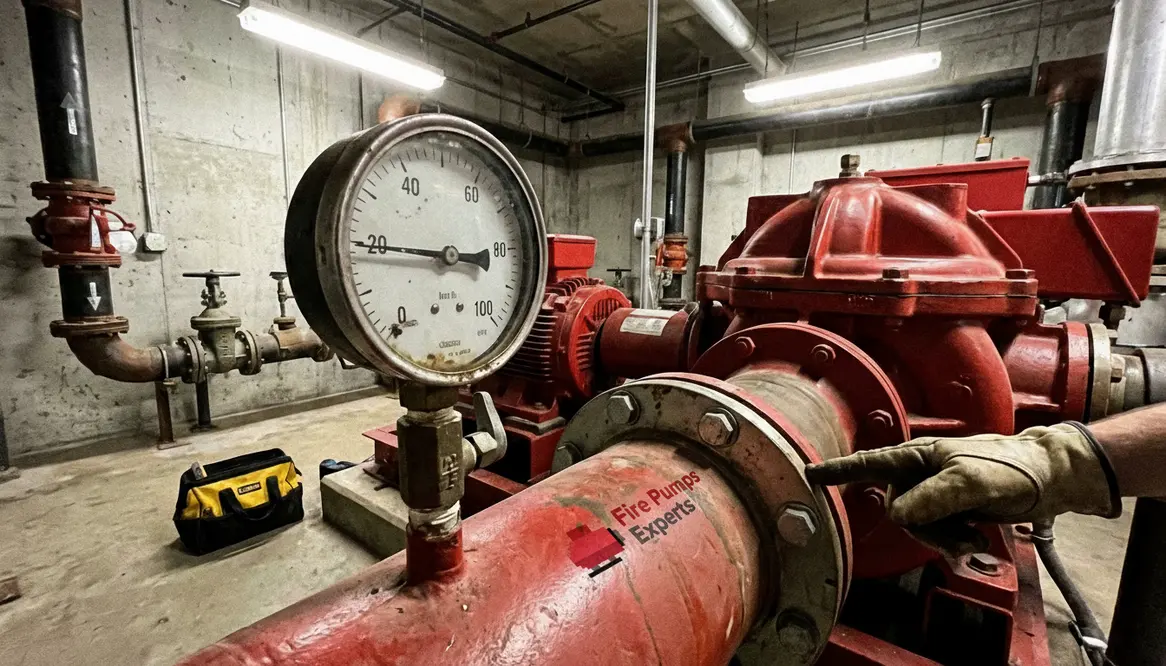
Fire Pump Repair Portland Low Suction Pressure Air Leaks
When your fire pump drops from a confident roar to a tired whisper, low suction pressure and air leaks are usually somewhere in the room with it.
This is the story of how those problems start, how to spot them in large Portland facilities, and how to fix them before they show up on an inspection report.
When a Fire Pump Starts Whispering Instead of Roaring
I have spent a long time around mechanical rooms in large Portland facilities. Hospitals. Data centers. High rise offices where the elevators hum and the backup systems quietly wait for their moment. And let me tell you something. A healthy fire pump has a certain presence. It sounds confident. Steady. Like a calm, experienced narrator walking you through a storm.
But when I walk into a building and hear a pump struggling to pull water, I know something is off. Most often, the trouble circles back to one stubborn pair of problems: fire pump repair portland low suction pressure air leaks. Those two issues sneak into commercial systems more often than people realize.
Low suction pressure chokes the pump before it even gets started. Air leaks slip into the suction line and break the smooth flow of water. Together they create a quiet but serious threat for large properties that rely on dependable fire protection.
So today I am going to walk you through how I diagnose these problems in commercial and industrial facilities. No fluff. No textbook jargon. Just practical insight from years of standing next to pumps that either behaved like champions or acted like they just rolled out of bed on a Monday morning.
Why This Matters For Portland Facilities
A fire pump is not a luxury item. It is the last line of pressure when sprinklers and standpipes need to perform at full design demand. When low suction pressure and air leaks creep into the system, the building may still “pass water,” but it will not deliver what the design promised.
In other words, if you ignore fire pump repair portland low suction pressure air leaks long enough, you are gambling with inspections, insurance, and emergency performance all at the same time.
fire pump repair portland low suction pressure air leaks
When building engineers ask me why a pump is underperforming, I start with the basics. A fire pump does not create water out of thin air. It pulls water from a reliable supply and boosts pressure through the building.
However, the pump depends on one simple rule. Water must arrive at the suction side smoothly and consistently. If that flow weakens, the pump struggles.
Low suction pressure usually comes from one of several conditions inside large commercial systems:
- Partially closed or damaged suction valves
- Blocked strainers or debris inside intake piping
- Municipal supply pressure changes
- Undersized or aging suction lines
- Improper system modifications over time
Meanwhile, air leaks add a second layer of trouble. When air sneaks into the suction line, the pump loses prime and efficiency drops fast. Instead of moving solid water, the impeller churns a mixture of air and water.
That is like asking a blender to make a smoothie with half the lid missing. Sure, something spins. But the results are messy.
In Portland commercial properties, I often find air entering through aging flange gaskets, loose fittings, corroded suction piping, or poorly sealed test connections. Over time, even a tiny opening invites air to slip inside.
And once that happens, pressure readings begin to dance around like they are auditioning for a reality show.
How I Diagnose Low Suction Pressure Inside Large Buildings
Every investigation starts the same way. I slow down and listen.
First, I check the gauges. They tell the opening chapter of the story. If suction pressure drops below manufacturer specifications, the pump is starving for water.
However, gauges alone never tell the whole truth. Therefore I move upstream through the system.
I inspect isolation valves and confirm they are fully open. You would be surprised how often a valve sits halfway closed after maintenance work. It is the mechanical version of trying to breathe through a coffee stirrer.
Next, I examine the suction supply from the municipal line or storage tank. Portland infrastructure is reliable, yet pressure conditions can shift during peak demand or construction nearby.
After that, I look closely at suction piping. Large commercial facilities sometimes carry decades of upgrades. A pipe added here. A bypass installed there. Eventually the system resembles a mechanical family tree.
Each connection introduces potential pressure loss.
Finally, I check strainers and filters. Debris buildup can slowly choke the intake. I once opened a strainer that looked like it had been collecting souvenirs since the Clinton administration.
Once the restriction disappears, suction pressure usually rebounds immediately. And when that happens, the pump breathes again.
fire pump repair portland low suction pressure air leaks In The Real World
Air leaks demand a different approach. They are sneaky. They rarely announce themselves with flashing lights.
Instead, they whisper clues.
You might notice fluctuating suction pressure. Or unusual vibration along the pump housing. Sometimes the pump loses prime after sitting idle. In other cases, discharge pressure drops during high demand.
Therefore I inspect the entire suction path carefully. Even a tiny gap matters.
Common Entry Points
- Loose flange bolts
- Worn gaskets
- Improperly sealed threaded fittings
- Old packing seals
- Maintenance test connections
Diagnostic Clues
- Bubbles in suction gauges
- Inconsistent pressure readings
- Pump losing prime between runs
- Unusual cavitation noise
- Visible moisture around joints
Sometimes I apply a vacuum test to the suction piping. Other times I isolate sections of the line and monitor pressure changes. Step by step, the system reveals the weak point.
And once the air entry point shows itself, repairs are usually straightforward. Tighten the connection. Replace the gasket. Reseal the joint.
It is not glamorous work. But then again, neither is plumbing in a superhero movie. Yet when the moment comes, everyone is grateful the system works.
What Large Facilities in Portland Should Watch for Early
Commercial property teams often ask me what warning signs appear before a pump problem becomes serious.
Fortunately, most systems give plenty of early signals.
Early Warning Signs Your Suction Side Needs Attention
- Unstable suction pressure readings during weekly churn tests
- Cavitation noise that sounds like gravel in the pump casing
- Sluggish discharge pressure during full flow testing
- Pump struggling to maintain prime after shutdown
- Visible leaks, rust streaks, or wet spots along suction piping
Large properties such as hospitals, manufacturing plants, and high rise buildings rely on consistent fire protection. Therefore early detection prevents both compliance issues and emergency failures.
And trust me, no facility manager wants to explain to inspectors why a million square feet of building protection depends on a pump that sounds like it just watched a sad movie.
Preventive Maintenance That Stops These Problems Early
The best solution is always prevention. A disciplined inspection routine keeps suction pressure stable and blocks air leaks before they grow.
In my experience, successful commercial facilities follow several practical habits.
- Routine suction gauge verification during pump tests
- Annual inspection of all suction flange connections
- Cleaning and inspection of suction strainers
- Verification of municipal supply pressure conditions
- Vacuum testing of suction piping during major service
Additionally, documentation matters. Recording pressure readings over time reveals subtle trends long before performance drops below acceptable limits.
Facility engineers who track these numbers gain a powerful advantage. They see the system evolving instead of reacting after something breaks.
And frankly, that kind of foresight makes life easier for everyone. The pump runs better. Inspectors stay happy. And nobody receives a 3 AM emergency call that begins with the phrase “the fire pump sounds weird.”
FAQ
Keep Your Fire Pump Ready When It Matters
In large Portland facilities, fire pumps quietly guard millions of dollars in property and countless lives. When suction pressure drops or air leaks creep into the system, that protection weakens. If your team suspects fire pump repair portland low suction pressure air leaks, it is time to bring in experienced specialists.
Service companies that understand commercial pumps, suction piping, and code compliance can help your building avoid failures during inspections and real emergencies. Teams like the fire pump professionals at Kord Fire Protection handle testing, troubleshooting, and repair so your system delivers the pressure it is supposed to when alarms go off.
The goal is simple: keep problems like fire pump repair portland low suction pressure air leaks from ever becoming the reason a building does not get the water it needs. With the right inspections, records, and repairs, your pump keeps its confident voice and your facility stays ready for whatever the next alarm brings.