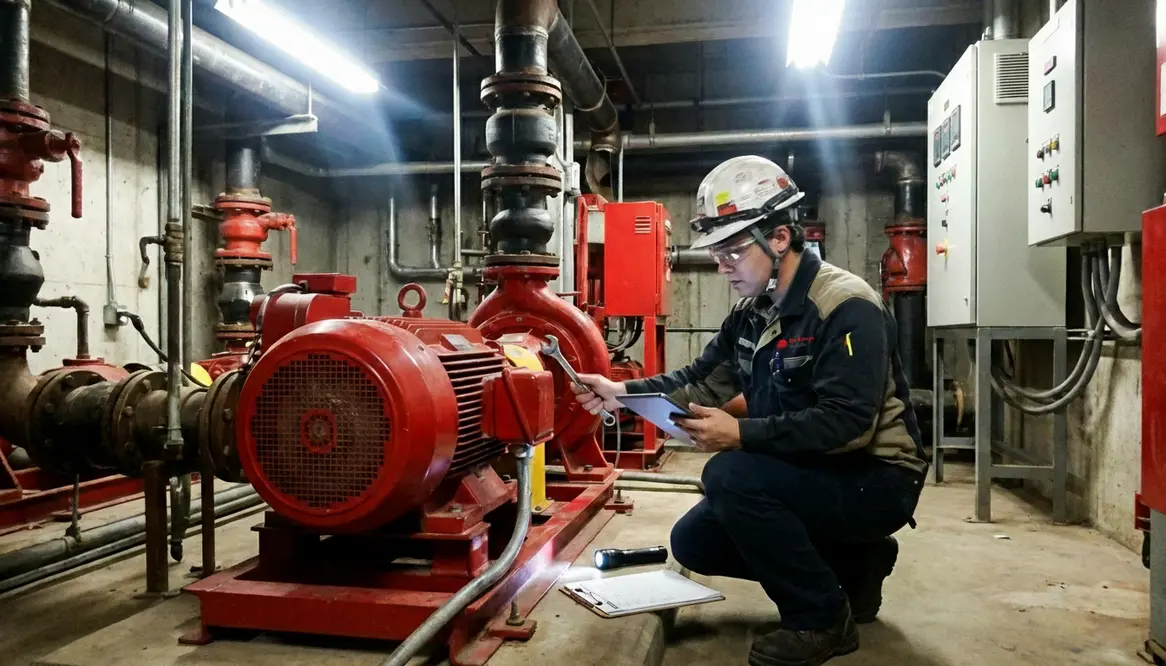
Fire Protection Downtime Reduction with Pump Care
I have spent enough time around pump rooms to know one simple truth. When a fire protection system goes quiet at the wrong moment, everything else gets loud in a hurry. That is why I take fire protection downtime reduction seriously, especially in large commercial and industrial buildings where risk does not politely wait its turn. The good news is this. With proper pump care, I can keep systems ready, reliable, and far less likely to fail when they matter most. And yes, it is less dramatic than an action movie explosion, but trust me, prevention is the real blockbuster.
Why Pump Care Quietly Runs the Whole Show
At the heart of every fire protection system sits the pump. It does not ask for applause. It does not trend on social media. However, it decides whether water moves when it must. Because of that, neglecting pump care is like skipping oil changes and expecting your car to cross the desert. It might work for a while. Then suddenly, it does not.
So I focus on consistency. Routine inspection, lubrication, alignment checks, and performance testing all play a role. More importantly, I treat small irregularities like early warnings, not background noise. A slight vibration or pressure fluctuation today can turn into full system downtime tomorrow. And downtime, in a commercial facility, is never just inconvenient. It is expensive and risky.
How Do I Prevent Unexpected Pump Failures?
I start by respecting the schedule. Weekly churn tests, monthly inspections, and annual flow tests are not optional. They are the backbone of reliability. At the same time, I rely on data instead of guesswork. Pressure readings, flow rates, and motor performance tell a story if I bother to listen.
Then I go deeper. I check for alignment issues between the motor and pump. I monitor seal integrity and bearing wear. I ensure controllers respond instantly. Because when a system hesitates, even for a second, it defeats the purpose.
Also, I avoid the classic trap of reactive maintenance. Fixing things after they break might feel productive, but it is actually a slow march toward more downtime. Preventive care, on the other hand, keeps systems steady and predictable. It is less exciting, sure. But so is a safe building, and I will take that trade every time.
Smart Maintenance Strategies for Fire Protection Downtime Reduction
When I think about fire protection downtime reduction, I think in layers. One action alone will not protect a system. Instead, I combine multiple strategies that work together.
Preventive Actions
- Routine inspections with documented results
- Scheduled component replacements before failure
- Lubrication and cleaning to reduce wear
- Calibration of sensors and controllers
Predictive Measures
- Vibration analysis to detect imbalance
- Thermal monitoring for overheating parts
- Performance trend tracking over time
- Remote alerts for abnormal conditions
By combining both sides, I stay ahead of problems instead of chasing them. It is a bit like having both a map and a weather forecast before a long drive. You could wing it, but why would you?
Training and Team Awareness Make the Difference
Even the best equipment cannot compensate for an unprepared team. So I make sure everyone involved understands the system. Facility managers, maintenance crews, and even security staff should know the basics of pump operation and warning signs.
Because when someone notices an unusual sound or delayed startup, that observation matters. It might be the first clue that something is off. And in large properties, where systems cover vast areas, early detection is everything.
Besides, clear procedures reduce hesitation. When a team knows exactly what to do during a test or a fault condition, they act faster and with confidence. That alone can prevent minor issues from becoming full system outages and supports meaningful fire protection downtime reduction across the property.
Choosing the Right Equipment for Long Term Reliability
Not all pumps are created equal. I have seen facilities invest heavily in infrastructure, only to cut corners on critical components. That decision almost always comes back to haunt them.
Instead, I focus on quality and compatibility. Pumps must match the system demands precisely. Controllers must respond without delay. Backup power must be reliable. Every component plays a role in keeping the system operational and contributing to fire protection downtime reduction, not more surprises.
Additionally, I look for equipment that supports monitoring and diagnostics. Modern systems offer insights that older setups simply cannot. And while upgrading may seem costly upfront, it often saves far more by preventing downtime later.
Think of it this way. You would not cast a low budget extra as the hero in a major film. Your fire pump should not be the weak link either. If you want an example of what expert support looks like in practice, take a look at professional fire pump service providers that specialize in inspection, testing, and maintenance for complex buildings.
FAQ: Fire Pump Care and System Reliability
Fire pumps are the engine room of your fire protection strategy, and questions about testing, failures, and monitoring always come up. The quick answers below set the baseline for smart decisions and better fire protection downtime reduction without adding unnecessary drama.
Putting It All Together: A Practical Approach
In real facilities, theory only matters if it translates into daily habits. The schedule on paper, the monitoring screen on the wall, and the checklist in someone’s hands all have to line up.
- Use a clear inspection and testing calendar that everyone can see.
- Document every weekly churn test, every pressure reading, and every correction.
- Flag small anomalies immediately instead of waiting for a “real” failure.
- Review data trends quarterly to adjust maintenance plans before problems grow.
This rhythm might not look exciting from the outside, but inside the pump room it is exactly what keeps fire protection downtime reduction from being a slogan and turns it into a measurable result.
Final Thoughts and Next Steps
If I have learned anything, it is this. Reliability does not happen by accident. It comes from deliberate care, consistent action, and a refusal to ignore small warning signs. If you want stronger performance and fewer disruptions, now is the time to invest in proper pump care.
Partner with experts who understand complex commercial systems, and take control of your uptime before it takes control of you. Build a culture where data is reviewed, tests are never skipped, and the pump room is treated as mission critical space. That is how fire protection downtime reduction stops being a hopeful goal and becomes the way your building actually runs.
In the end, the real success story is not a dramatic save on the news. It is the quiet, predictable moment when an alarm sounds, the pump starts, water flows exactly as designed, and everyone walks away wondering why it all seemed so uneventful. That calm outcome is the reward for every inspection, every test, and every careful decision you make long before anything catches fire.