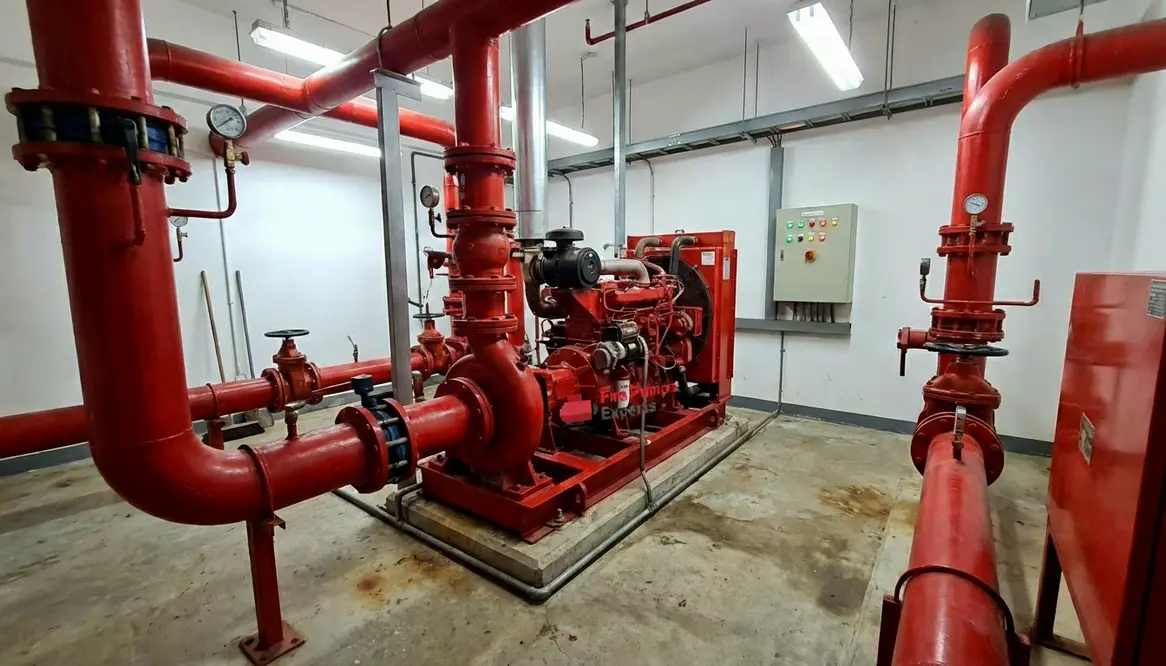
Fire Pumps in a Fire Protection Strategy
I have always seen a fire protection strategy as more than a checklist. It is a living system that quietly stands guard over people, property, and operations. And right at the heart of that system sits the fire pump, steady as a veteran actor who never misses their cue. In large commercial and industrial buildings, where scale changes everything, fire pumps are not just helpful. They are essential. So let me walk you through how these powerful machines fit into a complete protection approach, and why ignoring them is a bit like casting a blockbuster without a lead character.
When you zoom out and look at the whole picture, a strong fire protection strategy is really a blueprint for resilience. It shapes how your systems respond in the first crucial minutes of a fire, how long they can sustain that response, and how much damage they prevent before firefighters even arrive.
What role do fire pumps play in a fire protection strategy
Let me answer this straight away. Fire pumps ensure water moves where it needs to go, at the pressure required to actually fight a fire. Without them, even the best sprinkler or standpipe system can fall short.
Now, in high rise buildings, warehouses, and industrial facilities, municipal water pressure often cannot meet demand. That is where fire pumps step in. They boost water flow, maintain consistent pressure, and make sure every sprinkler head or hose outlet performs as designed. In other words, they turn a passive system into an active defender.
Moreover, they operate automatically. Once a pressure drop is detected, the pump engages. No hesitation. No dramatic pause. Just action. It is the kind of reliability that would make even the most seasoned action hero nod in approval.
When you are serious about a facility wide fire protection strategy, you start seeing the fire pump as the muscle behind every nozzle and sprinkler. It is not there for decoration. It is there to turn design intent into real, forceful water where and when you need it.
Translating design intent into real performance
Every sprinkler layout, hydraulic calculation, and riser diagram ultimately assumes a certain water pressure and flow. The fire pump is the device that makes those assumptions real. If it underperforms, the entire system underperforms with it.
So when you hear someone talk about their fire protection strategy but they gloss over the pump, you are really hearing half a story. The pump is the bridge between theory on paper and water on fire.
Building around the pump, not just adding it
I often see people treat fire pumps like an accessory. Install it, check the box, move on. However, a real fire protection strategy integrates the pump from the beginning.
For example, system designers must match pump capacity with building size, hazard classification, and water supply conditions. Additionally, placement matters. The pump room must be accessible, protected, and compliant with codes. Otherwise, you risk having a powerful system that cannot be used effectively when it counts.
Then there is power. Electric or diesel driven pumps each bring advantages. Electric units are clean and efficient, while diesel pumps provide independence during power loss. Choosing between them is not about preference. It is about risk management.
Design questions to ask early
- What hazards and storage arrangements drive the required pressure and flow?
- How reliable is the incoming water source under real emergency demand?
- Where can the pump room be placed for both protection and easy access?
Thinking through these details early makes the pump an integrated asset, not a bolt on afterthought.
Power and redundancy choices
Electric pumps are great when you have dependable power and a robust emergency system. Diesel shines when you cannot trust the grid to stay up during severe events.
The right choice supports your broader fire protection strategy and your tolerance for risk, outages, and downtime.
The more complex the facility, the more your fire protection strategy should be built around the pump’s capabilities and dependencies, not just wrapped around it later.
How fire pumps connect with other system components
Fire pumps do not work alone. They are part of a larger ecosystem, and every piece must align.
Column One: Core Connections
- Sprinkler systems that distribute water across floors
- Standpipe systems that support firefighter operations
- Water storage tanks that ensure supply during peak demand
Column Two: Supporting Elements
- Controllers that manage pump activation and monitoring
- Backflow preventers that protect water quality
- Alarm systems that signal performance and issues
Because each component depends on the others, a weak link can compromise the whole system. Therefore, coordination during design and installation is critical. It is a bit like assembling a band. You can have a great drummer, but if the guitarist is out of tune, the show falls apart.
Seeing the system as one machine
When you plan a fire protection strategy, it helps to think of the pump, tanks, risers, valves, alarms, and controllers as parts of a single machine. If one part drags, everything slows.
That is why expert partners matter. If you want to understand how pump selection, testing, and maintenance play into system reliability, have a look at Kord Fire’s fire pump service overview at this detailed fire pump systems page, then map those insights back to your own facility.
Performance under pressure in large scale environments
Commercial and industrial facilities introduce challenges that smaller properties simply do not face. Think long pipe runs, multiple floors, high hazard materials, and complex layouts.
In these settings, fire pumps must deliver consistent performance under extreme demand. Furthermore, they must sustain that performance over time. A short burst of pressure is not enough. Fires do not politely resolve themselves in a few seconds.
Because of this, testing and maintenance become non negotiable. Regular flow tests confirm the pump meets required output. Inspections catch wear before it becomes failure. And yes, skipping maintenance might save time today, but it tends to create very expensive surprises later. The kind no facility manager enjoys explaining.
The reality of “worst case” design
Designs are based on demanding scenarios: the most remote sprinkler, the highest floor, or the toughest hazard area. A serious fire protection strategy does not just aim to barely meet those numbers on paper. It aims to hit them in real life, when pipes scale, valves age, and pumps have years of runtime behind them.
That is why disciplined testing and clear documentation are not busywork. They are how you prove your system can still deliver when the emergency is no longer hypothetical.
Compliance, codes, and why they actually matter
I know, code compliance does not sound exciting. However, in the world of fire protection, it is the difference between theory and reality.
Standards from organizations like NFPA define how fire pumps should be installed, tested, and maintained. These guidelines are built from real world lessons. In many cases, they are written in response to failures that taught hard truths.
So when I design or evaluate a system, I treat compliance as a baseline, not a ceiling. Meeting code ensures the system works. Going beyond it ensures resilience. And in large facilities where downtime can cost millions, that distinction matters.
From “code compliant” to “operationally resilient”
If code is the floor, your business objectives set the ceiling. A thoughtful fire protection strategy aims higher than the bare minimum. It looks at questions like:
- How quickly can we resume operations after a fire?
- What does a “successful” response look like in terms of damage and downtime?
- Where do we add extra layers of redundancy to protect those outcomes?
Why fire pumps quietly protect business continuity
It is easy to think of fire pumps only in terms of safety. Yet they also protect operations, revenue, and reputation.
When a fire breaks out, a properly designed system can contain it quickly. That means less damage, shorter interruptions, and faster recovery. On the other hand, a weak system can allow a small incident to escalate into a major loss.
In industries where uptime is everything, that difference is enormous. So while fire pumps may not get the spotlight, they play a starring role behind the scenes. Kind of like that one character actor you recognize in every film but never quite remember the name of.
The business case for a strong fire protection strategy
When you connect the dots, the pump is part of a financial story, not just a safety story. A robust, well maintained pump supports a fire protection strategy that:
- Limits the spread and severity of fire incidents
- Reduces repair and replacement costs after an event
- Shortens downtime so operations return to normal faster
- Protects customer confidence and brand reputation
Pulling it all together into a real fire protection strategy
By now it should be clear that a fire pump does not live in isolation. It interacts with your water supply, your building layout, your hazard profile, and your tolerance for risk. A serious fire protection strategy ties these threads together instead of treating them as separate projects.
That strategy asks hard questions. Where could pressure drop under worst case demand? What happens if utility power fails? Which areas of the building absolutely cannot tolerate extended downtime? The answers guide pump selection, redundancy, testing routines, and upgrade priorities.
From equipment list to cohesive plan
On paper, a system can look impressive: sprinklers everywhere, a big pump, shiny controllers, alarms in all the right spots. But what turns that list into a true fire protection strategy is the way those pieces are sized, located, powered, tested, and maintained as one coordinated whole.
The fire pump just happens to be the most obvious place to see whether that coordination exists. If the pump has been thoughtfully selected, properly integrated, and consistently maintained, chances are the rest of the system has been treated with the same level of care.
FAQ
What does a fire pump do
It increases water pressure so sprinkler and standpipe systems can operate effectively.
When is a fire pump required
When municipal water pressure cannot meet system demand in large or complex buildings.
How often should fire pumps be tested
They should be tested regularly, including weekly checks and annual flow testing.
Are diesel or electric fire pumps better
It depends on the facility. Diesel offers backup during power loss, while electric is efficient and low maintenance.
Can a fire protection system work without a pump
In smaller buildings yes, but large commercial and industrial facilities usually require one.
Conclusion
If you are responsible for a large facility, now is the time to look closely at your system. A strong fire protection strategy is not built on hope. It is built on smart design, reliable equipment, and consistent care. Fire pumps are central to that equation. So take action, review your setup, and make sure your system is ready to perform when it matters most. Because in this line of work, readiness is everything.
Most importantly, treat your fire protection strategy as a living system, not a one time project. Buildings age, operations change, hazards shift, and people come and go. When you keep the fire pump and its supporting components tuned to those changes, you move from simply “having equipment” to having real confidence that your system will do its job when the alarms sound.