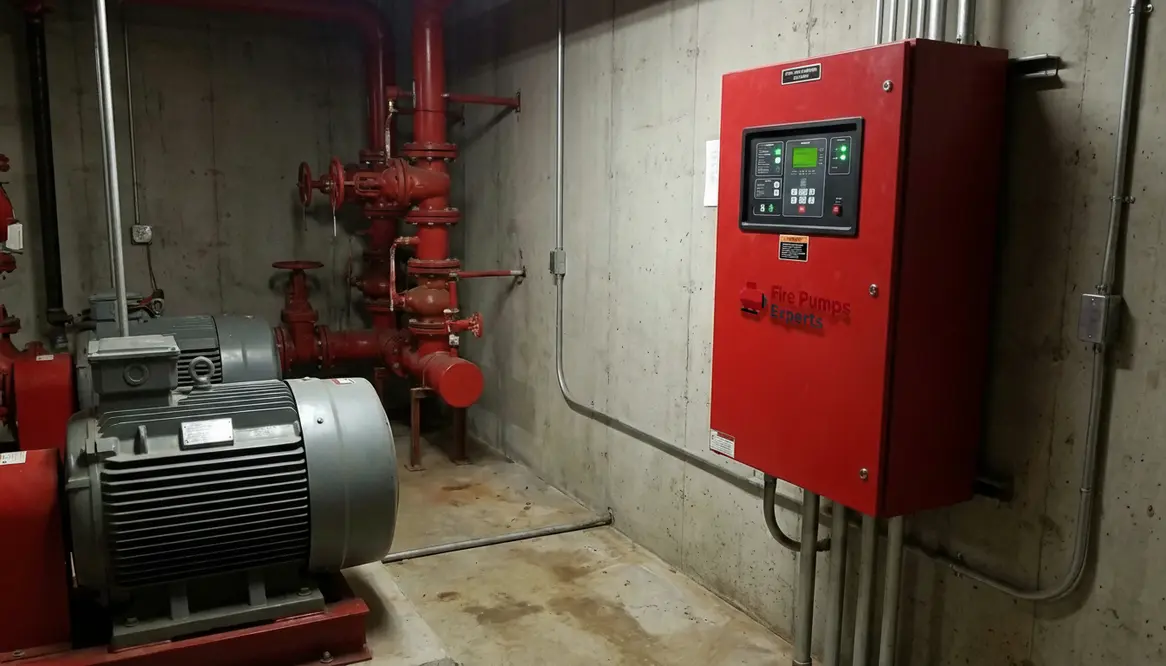
Fire Pump Controllers Guide for Commercial Systems
I have spent enough time around commercial buildings to know one simple truth. When things go wrong, they go wrong fast. That is exactly why our fire pump controllers sit quietly in the background, ready to act without hesitation. They are not flashy. They do not ask for attention. But when pressure drops and alarms rise, they become the calm voice in the chaos, making sure water moves exactly where it needs to go.
So let me walk you through what matters. Not the fluff. Not the sales pitch. Just the real mechanics, the decisions, and a few truths every facility manager should know before trouble ever knocks.
If you are responsible for life safety in any serious building, fire pumps and their controllers live on your short list of things that absolutely cannot fail. In many facilities, they are as critical as the main electrical service or the emergency generator. When you are planning, upgrading, or testing your system, it helps to think of fire pump controllers as the decision makers that stand between a small problem and a full-blown disaster.
What role do fire pump controllers play in a commercial system?
At its core, a controller acts as the brain behind the fire pump. It monitors system pressure and starts the pump when needed. Simple idea. High stakes execution.
However, there is more going on beneath the surface. These systems detect pressure drops in milliseconds, trigger motor startup, and keep the pump running long enough to support sprinkler and standpipe systems. In other words, they remove hesitation from a moment that cannot afford it.
Moreover, modern control panels log events, track performance, and provide diagnostics. That means you are not guessing during inspections or emergencies. You are working with data.
And let me say this plainly. A delayed pump start is not dramatic like in the movies. There is no slow motion. There is just loss. So the controller’s job is not optional. It is essential, and the right fire pump controllers quietly remove uncertainty from the worst possible moments.
Choosing the right fire pump controllers for large facilities
Matching the controller to the building, not the catalog
Not all systems are built the same. A high rise in Chicago does not behave like a distribution center in Texas. Therefore, choosing the right configuration matters more than most people realize.
I always start with the power source. Electric controllers offer reliability and lower maintenance. Diesel driven systems, on the other hand, bring independence from the grid. If your facility cannot afford a power failure risk, diesel becomes your insurance policy.
Then comes compliance. Controllers must meet NFPA standards and local codes. Skipping this step is like showing up to a black tie event in flip flops. Memorable, but not in a good way.
Electric Systems
Pros
- Lower operational cost
- Cleaner operation
- Simpler maintenance routines
Cons
- Dependent on power supply
Diesel Systems
Pros
- Independent of grid failure
- Highly reliable in emergencies
Cons
- Higher maintenance needs
- Fuel management required
In both cases, the goal stays the same. Immediate response. Zero hesitation. The best fire pump controllers are the ones sized correctly, powered correctly, and coded correctly for the realities of your building, not just the brochure.
If you want a real-world benchmark for how often pumps and controllers should be inspected, tested, and documented by a professional team, look at how established providers approach fire pump services and testing. It is a useful mirror for your own program and a reminder that design, commissioning, and maintenance all share responsibility when the alarms sound.
Key features I look for before approving a system
Clarity under pressure
Over time, I have learned that not all controllers are created equal. Some are built to last. Others feel like they were designed during a long lunch break.
First, I look for clear interface design. When an emergency hits, no one wants to decode cryptic buttons. Straightforward controls win every time.
Automation that respects reality
Next, I check for automated testing features. Weekly churn tests and system checks should happen without manual effort. Because let’s be honest, humans forget. Machines should not.
Records that tell the full story
Additionally, event logging matters. When inspectors arrive, records tell your story. A good controller keeps that story clean and complete.
Integration with the rest of the building
Finally, integration capability is no longer optional. Modern facilities tie systems together. Fire protection should not operate like it is stuck in 1995 while everything else runs on smart tech.
The short version: your controller should make it obvious what is happening, automatically prove it still works, and communicate clearly with the rest of your fire alarm and monitoring setup. That is the baseline for approving fire pump controllers in any serious commercial system.
Installation and placement decisions that actually matter
Environment, access, and the quiet killers of reliability
Placement is not just about convenience. It directly affects performance and longevity.
I always recommend installing controllers in clean, temperature controlled environments. Dust, moisture, and extreme heat quietly reduce reliability over time. And unlike your office coffee machine, these systems do not get a second chance to perform.
Accessibility is equally important. Technicians need room to inspect, test, and service the equipment without performing gymnastics. If maintenance becomes difficult, it becomes delayed. And delay is the enemy here.
Also, proper wiring and grounding are non negotiable. Cutting corners during installation is like building a skyscraper on sand. It may stand for a while, but you are just waiting for gravity to notice.
If you walk into a pump room and see controllers crammed into corners, surrounded by storage, or wired like a late-night science project, you are looking at warning signs. Fire pump controllers do their best work when the installation shows the same respect the equipment is expected to deliver during an emergency.
Maintenance habits that keep systems ready
Routine beats luck every time
Even the best equipment needs attention. The difference between a reliable system and a risky one often comes down to routine care.
I stick to scheduled inspections. Weekly visual checks. Monthly testing. Annual performance verification. These are not suggestions. They are the rhythm that keeps everything in tune.
Moreover, battery systems in diesel setups deserve special attention. A dead battery in an emergency is about as useful as a locked fire exit. It defeats the purpose entirely.
Documentation also plays a role. Every test, every alert, every adjustment should be recorded. Not because it looks good on paper, but because it builds accountability.
And yes, sometimes alarms go off during testing and people panic. That is normal. Consider it a rehearsal. Even Broadway runs through the script before opening night.
If there is one maintenance mindset worth repeating, it is this: treat your fire pump controllers like mission critical gear, not background hardware. The buildings that take that approach are the ones that stay calm when the alarms do exactly what they were built to do.
FAQ
Final thoughts and next steps
If you manage a commercial or industrial facility, you already carry enough responsibility. Let fire pump controllers do their job without compromise. Choose systems built for performance, install them with precision, and maintain them with discipline. When the unexpected happens, preparation becomes your strongest ally. If you are ready to strengthen your fire protection strategy, now is the time to act and make sure every component stands ready.
Treat that next review of your fire pump controllers as more than a checkbox. Use it as a chance to confirm that the brain behind the pump, the wiring that feeds it, the logs that prove it, and the people who test it are all pulling in the same direction. When they are, water goes where it is supposed to go, when it is supposed to get there. That is the standard worth protecting.