AHJ Fire Pump Approval and Testing in Kern County
I have spent years around commercial properties in Kern County, and if there is one system that never gets the luxury of a bad day, it is the fire pump. When it is called into action, it does not get a warm up lap. It performs or it fails. That is why AHJ fire pump approval is not just a checkbox. It is the moment your system proves it can stand up to real world pressure, literally and figuratively. And yes, while that may not sound thrilling, I promise there is more drama in a pump test than most people expect.
What Fire Pump Testing Means for Kern County Commercial Properties
In Kern County, commercial and industrial facilities operate under strict fire protection expectations. Warehouses, processing plants, and large scale buildings depend on fire pumps to maintain water pressure during emergencies. Without routine testing, that system becomes a very expensive paperweight.
So what does testing actually involve? I look at flow performance, pressure consistency, controller response, and overall reliability. In other words, I am asking one simple question. Will this system work when everything else is going wrong?
Additionally, local authorities expect documented proof. That is where compliance comes in. Meeting local fire authority approval standards ensures your building stays operational, insurable, and safe. Skip it, and you are not just risking fines. You are risking everything inside those walls.
How Often Should I Test a Fire Pump in Kern County?
Short answer. More often than most owners would like, and exactly as often as safety demands.
Weekly churn tests keep the pump active. Monthly inspections catch early wear. However, the real event is the annual flow test. That is where I simulate real demand and measure performance under pressure.
Because Kern County properties often deal with high heat and dust, systems can degrade faster than expected. Therefore, consistent testing is not just compliance. It is prevention. Think of it like going to the gym. Skip too many sessions, and suddenly lifting anything feels like a life crisis.
AHJ Fire Pump Approval and Why It Actually Matters
Now let us talk about the part that makes people sit up straighter. AHJ fire pump approval.
The Authority Having Jurisdiction does not care about good intentions. They care about results. During inspections, they review performance data, verify system output, and ensure everything aligns with code.
However, passing is not just about numbers. It is about consistency. I have seen systems pass one year and struggle the next because maintenance slipped. Therefore, approval is not a one time victory lap. It is an ongoing relationship with your system.
And between us, inspectors have seen every trick in the book. Trying to cut corners here is like trying to sneak snacks into a movie theater. Someone always notices.
When you treat AHJ fire pump approval as a yearly health check instead of a hurdle, you shift from scrambling for signatures to confidently handing over reports.
What Happens During a Commercial Fire Pump Flow Test
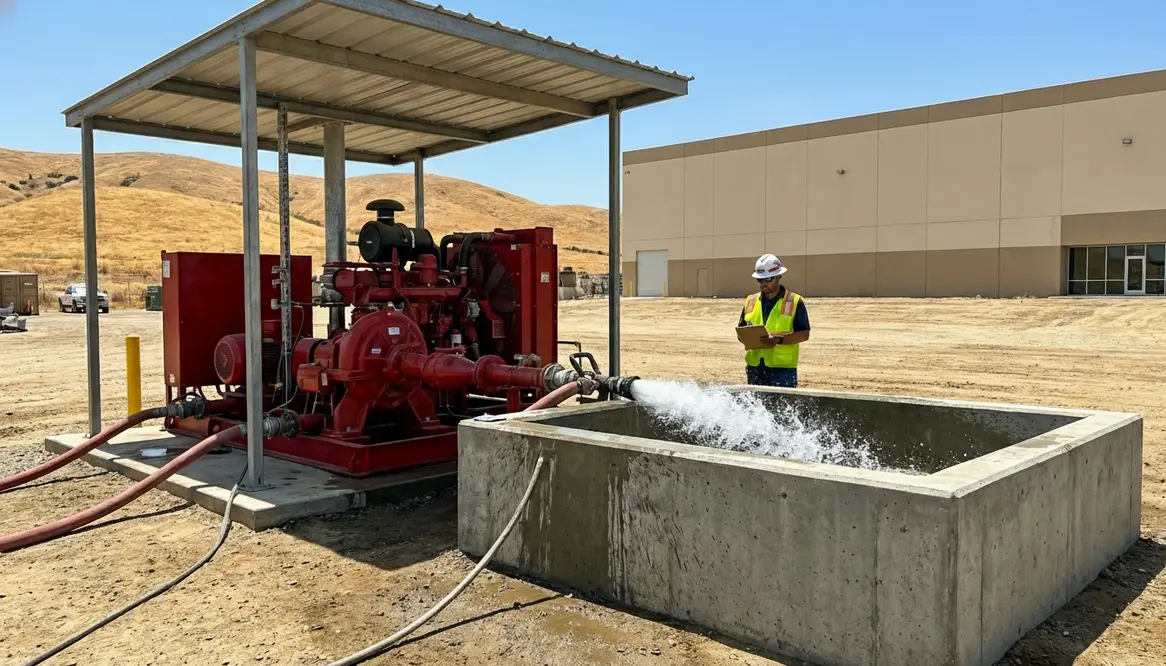
Let me paint the picture. We connect hoses, open discharge valves, and push the pump through increasing levels of demand. Meanwhile, I monitor pressure readings, flow rates, and engine or motor behavior.
Here is a simple breakdown:
What I Check
- Pressure at churn, rated, and peak demand
- Flow output against manufacturer curves
- Controller start and stop function
- Fuel or power system stability
Why It Matters
- Confirms real fire readiness
- Prevents hidden mechanical failure
- Ensures code compliance
- Avoids costly emergency repairs
During testing, I also watch for vibration, overheating, or delayed response. These small warning signs often tell a bigger story. Ignore them, and you may end up learning about your system the hard way.
Common Issues I See in Kern County Fire Pump Systems
Even well managed properties run into trouble. However, the patterns are surprisingly consistent.
First, I often see pressure drops caused by worn impellers or blocked suction lines. Then there are controller issues, where the pump hesitates or fails to start automatically. And of course, diesel systems sometimes suffer from neglected fuel quality. Old fuel behaves like that one coworker who refuses to update their software. Slow and unreliable.
Because Kern County environments can be harsh, dust and heat accelerate wear. Therefore, regular inspections become even more critical. Catching these issues early saves time, money, and a whole lot of stress.
Choosing the Right Team for Fire Pump Testing
Not all testing services are built the same. For large commercial and industrial properties, experience matters. I always recommend working with specialists who understand high capacity systems, complex layouts, and local compliance expectations.
Additionally, documentation should be clear and complete. Inspectors want detailed reports, not vague summaries. A proper report tells the full story of your system’s performance and supports your fire marshal approval process.
And let us be honest. When something as critical as fire protection is on the line, this is not the place to bargain hunt. Partnering with a team that treats AHJ fire pump approval as the standard, not the ceiling, is one of the easiest risk reduction moves you can make.
If you want an example of how a full service provider supports complex properties, look at how regional specialists like Kord Fire Protection handles county-wide fire pump and sprinkler services. The model is the same in Kern County: coordinated inspection, testing, and reporting that keeps your system and your paperwork aligned.
FAQ: Fire Pump Testing in Kern County
Keep Your System Ready Before It Is Needed
Fire pump testing is not about satisfying a requirement. It is about making sure your building can protect itself when it matters most. If your Kern County facility has not been tested recently, now is the time to act.
Schedule a professional evaluation, get ahead of compliance, and keep your system performing like it should. When you approach AHJ fire pump approval as part of your normal maintenance rhythm, you avoid last minute panic, awkward inspector conversations, and unpleasant surprises during real emergencies.
Because Kern County buildings work hard, their fire protection systems have to work even harder. Staying current on testing, documentation, and AHJ fire pump approval keeps your doors open, your people safer, and your investment better protected when that pump is finally called off the bench.
Because when the moment comes, there are no second chances, only prepared systems.