Fire Pump Acceptance Testing: What to Expect
From the outside, it looks like just another day in the mechanical room. Inside, your fire pump is about to prove whether it can protect lives, assets, and your reputation when everything is on the line.
I have stood in more mechanical rooms than I can count, each one humming with quiet anticipation before a critical moment. Fire pump acceptance testing is that moment. It is where theory meets steel, where design proves itself under pressure, and where owners of commercial and industrial facilities finally see if their fire protection system will stand tall when it matters most. And yes, it can feel a bit like a blockbuster premiere, except instead of red carpets, you get gauges, valves, and a whole lot of water.
So, let me walk you through what actually happens. No fluff. No guesswork. Just a clear look at what you should expect and why it matters.
What happens during fire pump acceptance testing
Right out of the gate, I will tell you this: nothing about this process is casual. Every step follows a strict standard, typically NFPA guidelines, because lives and high value assets are on the line. First, the team confirms that installation matches the approved design. Then, they verify power supply, controller settings, and pump rotation.
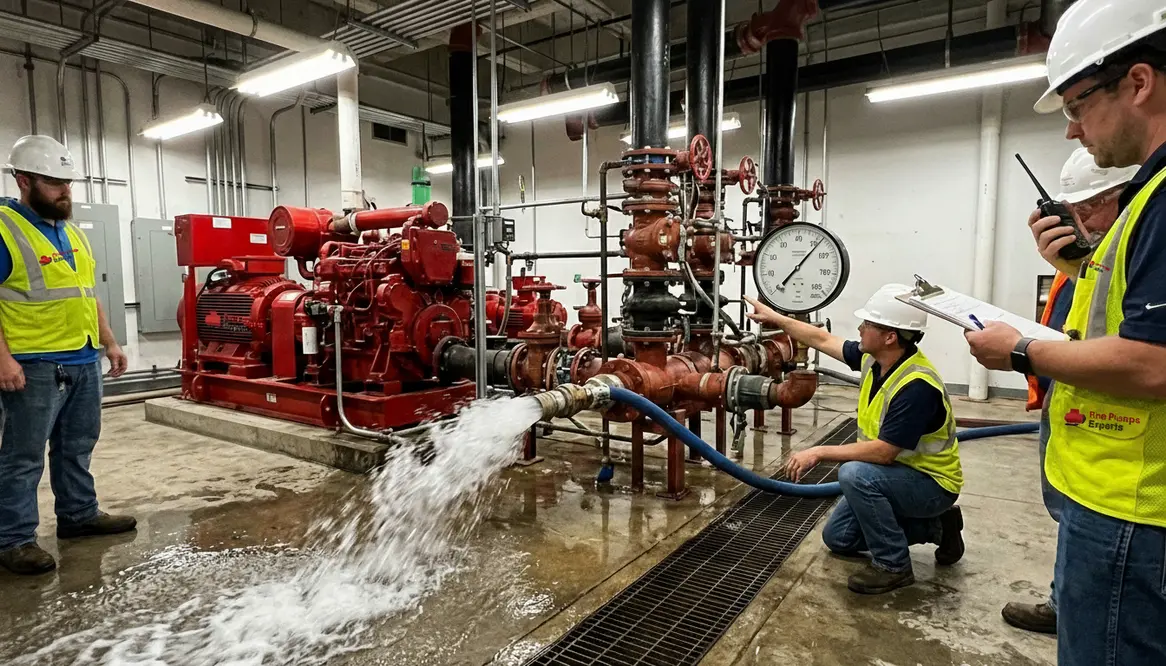
Next, we move into flow testing. This is where things get interesting. Water is pushed through the system at various demand levels, typically 100 percent, 150 percent, and churn conditions. Meanwhile, technicians record pressure, flow rate, and pump performance.
And yes, it is loud. It is wet. It is organized chaos. Think of it as the Super Bowl of your fire protection system, except nobody is arguing over halftime shows. This is the part of fire pump acceptance testing where everyone finds out whether the system performs the way the drawings promised.
Why this moment matters
Design calculations, hydraulic models, and submittals are all promises. Fire pump acceptance testing is the proof. When the pump hits its marks under real flow, you are not just checking a box; you are validating that your building can survive a worst day scenario.
If you want a deeper look at how NFPA 20 shapes the design and installation side before you ever get to testing, resources like this NFPA 20 overview from Kord Fire Protection tie the standards directly to what you are watching in the pump room.
Preparing your facility for the big test
Before the test begins, preparation sets the tone. I always tell facility managers that a smooth acceptance test starts days, sometimes weeks, in advance. First, ensure all components are installed and inspected. That includes piping, valves, controllers, and alarms.
Additionally, coordination matters. You will need your contractor, fire protection engineer, AHJ, and often insurance representatives present. Everyone has a role, and timing is everything.
Left Column
- Ensure water supply is reliable
- Confirm electrical connections
- Verify system flushing is complete
Right Column
- Schedule all stakeholders
- Prepare documentation
- Check sensor calibration
Meanwhile, I always recommend having contingency plans in place. Because if something fails, and sometimes it does, you want to fix it quickly without delaying operations. After all, downtime in a commercial or industrial facility is about as welcome as a plot twist in the final minute of a movie.
Key performance benchmarks you should watch closely
Now we get into the numbers, and this is where attention to detail pays off. During the pump performance test, I focus on three main benchmarks: flow rate, pressure, and stability.
Rated performance
At 100 percent capacity, the pump should meet its rated performance. Then, at 150 percent flow, it must still maintain acceptable pressure levels. Finally, churn conditions test how the pump behaves with no flow, which reveals potential overheating or pressure issues.
Subtle warning signs
Moreover, I always watch for vibration, unusual noise, or erratic readings. These are subtle clues that something is off. A pump might technically pass but still hint at future trouble. And trust me, future trouble in a high rise or industrial plant is not the kind of surprise anyone enjoys.
This is where disciplined fire pump acceptance testing gives you more than a yes or no; it gives you a snapshot of long term reliability.
Common issues uncovered during acceptance testing
Even well designed systems can stumble during testing. In fact, I have seen brand new installations fail for reasons that range from minor oversights to major design flaws.
For example, incorrect pump rotation is a classic mistake. It sounds simple, yet it can derail the entire test. Similarly, air trapped in the system can skew readings and reduce performance.
Another frequent issue involves power supply inconsistencies. If voltage drops or controllers misbehave, the pump cannot perform reliably. Additionally, undersized piping or obstructions can limit flow, which becomes obvious during high demand testing.
However, these issues are not failures of the process. Instead, they are exactly why fire pump acceptance testing exists. It is better to uncover problems now than during an actual emergency, when the stakes are far higher.
Who needs to be present and why it matters
This is not a one person show. A proper test brings together a small cast of specialists, each with a specific role. The installing contractor leads the operation, while the fire protection engineer verifies compliance.
Meanwhile, the Authority Having Jurisdiction observes and ultimately approves the system. Insurance representatives may also attend, especially for large commercial or industrial properties.
I have found that when everyone communicates clearly, the process moves smoothly. On the other hand, when coordination slips, delays pile up quickly. And nobody wants to reschedule a full scale test because someone forgot to send an email.
Documentation and final approval process
Once testing wraps up, the paperwork begins. Every reading, observation, and adjustment must be documented. This includes flow data, pressure logs, and confirmation that the system meets design criteria.
Afterward, the AHJ reviews the results. If everything checks out, approval is granted, and the system becomes fully operational. If not, corrections must be made and retested.
In my experience, thorough documentation is your best ally. It not only satisfies compliance requirements but also provides a baseline for future maintenance and inspections. When you revisit your data during later fire pump acceptance testing or annual performance checks, that original snapshot is worth its weight in gold.
FAQ
Below are some of the questions I am asked most often about fire pump acceptance testing, especially by owners seeing the process for the first time.
Ready to ensure your system performs when it counts
In the end, this process is about confidence. When your system passes, you know it will respond when called upon. If you manage a commercial or industrial facility, now is the time to take action. Schedule your evaluation, gather your team, and make sure your fire protection system is not just installed, but proven. Because when the moment comes, there are no second chances, only preparation.
Treat fire pump acceptance testing as the dress rehearsal for the biggest scene your building will hopefully never have to perform. Understand the benchmarks, demand thorough documentation, and surround yourself with professionals who take the process as seriously as you do.