Fire Pump Retrofits and AHJ Urban Buildings
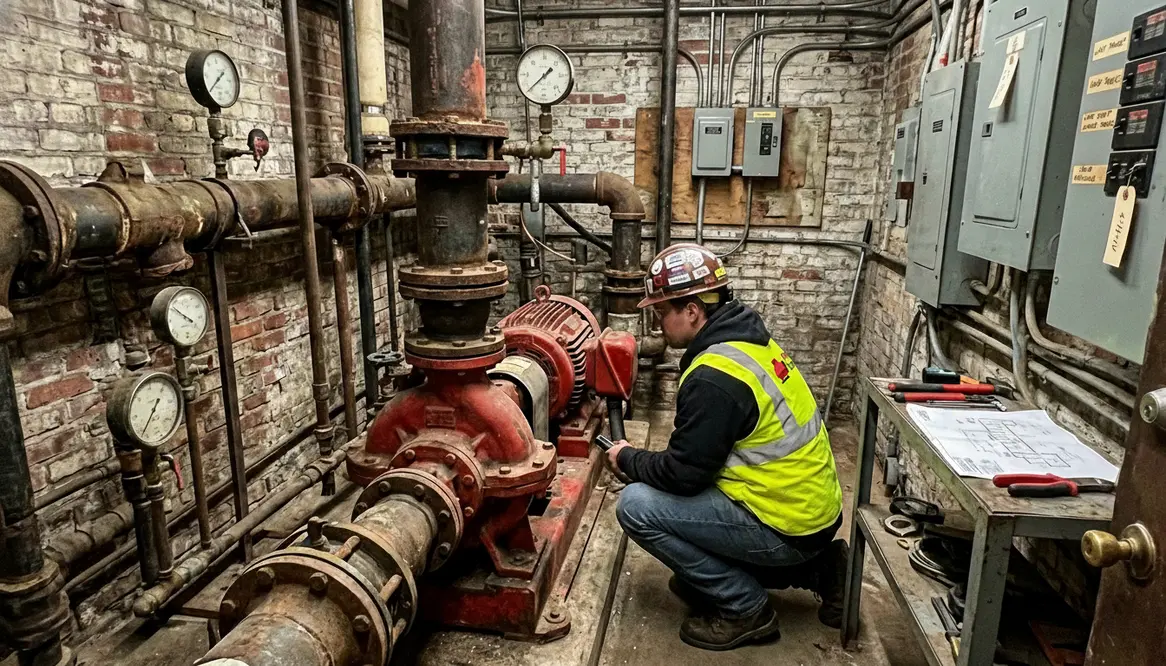
I have spent years walking through aging mechanical rooms in dense city blocks, where history hums through every pipe and panel. And right at the center of it all sits a fire pump that has seen better decades. When I talk about retrofitting these systems, I am not just talking about swapping parts. I am talking about preserving life safety while meeting modern code, including that ever important local AHJ fire pump approval. And yes, that approval can feel like the final boss in a video game, but it is one you absolutely want on your side.
Why Commercial Fire Pump Retrofits Matter in Older Urban Buildings
Older urban buildings were not designed for today’s fire protection demands. In fact, many were built before current flow requirements even existed. So, when I step into these properties, I often find undersized pumps, outdated controllers, or systems that simply cannot keep up.
However, retrofitting is not just about compliance. It is about reliability. A modernized fire pump system ensures consistent pressure, faster response, and fewer surprises during inspections. And let’s be honest, surprises in fire protection are about as welcome as a plot twist in a horror movie where you are the main character.
The Bigger Picture: Safety, Insurance, and Long-Term Value
Retrofitting a fire pump in an older commercial or mixed-use urban building also carries long-term benefits that stretch well beyond passing an inspection. It strengthens your building’s risk profile, supports better insurability, and builds trust with tenants who expect modern life safety even in century-old structures. When you pursue upgrades with local AHJ fire pump approval in mind, you are not just ticking boxes; you are increasing the building’s resilience for decades to come.
What Challenges Do I Face When Retrofitting Fire Pumps in Tight Urban Spaces?
The Never-Enough-Square-Feet Problem
Space. Always space. Older buildings rarely leave room for modern equipment. Therefore, I often need to rethink layouts, rework piping, and sometimes get creative with vertical installations.
Access: Getting Gear Into the Basement Time Capsule
Additionally, access becomes a puzzle. Getting new equipment into a basement built in 1920 can feel like trying to fit a grand piano through a revolving door. So, I coordinate closely with engineers, contractors, and building managers to plan every move.
Aging Infrastructure and One-of-a-Kind Conditions
Then there is the infrastructure itself. Electrical systems may need upgrades, and water supply conditions can vary. As a result, each retrofit becomes a custom solution rather than a one size fits all approach. That customization is also what gets the attention of the AHJ, because they want to know exactly how your specific building will perform when it has to.
Aligning with Local AHJ Fire Pump Approval Requirements
Every retrofit must satisfy the authority having jurisdiction. That means documentation, testing, and clear communication. I make it a point to involve the AHJ early, because waiting until the end is like submitting a term paper five minutes before class and hoping for an A.
Moreover, compliance is not just about passing inspection. It is about proving that the system performs under real world conditions. Flow tests, controller checks, and backup power verification all play a role.
When I approach a project with the jurisdictional fire pump approval process in mind from day one, everything moves smoother. And smoother projects mean fewer delays and happier stakeholders. The fastest road to local AHJ fire pump approval is usually the one where you share your intent, your drawings, and your testing strategy early, instead of trying to retrofit your retrofit at the eleventh hour.
On some projects, that means sitting down with plan reviewers, walking through past inspection reports, and clarifying how the new setup solves old deficiencies. On others, it is about documenting how the water supply, fire pump selection, and controller settings all align with the code sections your AHJ cares about most. Either way, local AHJ fire pump approval is never an afterthought; it is baked into every design conversation.
Key Components I Evaluate During a Retrofit
Before I recommend any upgrade, I assess the entire system. Each component tells part of the story, and together they reveal what needs attention.
Mechanical Systems
- Pump capacity and condition
- Suction and discharge piping
- Valves and fittings integrity
Electrical and Controls
- Controller functionality
- Power supply reliability
- Backup systems and alarms
After that, I connect the dots. If the pump is strong but the controller is outdated, I focus there. If the water supply is inconsistent, I address that first. It is a methodical process, and it keeps surprises to a minimum. It also gives the AHJ a clear picture of how each decision supports performance and compliance, which is exactly the kind of story that leads to local AHJ fire pump approval instead of a stack of correction notices.
How I Minimize Downtime During Retrofits
Phasing Work Around Real-World Operations
In commercial and industrial buildings, downtime is not just inconvenient. It is expensive. So, I plan retrofits in phases whenever possible.
For example, I may install parallel systems or temporary solutions to maintain protection during the upgrade. Meanwhile, I schedule critical work during off hours to reduce impact on operations.
Communication as a Project Tool
Communication also plays a huge role. I keep everyone informed, from facility managers to contractors. Because when everyone knows the plan, execution becomes far more efficient. It is also easier to demonstrate to the AHJ that, even during cutovers or partial shutdowns, you are never leaving the building unprotected.
Modern Technology Meets Old Infrastructure
One of the most satisfying parts of this work is blending new technology with old systems. Today’s fire pumps come with smarter controllers, remote monitoring, and improved efficiency.
However, integrating these into older buildings requires precision. I ensure compatibility while maintaining code compliance. It is a bit like upgrading a classic car with modern features. You want better performance, but you do not want to lose what makes it work.
And yes, sometimes I feel like Tony Stark in a mechanical room, minus the suit and dramatic soundtrack. The real hero moment comes when the upgraded pump spins up during testing, pressures hit the mark, alarms report correctly, and the AHJ signs off because every part of the local AHJ fire pump approval checklist has been satisfied with clean, well-documented performance.
Connecting Fire Pump Retrofits to the Rest of the System
A pump retrofit does not live in a vacuum. It touches sprinklers, valves, risers, alarms, and monitoring. That is why I often coordinate with fire sprinkler and alarm specialists, or point owners toward partners like fire sprinkler retrofit experts for historic and older buildings when the project calls for a deeper overhaul of the entire life safety system. When all these pieces move together, getting that final signoff feels far less like a boss battle and more like a well-rehearsed performance.
FAQ: Commercial Fire Pump Retrofits
The questions below come up constantly in older downtown properties, from converted warehouses to high-rise offices. Getting clear answers upfront can make your next conversation with ownership, insurance, or the AHJ a lot smoother.
Conclusion
Retrofitting a fire pump in an older urban building is not just a project. It is a responsibility. I bring together planning, precision, and compliance to deliver systems that perform when it matters most. The goal is a clean, reliable installation that feels almost boring on test day because everything works exactly as it should.
If you are managing a commercial or industrial property and your fire pump system feels stuck in another decade, now is the time to act. When you prioritize clear design, owner-friendly phasing, and early coordination aimed at smooth local AHJ fire pump approval, you set your building up for safer operations and fewer headaches down the road.
Reach out, ask the hard questions about your existing fire pump, and start planning the upgrade while you are still ahead of the next inspection cycle. Your future self, your occupants, and your AHJ will all thank you when the system roars to life on test day and proves that your retrofitted urban building is ready, approved, and protected for the future.