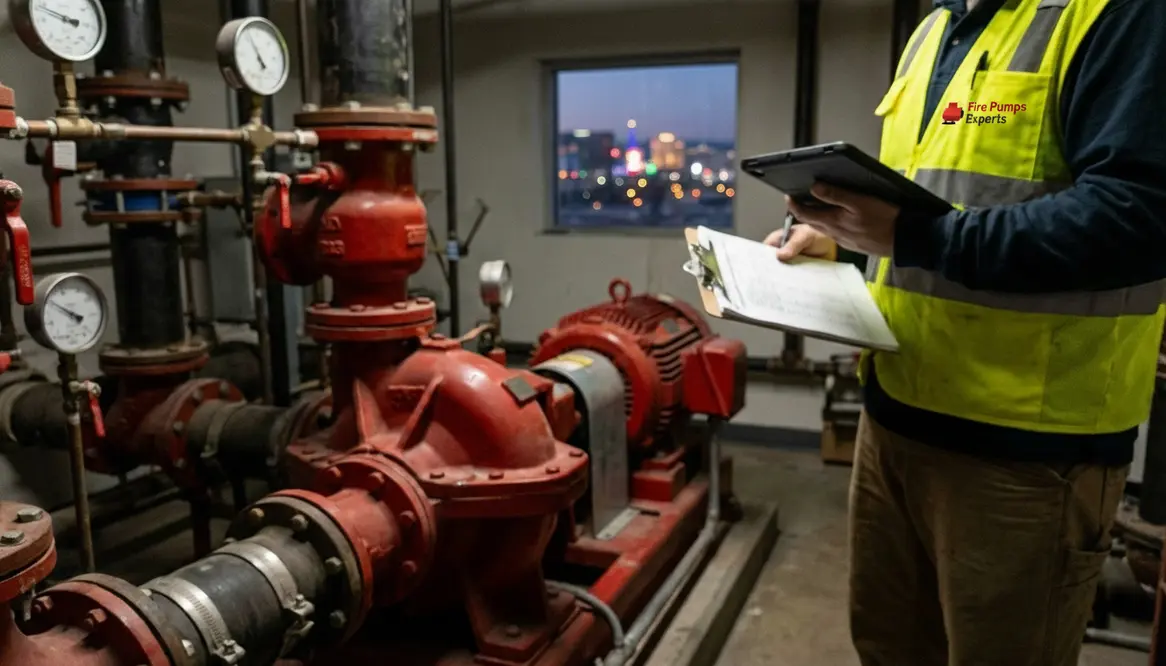
Las Vegas Fire Pump Inspections and Local Code
Navigating Fire Pump Inspections in Las Vegas Commercial Buildings
I have walked through enough mechanical rooms in Las Vegas to know one truth. Fire pumps do not care how busy your property is. They either work when called, or they do not. And when you factor in the local fire code impact, the stakes rise quickly. In this city, compliance is not just a box to check. It shapes how inspections are scheduled, how systems are tested, and how quickly issues must be corrected. So, let me guide you through it with a steady hand and just enough humor to keep things from feeling like a compliance seminar at 7 a.m.
At first glance, inspections seem straightforward. However, once you step inside a commercial or industrial facility, the details start stacking up like casino chips on a hot streak. I focus on three layers.
First, there is the weekly and monthly churn test. This ensures the pump starts and runs without hesitation. Then comes the annual flow test, where we measure performance under real demand. Finally, there is a full system review, including controllers, valves, and backup power.
Moreover, Las Vegas conditions add their own twist. Heat, dust, and long operational hours push systems harder than in milder regions. As a result, inspections here are less about routine and more about endurance. Think of it like training for a marathon, except the runner is a steel pump that never complains but always remembers neglect.
Las Vegas Fire Pump Reality Check
Las Vegas buildings do not get off easy. Long operating hours, heavy foot traffic, and relentless heat mean your fire pump rarely gets to “relax.” Inspections are not a formality; they are your proof that the system will answer the call when needed.
If you want a deeper technical walkthrough of inspection schedules and testing methods beyond your local fire code impact, resources like specialized fire pump guides can help you pair Las Vegas requirements with broader industry standards in a practical way.
What Do Fire Pump Inspections in Las Vegas Actually Involve?
Inspections are built on three layers that stack together into a complete picture of system health.
- Weekly and monthly churn tests to confirm the pump starts, runs, and behaves the way it is supposed to.
- Annual flow testing under actual demand conditions to prove the pump can deliver the pressure and volume the system was designed for.
- Full system review of controllers, valves, and backup power so no single weak link quietly undermines the entire setup.
In Las Vegas, those layers sit on top of an environment that never really cools off. Systems live in heat, dust, and long runtime expectations, so inspections feel less like a checklist and more like an ongoing stress test. Your pump is the quiet type, but if you neglect it, it absolutely remembers.
Local Fire Code Impact on Inspection Schedules
Now, let us talk about timing. The local fire code impact dictates strict inspection intervals for commercial and industrial buildings. I have seen properties try to stretch timelines, and let me say this plainly. That strategy never ends well.
Because Las Vegas enforces clear compliance standards, inspection schedules are not flexible suggestions. They are requirements tied to occupancy type, system design, and risk level. High rise buildings, manufacturing facilities, and large commercial campuses often face tighter oversight that leaves very little room for creative scheduling.
Additionally, inspectors expect documentation that tells a clean story. Every test, every adjustment, every repair must be recorded. If your paperwork looks like it was assembled during a power outage, you are already on thin ice, and your local fire code impact quickly turns into written corrections and follow up visits you did not plan on.
Why Schedules Are Non‑Negotiable
- They align testing frequency with actual building risk.
- They prove due diligence if something ever goes wrong.
- They keep inspections from becoming a scramble before renewals or audits.
How I Prepare a Commercial Building for a Fire Pump Inspection
Preparation separates smooth inspections from stressful ones. I approach it like staging a performance. The system needs to be ready before the curtain rises.
- Valve positions: I verify that all valves are in the correct position, especially suction, discharge, and bypass.
- Readable instruments: Gauges must be accurate, visible, and not buried behind creative storage decisions.
- History check: I review past inspection reports to catch any unresolved issues. If something was flagged before and ignored, it will return like a sequel nobody asked for.
- Clear access: No boxes, no random equipment, and no obstacle course between the door and the pump.
Inspectors do not enjoy squeezing past pallet racks and mystery crates to reach a pump room. Clean space signals control and professionalism, and it quietly tells them you treat both your system and your local fire code impact as part of daily operations, not as a yearly inconvenience.
Common Issues I See During Inspections
Even in well managed facilities, a few patterns show up again and again. And yes, some of them feel like déjà vu.
- Controllers with outdated settings or fault indicators left unresolved
- Diesel pumps with fuel quality issues or weak batteries
- Electric pumps with power supply inconsistencies
- Blocked or partially closed valves
- Incomplete or missing inspection logs
However, the most common issue is not mechanical. It is attention. When systems are out of sight, they drift out of mind. Unfortunately, fire does not operate on that same philosophy, and your inspection history will always reveal how seriously you treated that quiet time between emergencies.
Side‑by‑Side View of Proactive vs Reactive Inspection Strategies
Proactive Approach
- Scheduled testing without delays
- Immediate repairs after findings
- Clean and updated documentation
- Consistent system monitoring
Reactive Approach
- Last minute inspection prep
- Deferred maintenance
- Missing or messy records
- Frequent system surprises
As you can see, one approach feels like a calm drive down the Strip at sunrise. The other feels like rush hour with no brakes. I know which one I prefer, especially when the local fire code impact and real world emergencies intersect in the same week.
Local Fire Code Impact on Compliance and Risk
Compliance is not just about avoiding fines. It is about protecting operations, tenants, and assets. The local fire code impact ties directly into risk management for large properties, especially when those properties are open late, packed with people, and loaded with revenue producing equipment.
For example, if a fire pump fails during an emergency and inspection records show gaps, liability grows quickly. In contrast, a well maintained system with consistent testing demonstrates due diligence. That difference matters when decisions are made under pressure and when outside parties evaluate how seriously you treated your responsibilities.
Furthermore, insurance providers pay attention. A strong inspection history can support better coverage terms, while poor records may lead to higher costs or stricter conditions. So yes, inspections influence more than just compliance reports. They shape the story your building tells to regulators, insurers, and owners every time something goes wrong.
If you want to see how a specialized service provider approaches these same themes outside Las Vegas, Kord Fire Protection’s overview of fire pump inspections and maintenance at https://kordfire.com/fire-pump/ offers a helpful comparison point you can hold up against your own program.
FAQ About Fire Pump Inspections in Las Vegas
Below are some of the most common questions I hear from commercial and industrial building teams working to keep fire pumps ready for whatever comes next.
Conclusion
When I look at fire pump inspections in Las Vegas, I see more than a checklist. I see a system that protects people, property, and peace of mind. The local fire code impact is real, but it does not have to feel like a burden if you build it into your routine instead of treating it like an interruption.
If you manage a commercial or industrial facility, now is the time to take control of your inspection process, tighten your documentation, and stay aligned with code expectations. That means honest schedules, accurate records, and a pump room that does not make inspectors question their life choices when they open the door.
Work with experts who understand these systems deeply, keep your program grounded in both real world conditions and local requirements, and your fire pump will be ready for whatever comes next, even on the hottest day in Las Vegas.