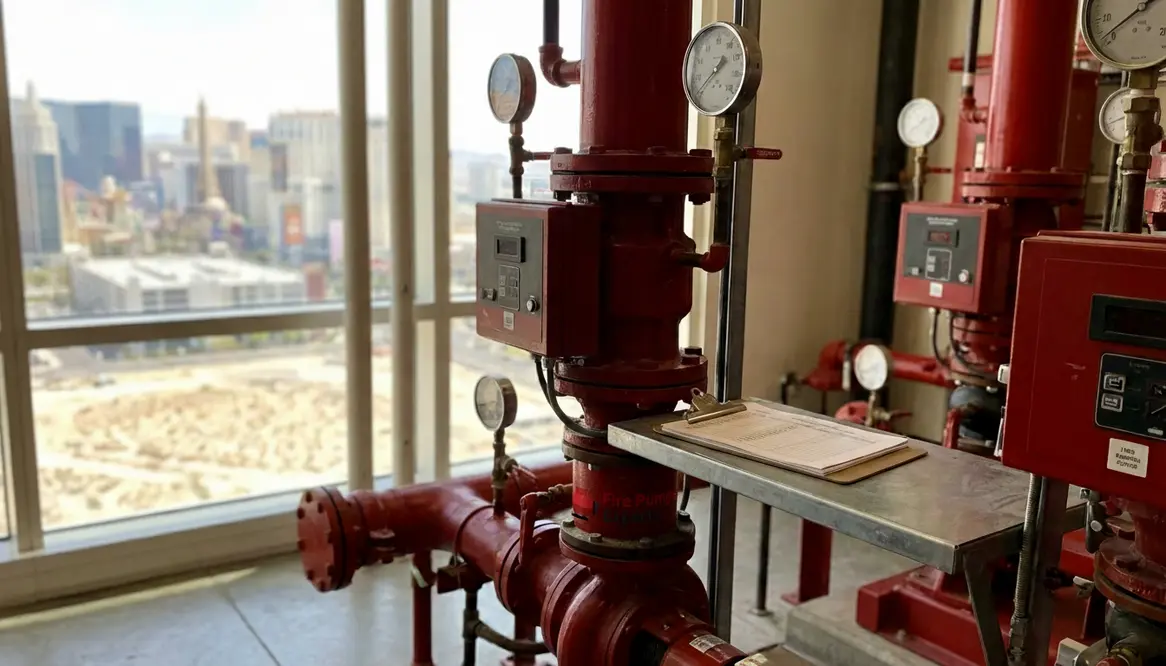
High Rise Fire Pump Compliance Las Vegas Guide
I have spent enough time around fire protection systems in Las Vegas to know one thing for certain. The desert does not forgive shortcuts, and neither do fire codes. When it comes to high-rise fire pump compliance, the stakes rise as fast as the buildings themselves. From luxury towers on the Strip to sprawling industrial campuses, staying compliant is not just about passing inspection. It is about ensuring that when the moment comes, everything works without hesitation. And trust me, fire does not wait for a rescheduled appointment.
Las Vegas High-Rise Reality Check
In a high-rise, gravity is not your friend, heat is relentless, and water has to be pushed where it does not naturally want to go. That combination makes high-rise fire pump compliance in Las Vegas less of a suggestion and more of a survival rule for your building.
What Does Fire Pump Compliance in Las Vegas Actually Require
Let me answer this the way most building managers wish someone had explained it on day one. Fire pump compliance in Las Vegas revolves around strict adherence to NFPA standards, local Clark County amendments, and routine verification that your system performs under real conditions. In other words, paperwork alone will not save you.
First, you need proper installation that meets code. Then, you need ongoing inspection, testing, and maintenance. Moreover, documentation must be airtight. Inspectors here are thorough, and they expect proof, not promises.
Additionally, high-rise systems demand consistent pressure levels across multiple floors. That means your pump must deliver reliable performance every single time it starts. If it stutters even once, it becomes a liability, not a safeguard. That is where teams that live and breathe pump standards, like those behind NFPA 20 fire pump design and installation guidance, earn their keep.
Core Ingredients of High-Rise Fire Pump Compliance
- Installation that meets NFPA and local Las Vegas requirements from day one
- Routine testing that proves the pump can actually deliver required flow and pressure
- Maintenance structured around heat, demand, and high-rise system complexity
- Detailed, current documentation that tells inspectors exactly what has been done and when
High Rise Fire Pump Compliance in Las Vegas Buildings
High-rise buildings bring their own personality to the compliance conversation. And by personality, I mean complexity that could rival a Christopher Nolan plot.
Because of vertical design, fire pumps must overcome gravity, friction loss, and system demand all at once. Therefore, engineers design these systems with precise pressure zones and backup redundancies. However, even the best design falls apart without proper upkeep.
I always emphasize three pillars here. Regular flow testing, controller functionality checks, and valve inspections. If one piece slips, the entire system can underperform. Furthermore, Las Vegas heat adds stress to mechanical components, which means wear and tear happens faster than most expect.
So yes, that monthly churn test you have been tempted to delay matters more than you think. Skipping it is like skipping oil changes in a high performance car. It will run fine until it very much does not. And when we are talking about high-rise fire pump compliance during a real emergency, “very much does not” is not the phrase you want to discover in real time.
Why High-Rise Systems Are Less Forgiving
Once you start stacking floors, weaknesses that might be “annoyances” in a low-rise become flat-out hazards. Long vertical runs magnify pressure losses, valve problems compound quickly, and any misstep in your high-rise fire pump compliance strategy ripples through the entire building.
How I Keep Commercial Fire Pumps Inspection Ready Year Round
Consistency beats panic every time. I have seen facilities scramble before inspections, and it never ends well. Instead, I stick to a structured approach that keeps systems ready at all times.
Routine Actions I Prioritize
- Weekly visual inspections for leaks and abnormal noise
- Monthly churn tests to verify automatic start
- Quarterly flow tests for performance validation
- Annual full system inspections with certified professionals
What I Never Ignore
- Controller alarms or warning signals
- Pressure drops across zones
- Fuel levels for diesel driven pumps
- Accurate and updated maintenance logs
In addition, I keep detailed records. Not because I enjoy paperwork, but because inspectors do. And honestly, clear documentation saves time, money, and awkward explanations later. It also ties directly into high-rise fire pump compliance when questions come up about performance history, past defects, or trends in test results.
Documentation That Makes Inspectors Relax
- Log every weekly visual inspection and monthly churn test
- Attach reports from quarterly and annual flow tests
- Track part replacements and controller adjustments by date
- Keep a running list of corrective actions and follow-up verification
Common Compliance Mistakes I See in Large Facilities
Let me be blunt. Most compliance issues are preventable. Yet they show up again and again like a rerun nobody asked for.
One major issue is neglected testing schedules. Facilities assume that if the pump worked last year, it will work this year. Unfortunately, mechanical systems do not share that optimism.
Another common problem is outdated components. Controllers, gauges, and valves all have lifespans. When they age out, performance drops. Meanwhile, some facilities rely on incomplete records, which can trigger immediate red flags during inspections.
Also, I often see coordination gaps between maintenance teams and compliance officers. When communication breaks down, critical steps get missed. And in this field, missing a step is not a small oversight. It is a risk multiplier that can undo months of otherwise solid high-rise fire pump compliance work.
Red Flags That Threaten High-Rise Compliance
- Missed or undocumented weekly and monthly testing
- Pumps or controllers operating outside manufacturer recommendations
- Known leaks left “for later” in risers or pump rooms
- Valves not in their correct position when inspectors arrive
- Staff who are unclear on who owns what in the compliance chain
How Do I Prepare for a Fire Pump Inspection in Las Vegas
I treat every inspection like it could happen tomorrow. Because sometimes, it practically does.
First, I verify that all recent tests are documented and signed. Next, I confirm that the pump room is clean, accessible, and properly ventilated. Inspectors notice everything, including the small details most people overlook.
Then, I run a pre inspection test. This allows me to catch any irregularities before someone else does. Additionally, I check that all gauges are readable and calibrated.
Finally, I walk through the system as if I were the inspector. If something looks questionable, it probably is. Fixing it early saves a lot of stress later. And yes, fewer surprises means fewer headaches, especially when you are juggling other parts of high-rise fire pump compliance across a large portfolio.
Pre-Inspection Checklist That Actually Works
- Confirm all weekly, monthly, and annual tests are current
- Make sure pump room lighting, clearance, and signage are in good shape
- Verify that control panel labels and indicators are easy to interpret
- Walk the standpipe and riser routes for visible issues in a high-rise
- Stage key documentation where inspectors can see it immediately
FAQ About Fire Pump Compliance in Las Vegas
How often should fire pumps be tested
Weekly visual checks, monthly churn tests, and annual full flow tests are standard.
Who enforces fire pump compliance in Las Vegas
Local authorities and fire departments enforce codes alongside NFPA standards.
What happens if my system fails inspection
You may face fines, required repairs, and possible operational delays until compliance is restored.
Are diesel fire pumps harder to maintain
They require fuel management and additional checks, but they are reliable when maintained properly.
Do high rise buildings need special fire pump systems
Yes, they require higher pressure systems and more complex configurations to meet demand.
Stay Ready So You Never Have to Get Ready
In Las Vegas, compliance is not a one time achievement. It is an ongoing commitment. When I stay ahead of maintenance, testing, and documentation, I avoid costly surprises and keep people safe. If you manage a commercial or industrial property, now is the time to take control of your system. Partner with experts, stay consistent, and treat your fire pump like the lifeline it is. Because when everything is on the line, preparation makes all the difference.
In the end, high-rise fire pump compliance in Las Vegas is really about discipline: doing the small, boring tasks over and over so that when something big and unexpected happens, your system responds exactly the way it was designed to. The city can be chaotic; your fire pump program should not be.
If you want a sanity check on where you stand, compare your current routine to what top-tier specialists recommend for inspections, testing, and documentation. Use that as your roadmap to tighten up weak spots, and your high-rise fire pump compliance will stop being a source of anxiety and start being one more thing you know is handled.