Developer Fire Pump Planning Las Vegas Systems
I have spent years around commercial fire protection systems, and if there is one place that keeps engineers humble, it is Las Vegas. Between towering resorts, sprawling industrial campuses, and facilities that never sleep, developer fire pump planning here is not just a box to check. It is a mission. In this city, water has to move fast, systems have to perform under pressure, and designs must anticipate everything from peak occupancy to desert heat. So let me walk you through what really matters when designing fire pump systems for major commercial properties in Las Vegas, with a little clarity and maybe a chuckle along the way.
What Makes Fire Pump Design in Las Vegas So Unique
Las Vegas is not your average environment, and your design cannot be average either. First, the climate is unforgiving. High ambient temperatures affect equipment performance, especially pump rooms without proper cooling. Additionally, water supply conditions can vary widely depending on location and municipal infrastructure.
Because of that, I always approach fire pump system planning for developers with a focus on reliability under stress. Not theoretical stress. Real stress. The kind that shows up at 2 a.m. when a facility is packed and something goes wrong.
Moreover, local codes and NFPA standards are strictly enforced, and inspectors in Las Vegas tend to have a sharp eye. They have seen it all. If your system cuts corners, they will spot it faster than a blackjack dealer spotting a bad hand.
Core Design Factors for Commercial Fire Pump Systems
When I design systems for large commercial or industrial facilities, I focus on a few non negotiables. These are the backbone of any solid plan. In other words, this is where developer fire pump planning either shines or falls apart.
Water Supply Reliability
You cannot fight fire without water. That sounds obvious, yet I have seen projects underestimate supply limitations. Whether you rely on city mains or storage tanks, your system must meet both flow and duration requirements without hesitation. Reliable supply is the quiet hero of developer fire pump planning in Las Vegas.
Pump Type Selection
Horizontal split case, vertical turbine, or inline pumps each serve specific needs. In Las Vegas, vertical turbine pumps often come into play when supply conditions are less than ideal. Choosing the wrong type is like bringing a spoon to a sword fight. Matching pump type to your building, water source, and code requirements is non negotiable.
Redundancy and Backup Power
Power loss is not a maybe. It is a when. Diesel driven pumps or backup generators ensure the system operates when the grid does not. And trust me, a silent pump during an emergency is not the kind of drama anyone enjoys. Proper redundancy turns a good design into one that is ready for the worst night of the year.
Pressure Zoning for High Rise Buildings
Many Las Vegas properties reach impressive heights. That means pressure must be carefully managed across zones. Too little pressure, and water does not reach upper floors. Too much, and you risk damaging the system itself. Smart zoning is one of the most critical parts of developer fire pump planning for resorts and mixed-use towers.
Smart Layout Strategies for Large Facilities
Layout is where planning meets reality. I like to think of it as choreography. Everything must move smoothly, or the whole performance falls apart. The way you place the pump room, route piping, and coordinate systems shows whether developer fire pump planning was intentional or just patched together.
Efficient Pump Room Placement
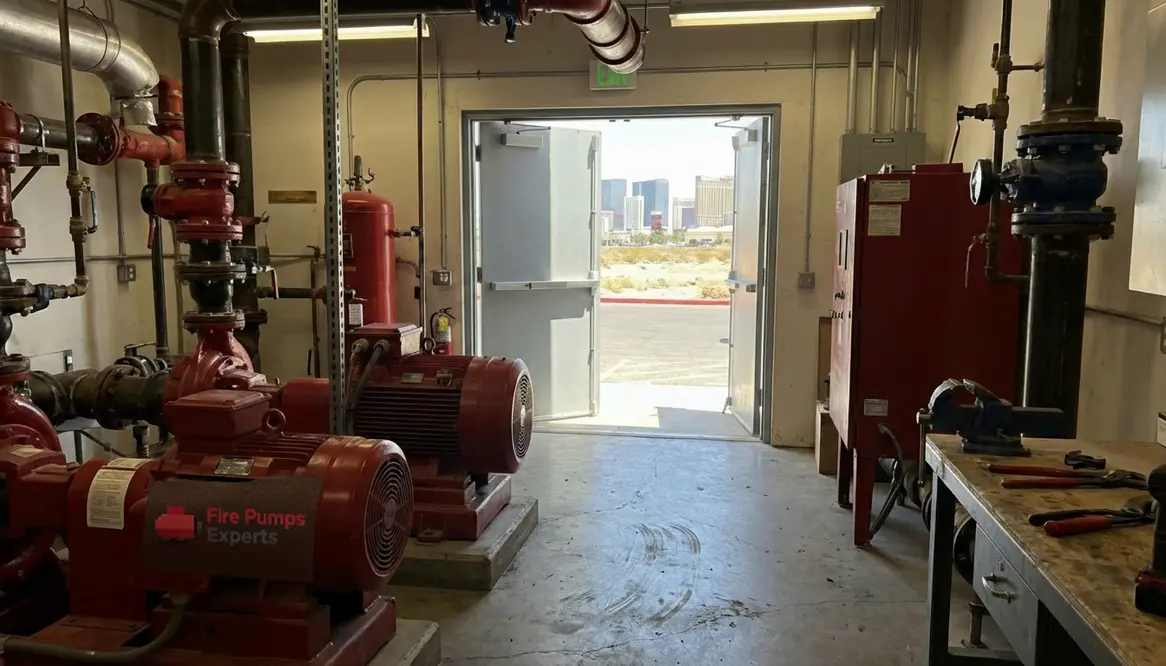
Position pump rooms where they are accessible yet protected. Flood risk, ventilation, and maintenance access all matter. A hidden pump room might look clean on paper, but it becomes a nightmare during inspections. The best designs in Las Vegas keep technicians out of obstacle courses and keep equipment out of harm’s way.
Clear Piping Routes
Straightforward piping reduces friction loss and improves performance. Every unnecessary bend is like asking the system to take the scenic route during an emergency. Not ideal. When a fire breaks out, you want hydraulic efficiency, not sightseeing.
Future Expansion Readiness
Las Vegas properties evolve. Designing with expansion in mind avoids costly retrofits later. I always leave room for growth, because no one builds small forever here. Developer fire pump planning is at its best when today’s design does not box in tomorrow’s ambitions.
Integration with Fire Protection Systems
The pump must work seamlessly with sprinklers, standpipes, and alarms. Coordination across systems is essential. Otherwise, you end up with components that behave like strangers at a party. Tight integration also makes it easier for service providers like fire pump specialists to inspect, test, and maintain everything as a unified system.
Developer Fire Pump Planning That Actually Works
Let me be direct. Developer fire pump planning is not about reacting to code requirements at the last minute. It is about leading with strategy from day one. You can either design the system that your building deserves, or negotiate with physics, inspectors, and schedules for the next two years.
I collaborate early with architects, engineers, and facility stakeholders. That way, we align system demands with building design instead of forcing adjustments later. This approach saves time, reduces cost surprises, and improves overall performance. It also keeps late-stage value engineering from quietly sabotaging your risk profile.
Additionally, I account for operational realities. Who maintains the system? How often will it be tested? Is the staff trained? A perfect design on paper means very little if it fails in practice. Real developer fire pump planning looks beyond drawings and asks, “Who is actually running this system at 3 a.m.?”
And yes, sometimes I have to deliver tough news. No, you cannot shrink the pump room to make space for a coffee bar. Even in Las Vegas, some bets are not worth taking. Trading code-compliant access and clearances for aesthetics is how you end up explaining design decisions to very patient, very strict inspectors.
How Do I Ensure Compliance and Long Term Performance
I treat compliance as a baseline, not a finish line. Meeting NFPA 20 and local fire codes is essential, but I go further by stress testing assumptions and planning for real world conditions. Las Vegas does not reward systems that only work on calm days with empty hallways.
For example, I evaluate peak demand scenarios, simulate pressure drops, and verify system response times. I also prioritize high quality components and clear documentation. Because when something goes wrong, clarity matters more than cleverness. Solid developer fire pump planning means you can trace what the system is doing and why, without guesswork.
Routine testing and maintenance planning are also part of the design phase. If a system is difficult to test, it often will not be tested properly. And that is where problems begin. Making weekly churn tests, annual flow tests, and documentation straightforward is just as important as pump horsepower on the spec sheet.
FAQ: Fire Pump Design for Las Vegas Commercial Projects
Over the years, a few questions come up again and again during developer fire pump planning meetings. Here are straightforward answers to the most common ones.
Bring Confidence to Your Next Project
If you are planning a commercial or industrial project in Las Vegas, now is the time to get serious about your fire protection strategy. I approach every project with precision, foresight, and a clear understanding of what is at stake. Thoughtful developer fire pump planning is one of the most direct ways to protect people, property, and business continuity.
Reach out today, and let us build a system that performs when it matters most. Because in this city, reliability is not optional. It is everything.