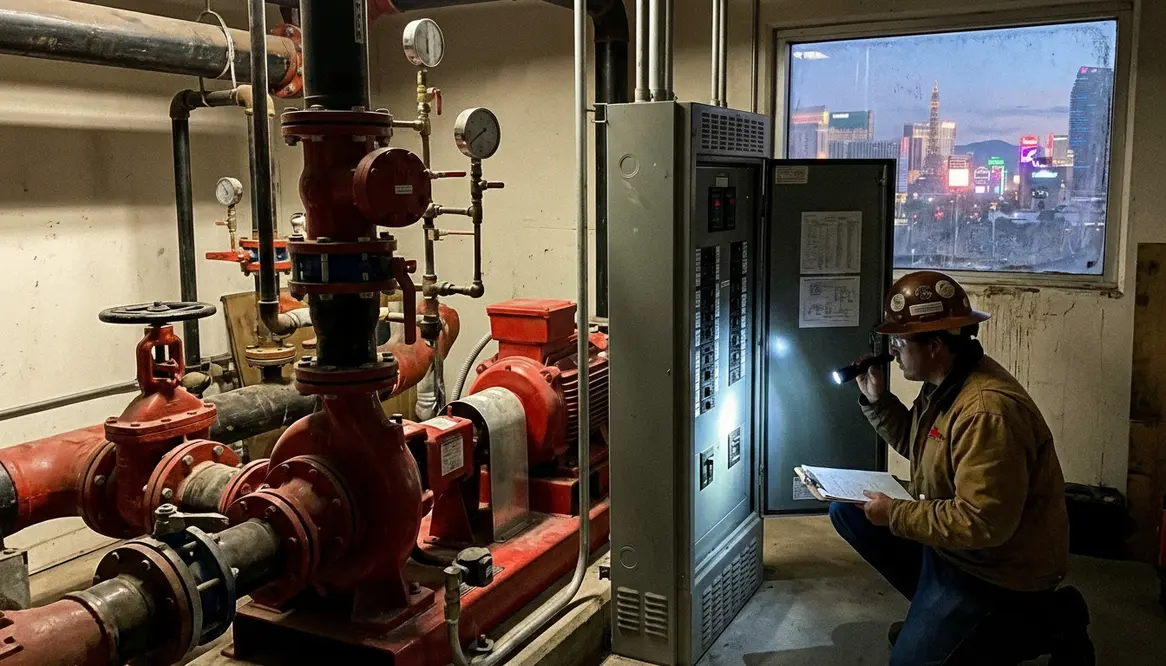
Las Vegas Fire Pump Acceptance Test Prep Guide
What Do Inspectors Actually Expect From Your Fire Pump System?
Let me answer this plainly. Inspectors want confidence. They want to see a system that starts without hesitation, runs without drama, and delivers pressure like it has something to prove.
First, I confirm that the pump starts automatically. Then, I make sure it reaches rated capacity without odd vibrations or pressure drops. Meanwhile, I review documentation because if it is not written down, it might as well not exist.
What I Keep In Mind Before Any Fire Pump Acceptance Test
- Automatic start must feel instant, not hesitant.
- Pressure should rise smoothly and stay steady.
- No unexplained noises, shakes, or dips in performance.
- Paperwork must back up what the pump is doing in real time.
Additionally, I look at controller settings, alarms, and power supply. Las Vegas facilities often rely on complex electrical systems, so I double check backup power. After all, a fire pump that only works when everything else is perfect is like a casino that only pays out on weekends. It sounds nice, but nobody believes it.
Start With Mechanical Readiness Before the Fire Pump Acceptance Test
I always begin with the physical condition of the pump. This is where many facilities trip up, not because the issues are complex, but because they are overlooked.
First, I inspect for leaks, corrosion, and loose fittings. Then, I verify that valves are in the correct position. Closed valves have ruined more inspections than I care to count.
Alignment, Lubrication, and Wear
Next, I check alignment and lubrication. A misaligned pump might still run, but it will not run well. Over time, that small issue becomes a very expensive conversation.
Instrumentation You Can Trust
Finally, I examine gauges and meters. If they are not accurate, then your test results will not be either. And inspectors do not enjoy guessing games.
Electrical Systems and Controllers Deserve Your Full Attention
Now we move into the brain of the operation. The controller is not just a box on the wall. It is the decision maker.
How I Exercise the Controller
I test both automatic and manual start functions. Then, I simulate conditions that trigger the pump. This ensures the system responds exactly as designed.
Communication, Alarms, and Backup Power
In addition, I verify that all alarms communicate properly. In large commercial and industrial buildings across Las Vegas, integration matters. Your fire pump should not operate in isolation. It needs to talk to the rest of the building systems like a well rehearsed ensemble.
And yes, I always check battery systems and backup power. Because when the lights go out, your fire pump should not join them.
Documentation That Makes Inspectors Nod Instead of Frown
Paperwork may not be glamorous, but it has a quiet power. When I present clean, organized records, the tone of the inspection changes immediately.
I gather maintenance logs, previous test results, and repair records. Then, I ensure everything is current and easy to read. Inspectors appreciate clarity. They do not want to dig through a pile of mystery documents like they are searching for buried treasure.
Moreover, I include records from prior performance evaluations, including any fire pump acceptance test data. This creates a clear timeline of reliability and helps demonstrate consistency.
What I Always Prepare
- Maintenance logs
- Inspection reports
- Controller test records
- Repair history
What Inspectors Look For
- Consistency in performance
- Clear documentation
- Code compliance
- Immediate issue resolution
If you want a broader look at how water supply testing connects to fire protection strategy, a resource like Kord Fire Protection’s NFPA 291 hydrant testing guide at this NFPA 291 fire hydrant testing article shows how upstream performance supports what your pump is trying to deliver.
Run a Full Performance Check Before Inspection Day
This is where preparation becomes proof. Before any official inspection, I conduct a full operational test.
I run the pump at churn, then at rated load, and finally at peak demand. During this process, I monitor pressure, flow, and stability. If anything feels off, I address it immediately.
Furthermore, I simulate real world conditions. Because a pump that only performs in perfect scenarios is about as useful as a lifeguard who cannot swim.
This step often mirrors parts of a fire pump acceptance test, but with one key difference. Here, I control the environment. That gives me the chance to fix problems before anyone else notices them.
Common Issues I Fix Before They Become Big Problems
Over the years, I have seen patterns. The same issues appear again and again, quietly waiting to ruin an otherwise smooth inspection.
Low suction pressure is a common one. So is air trapped in the system. Additionally, worn components can reduce efficiency without obvious warning signs.
Controller and Timing Problems
I also watch for controller misconfigurations and delayed start times. These are subtle issues, but they matter. In a real emergency, seconds are not just numbers. They are consequences.
Fixing these early keeps your system reliable and your inspection stress free. And trust me, a calm inspection day is a beautiful thing.
FAQ About Preparing Fire Pumps for Inspection
How often should I test my fire pump?
I recommend weekly churn tests and annual full performance testing for commercial systems.
What fails most inspections?
Closed valves, poor documentation, and electrical issues are the most common causes.
Do I need a full performance test every time?
Not always, but pre testing before an inspection greatly improves success rates.
How long does an inspection take?
Most inspections take a few hours, depending on system complexity.
Who should handle preparation?
Experienced professionals who specialize in commercial and industrial fire pump systems.
Final Thoughts and Your Next Step
Preparation is not about avoiding failure. It is about building confidence into every component of your system. When I prepare a fire pump for inspection, I remove uncertainty piece by piece. If your Las Vegas facility demands reliability, then now is the time to act.
Schedule a professional evaluation, fine tune your system, and walk into your next fire pump acceptance test knowing everything will perform exactly as it should. When the inspector arrives, the goal is simple: your pump starts cleanly, your paperwork speaks clearly, and the only surprise in the room is how uneventful the whole thing feels.