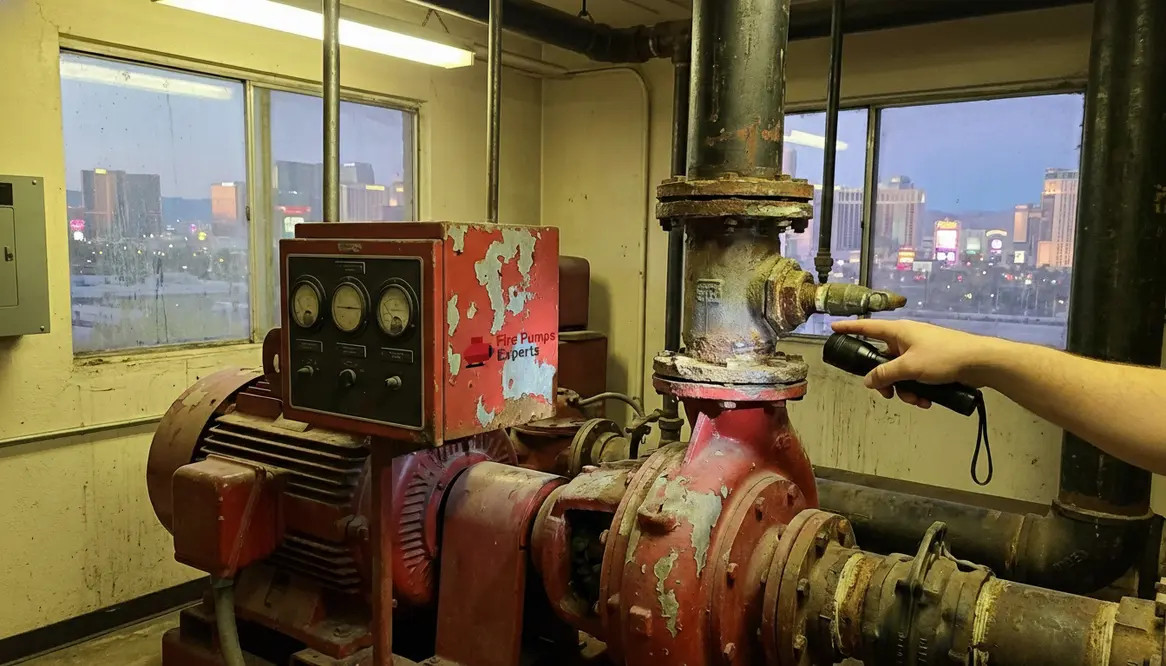
Las Vegas Fire Pump Upgrades for Commercial Buildings
I have spent years walking through older commercial buildings in Las Vegas, and I can tell you this right away: fire protection systems age quietly, but they fail loudly. Early in my career, I learned how Bakersfield fire pump requirements set a clear baseline for performance, testing, and reliability. Those standards shaped how I evaluate upgrades today. And while Las Vegas has its own codes, the mindset carries over. You either stay ahead of risk, or risk introduces itself at the worst possible moment. No one wants their fire pump to make its dramatic debut during an actual emergency. That is not the kind of grand opening anyone signs up for.
In Las Vegas, the stakes for commercial fire protection are unusually high. High-rise hotels, sprawling retail centers, and dense mixed-use properties rely on fire pumps as the backbone of their water-based protection. When those pumps are tired, undersized, or ignored, everything downstream is at risk.
That is why I often compare Las Vegas upgrades to the discipline found in Bakersfield fire pump requirements. The geography and occupancy types may differ, but the mindset is the same: consistent testing, documented performance, and a refusal to accept “good enough” when lives and property depend on it.
Why older Las Vegas buildings need fire pump upgrades now
Older commercial and industrial properties in Las Vegas face a unique mix of challenges. First, water demand has changed. Buildings have expanded, tenant needs have evolved, and fire codes have tightened. As a result, many legacy fire pumps simply cannot keep up.
At the same time, parts wear down. Controllers become outdated. Flow performance drops. However, these issues rarely announce themselves with flashing lights and a soundtrack. Instead, they sit quietly until a test fails or worse, a real event exposes the gap.
So I always tell property managers this: upgrading is not about checking a box. It is about ensuring your system performs under pressure, literally. And in a city that never sleeps, your fire protection should not either.
Hidden stresses in legacy fire pump systems
One of the most dangerous myths in older properties is the idea that “it has always worked, so it will keep working.” Behind the scenes, pump shafts, bearings, seals, and electrical components are all aging. Expansion projects add floors and tenants without revisiting whether the original pump curve still makes sense for today’s demand.
Meanwhile, local interpretations of codes and insurance expectations continue to evolve. The same way Bakersfield fire pump requirements push building owners toward regular validations, Las Vegas facilities benefit from treating their fire pump as critical infrastructure instead of a forgotten mechanical accessory.
How do I know if my fire pump system is outdated?
I look for a few clear signals. First, I check performance data. If your pump struggles to meet required flow and pressure during testing, that is your opening clue. Next, I examine the controller. If it looks like it belongs in a museum next to a VHS player, it is time.
Additionally, I pay attention to compliance gaps. Codes evolve, and while your system may have been compliant years ago, it might not meet current expectations. That is where lessons from Bakersfield fire pump requirements come in handy. They emphasize consistent testing and performance validation, not just installation.
Finally, I consider reliability. Frequent repairs, odd noises, or delayed startup are all red flags. A fire pump should respond instantly. Not eventually. Not after a motivational speech.
Early warning signs you should not ignore
- Test curves that consistently fall below original design values
- Visible corrosion on piping, valves, or pump housings
- Controllers with missing labels, taped-over alarms, or improvised “fixes”
- Difficulty sourcing replacement parts because the model is decades old
- Documentation that exists only as a rumor and not in an actual binder
When a system starts checking more than one of those boxes, it is time to move from patching problems to planning a structured upgrade.
Key upgrade components that actually make a difference
When I plan an upgrade, I focus on impact, not just replacement. Throwing in a new pump without addressing the system around it is like putting a race car engine into a car with flat tires. Impressive, but not useful.
Core mechanical improvements
Mechanical upgrades address the heart of your system. When they are done right, you gain predictable pressure, reliable flow, and fewer late-night repair calls.
- Modern fire pump with proper flow capacity
- Efficient driver systems
- Updated piping configurations
- Improved suction and discharge design
Control and monitoring upgrades
Modern controllers and monitoring turn a black box into a transparent system. You see problems before they become failures.
- Smart controllers with diagnostics
- Remote monitoring capabilities
- Alarm integration with building systems
- Data logging for compliance tracking
Moreover, I always recommend integrating monitoring tools. They turn your fire pump from a silent box into a system that actually communicates. Think of it as upgrading from a flip phone to a smartphone. Same purpose, far better awareness.
If you want a deeper technical view on how standards shape these choices, resources like NFPA 20 fire pump guidelines from Kord Fire Protection offer a solid framework for design, installation, and long-term compliance.
Balancing compliance with real world performance
Meeting code is essential. However, I never stop there. Code is the minimum. Performance is the goal.
Las Vegas properties often deal with high occupancy loads and complex layouts. Therefore, I evaluate how water moves through the building under real conditions. I simulate demand. I review pressure loss. I make sure the system does not just pass a test, but actually protects the structure.
Also, I coordinate closely with facility teams. Because even the best system fails if no one understands how to maintain it. Training matters. Documentation matters. And yes, routine testing matters more than most people expect.
Lessons from disciplined jurisdictions
Consistent application of standards, similar to what you see in Bakersfield fire pump requirements, reinforces a valuable habit: never let paperwork replace performance. A system that looks compliant on paper but fails under flow test conditions is a liability, not an asset.
In Las Vegas, aligning your upgrades with both local fire department expectations and proven approaches from other jurisdictions gives you resilience, not just a sign-off.
What does a fire pump upgrade project look like in Las Vegas?
It starts with an assessment. I walk the site, review records, and test performance. Then, I design a solution that fits the building, not a generic template.
Next comes planning. Timing is critical, especially for commercial operations that cannot afford downtime. So we phase the work carefully. We keep systems operational whenever possible.
Then we execute. Installation, calibration, testing. Every step matters. And finally, we validate the system under load. Because if it cannot perform during testing, it will not perform when it counts.
It is a process, yes. But it is a controlled one. Unlike a fire emergency, which tends to ignore your calendar completely.
From assessment to quiet confidence
- Assessment: Document existing conditions, test the pump, identify code and performance gaps.
- Design: Match pump size, controller type, and piping modifications to real building demand.
- Execution: Coordinate installations, changeovers, and temporary measures to maintain protection.
- Validation: Prove, under test, that the upgraded system hits its targets with room to spare.
Comparing local expectations with Bakersfield fire pump requirements
While every jurisdiction has its own adopted codes and enforcement style, there is a practical advantage in using stricter benchmarks as your internal standard. The discipline reflected in Bakersfield fire pump requirements encourages owners and managers to:
- Plan regular, documented performance testing instead of waiting for an inspection notice
- Upgrade controllers before parts become impossible to find
- Integrate monitoring so alarms are noticed instantly, not days later
- Treat fire pumps as mission-critical equipment, not background noise in a mechanical room
When you carry that mindset into Las Vegas projects, you are no longer just “meeting code.” You are building in resilience that protects guests, staff, and assets even as buildings expand, tenants change, and regulations evolve.
FAQ: Fire pump upgrades for commercial buildings
Below are some of the questions I hear most often when owners and managers start planning serious upgrades to their Las Vegas fire pump systems.
Conclusion: Take control before the system takes control of you
If you manage a commercial or industrial property in Las Vegas, now is the time to act. I approach every upgrade with precision, clarity, and a focus on long term reliability. Because when a fire pump is needed, it must perform without hesitation. Reach out, schedule an evaluation, and let us bring your system up to a standard that works when it matters most. Quiet confidence beats loud regret every single time.
Whether you are guided by local codes or by the more rigorous expectations seen in Bakersfield fire pump requirements, the goal is the same: a system that works the first time, every time. In a city built on spectacle, your fire pump should never be the star of the show.