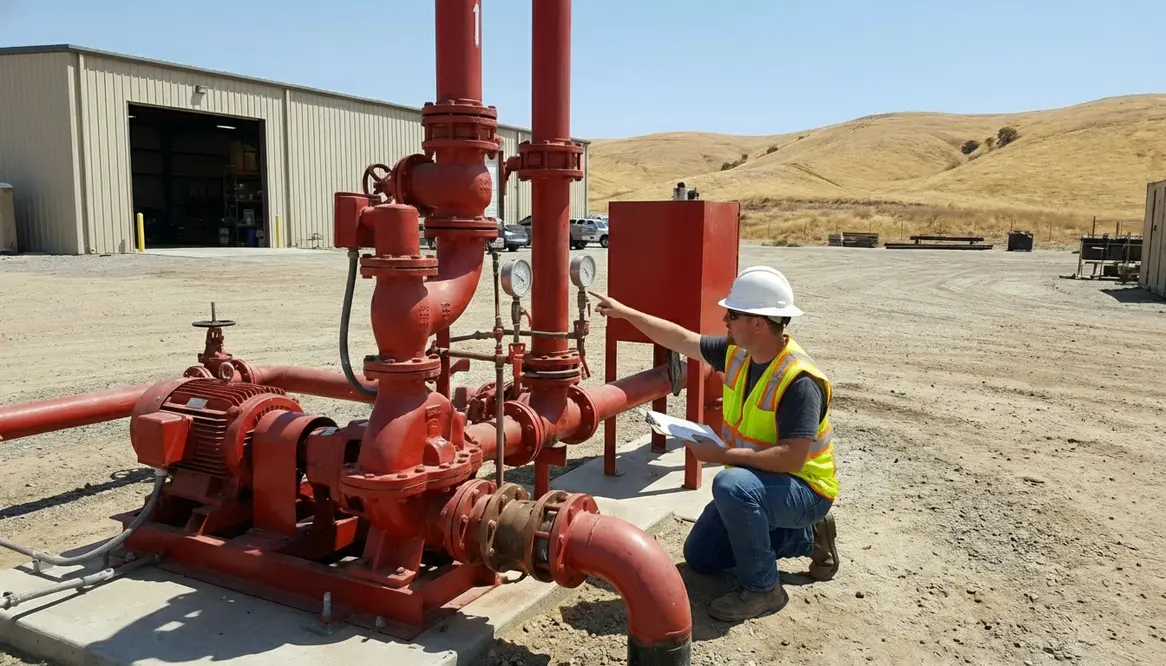
Choosing Fire Pumps in Kern County and Avoiding Issues
Fire pumps are not background extras in your facility; they are the ones expected to carry the scene when everything else goes wrong. In Kern County, where water conditions, facility sizes, and industrial risks collide, choosing the wrong pump or ignoring fire pump inspection issues can turn a solid plan into an expensive disappointment.
I have spent enough time around commercial and industrial properties in Kern County to know one thing for certain. Fire protection is not where you cut corners. And yet, I still see the same fire pump inspection issues pop up again and again. Systems that look solid on paper but fall short under pressure. Maintenance gaps. Poor sizing. And choices made in a hurry that end up costing far more later. So today, I want to walk you through how I approach choosing the right fire pump, calmly and carefully, like a good jazz rhythm that never misses a beat.
If you are responsible for a Kern County facility, fire pump inspection issues are not just paperwork problems; they are signals that something in the system design, maintenance, or operation is off-beat.
The goal is not just to install a pump; it is to have a system that behaves exactly as it should on the worst day your building ever has.
Understanding Fire Pump Inspection Issues Before You Choose
Before I even think about selecting a fire pump, I take a close look at existing fire pump inspection issues. Why? Because they tell a story. And frankly, it is usually not a happy one.
For example, I often find undersized pumps struggling to meet demand. Meanwhile, in other facilities, oversized units cycle too frequently, wearing themselves out like a treadmill in January. Therefore, identifying these performance gaps early helps me avoid repeating the same mistakes.
Additionally, Kern County brings its own challenges. Water supply variability, large facility footprints, and industrial hazards all play a role. So, I always ask myself what failed before and why. That answer shapes every decision that follows.
Common patterns hidden in inspection reports
When I review fire pump inspection issues, I am not just hunting for red X marks; I am looking for patterns:
Repeated low-pressure readings under flow
Jockey pump running far more than it should
Controllers located in cramped, overheating rooms
Suction piping with awkward bends or restrictions
Testing connections that are hard to access, so they simply do not get used
Each of these shows up as an inspection line item, but together they point to design choices that are quietly setting the system up for failure.
What Type of Fire Pump Does My Kern County Facility Need
Now, let us get practical. Choosing the right type of pump is not about guessing. It is about matching the system to the risk.
In most commercial and industrial properties, I typically consider these options:
Centrifugal pumps are the most common. They are reliable and efficient, which is why they show up everywhere from warehouses to processing plants.
Vertical turbine pumps work best when water comes from underground sources. In Kern County, where groundwater use is common, this option often makes sense.
Diesel driven pumps step in when power reliability is questionable. And let us be honest, power outages do not send a warning text first.
However, I do not just pick based on type. I match the pump to hazard classification, building size, and required flow. If you skip that step, you are basically casting a superhero without knowing the script. It might look good, but it will not perform when it matters.
Matching pump choice to Kern County realities
Between agricultural operations, warehouses, logistics hubs, refineries, and mixed industrial sites, Kern County knows how to keep facilities busy. That activity brings varied water demands, high hazard areas, and long piping runs that magnify any design flaw.
This is where the right partner matters. Working with a team that lives and breathes Kern County fire protection, like the crew behind Kern County fire protection services, helps line up your real-world risks with the right fire pump design, instead of relying on guesswork or copy-paste solutions.
Flow Rate and Pressure That Actually Fit the Facility
Once I know the type, I focus on flow rate and pressure. This is where precision matters. A lot.
I calculate demand based on sprinkler systems, standpipes, and any specialized suppression systems in place. Then, I factor in future expansion. Because if your facility grows and your pump does not, you will be right back here having this conversation again.
Moreover, I always account for pressure loss across the system. Pipes, elevation, and layout all eat away at pressure. Therefore, I ensure the pump can handle real world conditions, not just ideal ones.
Think of it like casting a lead actor who can handle both drama and action scenes. You need range, not just a good first impression.
How fire pump inspection issues expose sizing mistakes
When a pump is too small, inspection tests quickly reveal low residual pressures, especially at remote hydrants or standpipe outlets. When a pump is too large, it may hit shutoff pressure too easily, short-cycle, or create stress on components that were never meant to deal with that much energy in normal operation.
These are not just technical nitpicks. Over time, they show up as recurring fire pump inspection issues: frequent corrective actions, repeated notes about performance outside the expected curve, and frustrated maintenance crews who spend their nights chasing the same problems.
Comparing Electric and Diesel Drivers Side by Side
Electric driven pumps
These are efficient and easier to maintain. If your facility has a stable power supply, this is often my first choice. They are quieter too, which your maintenance team will appreciate at 2 AM.
They pair well with facilities that already have robust electrical infrastructure and can support the starting currents without dimming the neighborhood.
Diesel driven pumps
These shine when reliability is critical. Even if the grid goes down, the pump keeps running. However, they require more upkeep and fuel management, so I plan accordingly.
Fuel storage, ventilation, exhaust routing, and periodic testing become part of the ongoing rhythm. Ignore any of those, and they will show up as increasingly serious fire pump inspection issues over time.
Ultimately, I choose based on risk tolerance and infrastructure. In high stakes industrial environments, redundancy is not a luxury. It is a requirement.
Avoiding Fire Pump Inspection Issues Through Smart Design
Here is where everything comes together. Because even the best pump will fail if the system design is flawed.
I pay close attention to controller placement, suction piping design, and proper testing connections. In fact, many fire pump inspection issues I encounter come down to poor installation rather than bad equipment.
Additionally, I ensure compliance with NFPA standards and local Kern County regulations. Not because it looks good on paper, but because it ensures the system performs when it counts.
And yes, I always think about long term maintenance. If your system is difficult to test or access, it will not get tested properly. That is just human nature. So I design with real people in mind, not just theoretical perfection.
Design checkpoints that prevent recurring problems
Clear, code-compliant access routes to the fire pump room
Straight, properly sized suction piping with minimal turbulence
Discharge, test header, and relief valve arrangements that actually match NFPA 20 intent
Ventilation that keeps diesel drivers within their temperature limits
Adequate lighting and work space so inspections and testing do not turn into acrobatics
When these are handled correctly upfront, inspection visits stop being a tour of new problems and start becoming simple confirmations that the system is still on beat.
How I Future Proof Fire Protection Systems
I never treat a fire pump as a one time decision. Instead, I look ahead.
Facilities evolve. Operations expand. Risks change. Therefore, I build flexibility into every system. I leave room for increased demand, integrate monitoring technology, and ensure parts are accessible.
Moreover, I recommend regular testing schedules and performance tracking. This helps catch small issues before they become major failures. Because let us face it, no one wants their fire pump to debut like a plot twist in a disaster movie.
Using data from inspections to stay ahead
If you treat inspection reports as a running log instead of a once-a-year nuisance, they become an early warning system. Gradual pressure drops, increasing start counts, or trending temperature issues all tell you when it is time to adjust, repair, or upgrade before you are backed into a corner.
In other words, instead of reacting to fire pump inspection issues after they have piled up, you use those same inspection notes to avoid surprise downtime and expensive rush work.
FAQ Quick Answers
What size fire pump do I need for a commercial facility
It depends on hazard level, system demand, and building size. A professional calculation is required.
Are diesel fire pumps better than electric
Diesel offers reliability during power loss. Electric is easier to maintain when power is stable.
How often should fire pumps be inspected
Weekly visual checks and monthly testing are standard, with annual performance tests.
What causes most fire pump failures
Poor maintenance, incorrect sizing, and unresolved inspection deficiencies are the top causes.
Can I upgrade an existing fire pump system
Yes, many systems can be upgraded to meet current demands and codes.
Final Thoughts and Next Steps
Choosing the right fire pump for a Kern County facility is not guesswork. It is a careful balance of engineering, experience, and foresight. I take every detail seriously, from flow calculations to avoiding common inspection problems. If you want a system that performs when it matters most, now is the time to act. Reach out, evaluate your setup, and make sure your fire protection is as strong and reliable as the facility it protects.
Treat your fire pump as a critical asset, not an afterthought, and you will spend far less time wrestling with fire pump inspection issues and far more time seeing clean reports, quiet systems, and a facility that is ready for whatever the day brings.