ABNT Fire Pump Installation Requirements Guide
ABNT Fire Pump Installation Requirements Overview
When I talk about fire safety in commercial and industrial facilities, I always start with one simple truth: a fire pump is not decoration. It is the muscle behind the sprinkler and hydrant system. In an ABNT installation, every detail matters, because when the pressure drops, this system must step in fast and keep the water moving. That is the whole game. And yes, it sounds a bit like a hero entrance in a movie, except with less cape and more steel, valves, and code compliance. Still, the goal is the same: protect people, property, and business continuity.
In this article, I explain what I look for in a proper fire pump setup under ABNT rules, what building owners need to know, and why getting the installation right from the start saves trouble later. I will keep it practical, clear, and focused on major properties, because nobody wants a fire protection plan that works only in theory. That would be a very expensive paperweight.
What ABNT fire pump installation requires in major facilities
I always begin with the building’s real risk profile. ABNT standards guide the design, installation, and performance of fire pumps so the system can support the full fire protection demand. For commercial and industrial buildings, that means I review water supply, pressure needs, flow demand, and the type of fire protection system in place. If the pump cannot deliver the required pressure and volume, then the whole system starts life with a weakness.
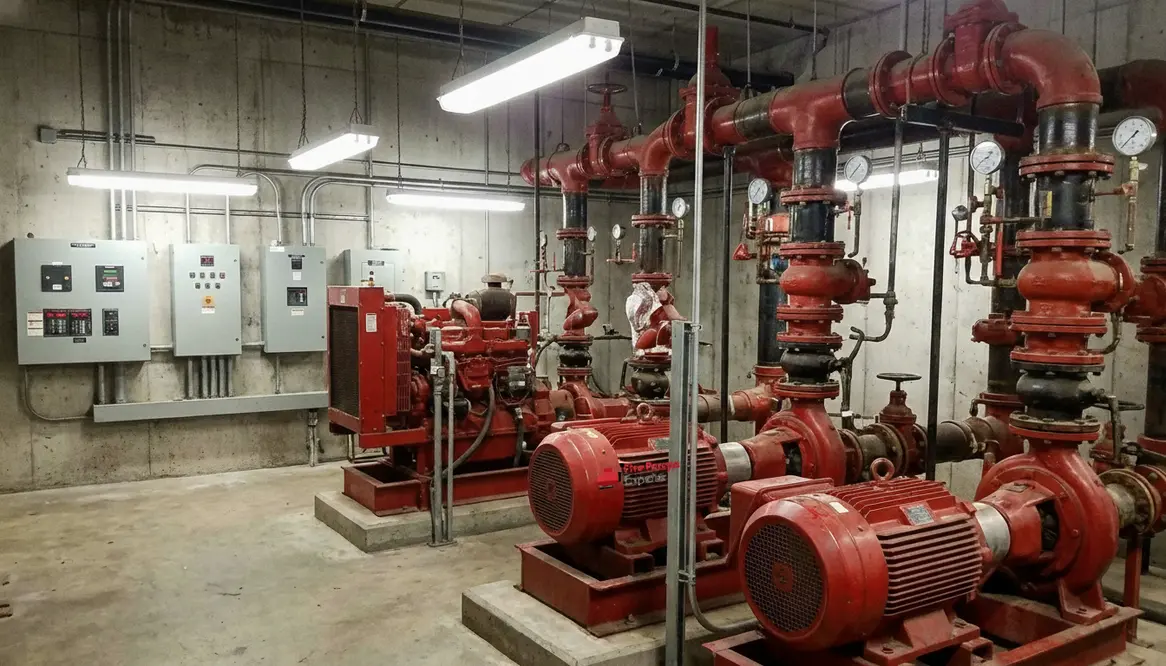
First, the pump room must stay accessible, protected, and easy to inspect. I also make sure it has enough space for operation, maintenance, and future service work. After all, a technician should not have to play hide and seek with a fire pump. The room must stay dry, ventilated, and safe from flooding. In addition, the power source must support reliable startup, whether the system uses electric drive, diesel drive, or both.
Next, the pump must match the hydraulic demand of the building. I do not guess here. I look at the system curve, suction conditions, discharge pressure, and the needs of the installed sprinklers, hydrants, or standpipes. ABNT installation rules expect the equipment to fit the project, not the other way around. That distinction matters more than it sounds, because a pump that looks strong on a brochure can still fail the real test if the site design is off.
How I plan the fire pump room and equipment layout
Once I confirm the demand, I focus on the room and layout. This is where many projects win or lose time. A clean, well planned pump room improves inspection, reduces maintenance issues, and helps the system start correctly when needed. I also check the suction line, discharge line, valves, gauges, controls, and test connections. Each part needs room to breathe, because crowding a fire pump setup invites trouble.
Key layout checks during an ABNT installation
- Proper pump room access for service and emergency use
- Stable foundation for vibration control
- Correct suction pipe size and layout
- Reliable discharge piping and isolation valves
- Clear space around controls and gauges
- Power and backup power readiness
- Drainage and flood protection
- Test line setup for inspection and flow checks
That layout work may feel boring to some people, but boring here is beautiful. Boring means predictable. Predictable means reliable. And reliable is what you want when the building alarm sounds and everyone suddenly remembers they left coffee on the counter.
ABNT installation checks I never skip
In every project, I check the details that keep the system honest. For example, I confirm that the suction line avoids air traps and that the piping supports proper flow. I also verify that valves are installed in the right position and that the pump can start automatically when pressure drops. In many facilities, the system also needs manual start controls and clear local signaling.
I pay close attention to the pump test. A pump may look perfect on paper, but if it cannot prove its flow and pressure in real conditions, I treat that as a red flag. ABNT requirements push me to confirm performance, not just appearance. That is smart engineering, not wishful thinking.
I also check the power setup with extra care. If the pump uses electric power, I review the supply, wiring, and control panel. If it uses diesel, I look at fuel supply, cooling, battery backup, and ventilation. Either way, the system must work during stress, not just during a sunny Tuesday when everything feels easy and life seems sponsored by good luck.
Why ongoing inspection protects commercial and industrial buildings
A proper fire pump installation does not end when the equipment arrives on site. It starts there. From that point on, inspection and testing keep the system ready. I recommend regular checks because seals wear down, valves drift, and controls age. Even the best equipment needs attention, much like a classic soundtrack that still deserves a remix now and then.
ABNT installation as part of the protection chain
For major properties, this matters even more. A warehouse, manufacturing plant, shopping center, hospital, or high rise carries complex risk. One missed issue can affect people, operations, insurance, and recovery time. Therefore, I treat the ABNT installation as part of a larger protection plan. That plan should include documented tests, maintenance records, corrective work, and clear responsibility for every task.
When I work with owners and facility teams, I always stress one point: the fire pump must support the whole protection chain. If one link fails, the system loses strength. That is why I keep the process disciplined and the records clean. Nobody enjoys paperwork, but in fire safety, paperwork often tells the truth when memory gets lazy.
Understanding ABNT installation in real facilities
An ABNT installation in a real building is never just about placing a pump in a room and closing the door. In a distribution center, for example, I look at long pipe runs, roof sprinklers, and hydrants on the perimeter. In a hospital, I factor in critical areas, emergency power, and the impact of any downtime. In a shopping center, I consider irregular shapes, atriums, and loading areas with different hazards.
Each of these sites needs the same disciplined approach: confirm the hydraulic calculations, align the fire pump selection with the design standards, and verify that the ABNT installation supports both sprinklers and hydrants as intended. That means checking not just the pump curve but also how the suction source behaves during long flows, how the jockey pump keeps pressure stable, and how quickly the main pump responds when something in the system changes.
The more complex the facility, the more important it is to avoid shortcuts. A high rise with multiple fire zones, for instance, can expose every weakness in a poorly planned ABNT installation. Pressure reducing valves, zone control valves, and test headers all rely on a pump that behaves exactly as expected. When the design, installation, and testing align, the building gains a quiet kind of confidence that does not need a spotlight to matter.
Practical tips for a reliable ABNT installation
From design table to pump room floor
One of the most practical moves a building owner can make is to keep the design team, installer, and maintenance crew in the same loop. When everyone understands the intent of the ABNT installation, fewer compromises creep in during construction. I have seen excellent designs weakened by rushed field changes, missing supports, or last‑minute routing that ignores hydraulic rules.
I also encourage owners to walk the pump room before sign‑off. A short visit can reveal things drawings never show: awkward access, poor lighting, confusing labels, or test headers hidden behind stored materials. A solid ABNT installation looks orderly even to someone who does not read codes for a living. Piping is clearly arranged, valves are reachable, and the control panel does not feel like a puzzle game.
ABNT installation and documentation discipline
Another area where projects succeed or fail is documentation. A fire pump that passes its acceptance test today can still cause anxiety a year from now if nobody can find the test curves, commissioning reports, or maintenance records. I keep the paperwork tied directly to the ABNT installation: what was installed, how it was tested, and what conditions were verified. That way, every future inspection builds on facts, not fuzzy recollections.
For facility teams, this record‑keeping is not just about satisfying auditors. It becomes the roadmap when something changes, whether a renovation adds new floor space or a production line upgrades equipment. When the ABNT installation history is clear, decisions about pump capacity, electrical upgrades, or pipe modifications become much easier to defend and implement.
FAQ
Conclusion
If I want a fire protection system to earn trust, I start with a proper ABNT fire pump installation and keep it maintained with care. For commercial and industrial facilities, that choice protects people, property, and operations when the pressure drops and the stakes rise. If you manage a major building, now is the time to review your pump setup, close the gaps, and confirm compliance before trouble makes the first move.