Common Fire Pump Inspection Issues Kern County
When I walk into a commercial facility in Kern County, I do not just see pipes and gauges. I see a system that stands between order and chaos. Fire pumps are quiet guardians. However, like any guardian, they need attention. Through my work alongside teams focused on New Jersey industrial fire protection, I have seen how small oversights turn into big risks. So today, I will walk you through the most common fire pump inspection issues I encounter in commercial and industrial buildings, with a steady eye and just a hint of humor to keep us awake.
What are the most common fire pump inspection issues in Kern County?
Let me answer this plainly. The usual suspects show up more often than a rerun of your favorite sitcom.
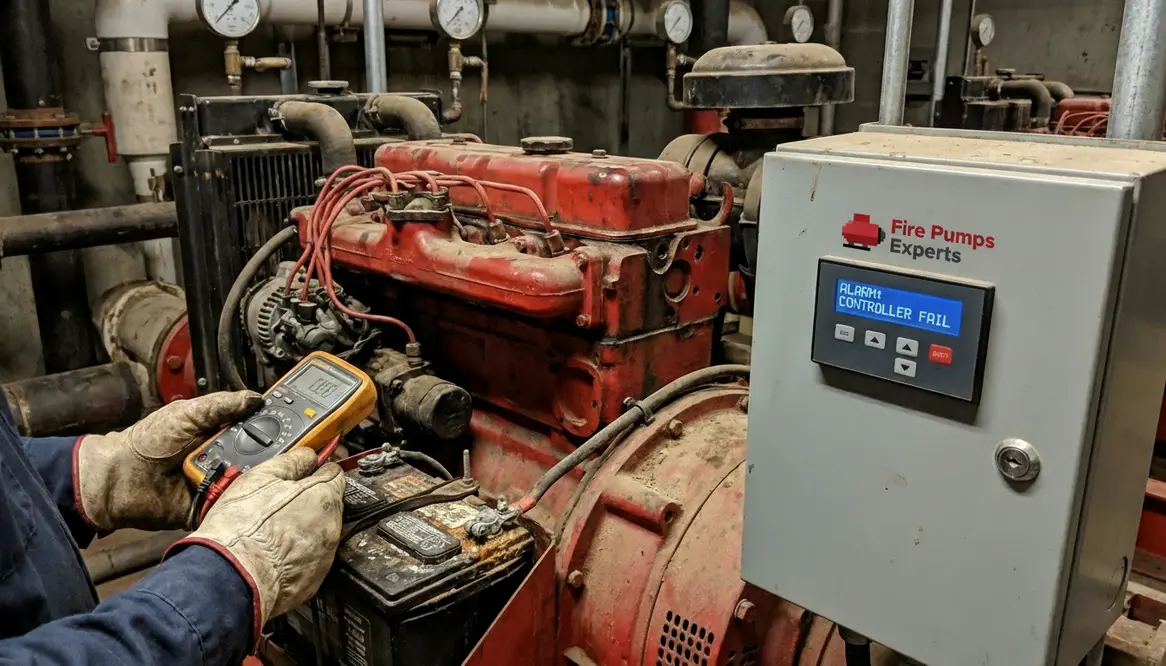
First, I often find controller malfunctions. These are the brains of the operation. When settings drift or alarms fail, the pump may not start when needed. And trust me, that is not the kind of surprise anyone wants.
Next, diesel engine problems tend to creep in. Batteries weaken. Fuel systems clog. Meanwhile, people assume the engine will just roar to life like a Hollywood action scene. Reality is quieter and less forgiving.
Then there is poor water supply. Even the strongest pump cannot move water that is not there. Blocked suction lines or faulty valves can choke the system before it even begins.
Finally, I see neglected testing records. Documentation may not sound exciting, but inspectors love it. More importantly, it tells the story of whether your system is truly ready.
The hidden cost of skipping routine inspections
Now, here is where things get interesting. Skipping inspections does not save money. It simply delays the bill.
For example, I once saw a facility delay maintenance for a year. At first, everything seemed fine. However, when we finally tested the system, multiple components failed at once. The repair cost? Let us just say it could have funded a small vacation home.
Moreover, compliance becomes a serious issue. Kern County enforces fire codes strictly for commercial properties. If your system fails inspection, you risk fines, shutdowns, or worse.
So while it may feel tempting to push inspections down the to do list, the long term consequences tend to show up like an unexpected sequel nobody asked for.
Key inspection points I never overlook
Over time, I have developed a rhythm when inspecting fire pumps. It is methodical, almost like a checklist in my head.
Left column
- Pump start and run performance
- Pressure readings under load
- Valve positions and accessibility
- Controller response times
Right column
- Fuel levels and battery health
- Alarm and signal functionality
- Condition of seals and bearings
- Flow test accuracy
Each of these points connects to the next. If one element fails, the system weakens as a whole. It is a bit like a band. You can have a great singer, but if the drummer disappears, the show falls apart quickly.
How Kern County environments impact fire pump performance
Kern County brings its own personality to the table. Heat, dust, and long dry seasons all play a role.
Because of the high temperatures, components wear faster. Rubber seals dry out. Electronics struggle. Meanwhile, dust finds its way into places it absolutely should not be. It is persistent, like a villain that never quite goes away.
Therefore, facilities here need more frequent checks compared to milder regions. I often recommend adjusting inspection schedules to match environmental stress. This approach mirrors best practices used in New Jersey industrial fire protection, where weather extremes also demand careful planning.
Why proactive maintenance always wins
I will say this clearly. Reactive maintenance is like fixing a leak after your house floods. Proactive maintenance, on the other hand, keeps the storm outside where it belongs.
When I work with commercial property managers, I emphasize consistency. Regular testing, timely repairs, and clear records build confidence in the system. More importantly, they reduce the chance of failure during an emergency.
Additionally, proactive care extends the life of the equipment. Fire pumps are not cheap. Treating them well ensures they stay reliable for years.
And let us be honest. There is something satisfying about knowing everything will work exactly as it should. It is the engineering version of a perfectly brewed cup of coffee.
Connecting Kern County inspections with wider best practices
Spending time around teams that specialize in New Jersey industrial fire protection has confirmed something I already suspected: the fundamentals do not really change from coast to coast. Whether you are dealing with dense humidity back east or dry heat in Kern County, fire pumps demand the same discipline, documentation, and respect.
The details shift with the climate, but the mindset stays the same. Make inspections routine instead of optional. Treat test records as a safety logbook instead of a formality. See every minor deficiency as a preview of a larger failure rather than a harmless quirk.
In that sense, New Jersey industrial fire protection and Kern County fire pump programs are cousins. Both rely on tight coordination between maintenance teams, code officials, and building owners to keep water moving and pressure stable when the heat turns real, fast.
When those pieces come together, your fire pump is not just a box in a mechanical room. It is a fully supported, regularly tested system with people invested in its performance, from the first weekly churn test to the last line in the inspection report.
FAQ: Fire pump inspections in commercial buildings
Before getting into specific questions, it is worth remembering that the core principles span regions. Whether you are managing a warehouse in Kern County or navigating New Jersey industrial fire protection standards, the goal stays the same: a reliable, well documented fire pump that will not hesitate when it is finally called on.
Final thoughts and next steps
Fire pump inspections are not just a requirement. They are a promise that your building is ready when it matters most. If you manage a commercial or industrial property in Kern County, now is the time to act. Schedule a thorough inspection, review your records, and address small issues before they grow. Reach out to a trusted fire protection specialist and make sure your system stands ready, steady, and reliable when called upon.
If you want a deeper look at how professional fire pump service, testing, and documentation are handled, you can explore resources like the dedicated fire pump systems service page at comprehensive fire pump inspection and maintenance support. Seeing how a full service program is structured can help you benchmark your own facility and ask sharper questions the next time your pump room door swings open.