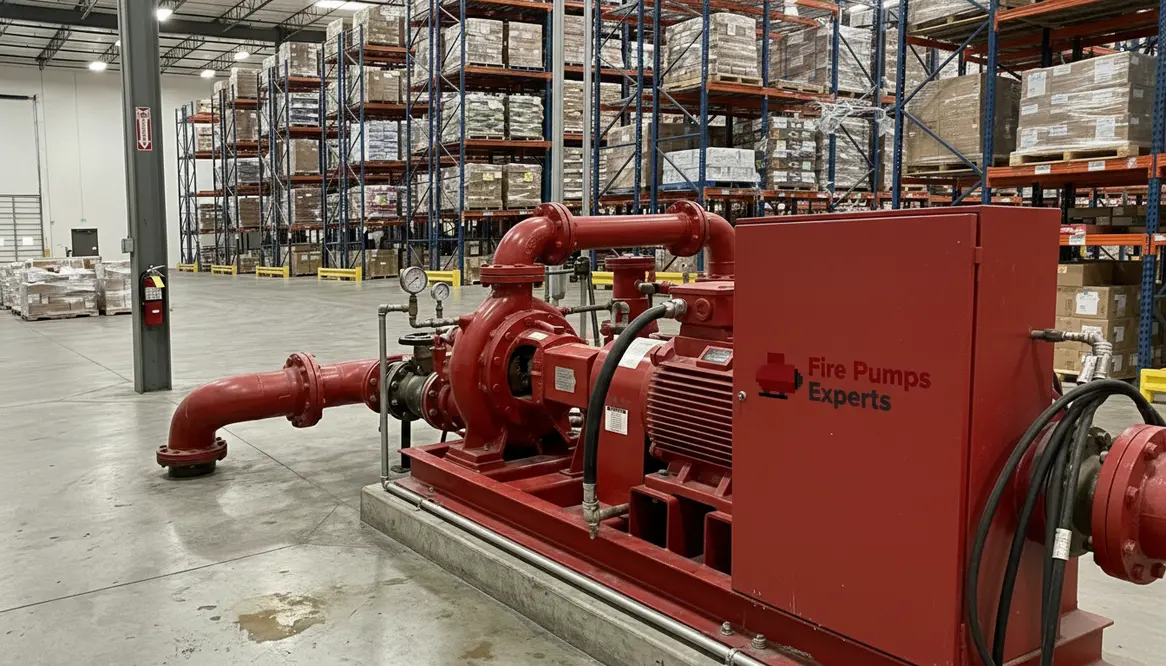
Fire Pumps for Kern County Warehousing Safety
The Role of Fire Pumps in Protecting Kern County Warehousing Operations
I have spent enough time around industrial facilities to know one thing for certain. Warehouses do not get second chances when fire shows up uninvited. In Kern County, where logistics hubs stretch across miles and goods move like clockwork, fire protection is not optional. It is survival. While my experience with New Jersey high-rise fire pumps taught me how critical pressure and reliability are in vertical environments, those same principles apply here, just spread across vast horizontal spaces. The setting changes, but the stakes stay the same. And yes, fire does not care if your inventory just arrived five minutes ago.
Why Warehousing in Kern County Faces Unique Fire Risks
Kern County warehouses operate in a climate that can turn dry air into a silent accomplice. Heat builds quickly, and once ignition starts, it spreads with enthusiasm. Add high rack storage, combustible packaging, and constant equipment movement, and you have a recipe that keeps safety managers awake at night.
However, the scale is what really shifts the conversation. These are not small buildings. They are massive footprints filled with valuable goods and complex layouts. Therefore, standard water supply alone often falls short. Fire needs pressure to be controlled, and that is where fire pumps step in with authority.
Moreover, modern warehouses rely heavily on automation. Conveyor systems, robotics, and electrical infrastructure introduce additional ignition points. So while the building may look calm, there is always a quiet tension beneath the surface. Fire pumps act as the muscle behind the system, ready to respond when everything else fails.
From Vertical Towers to Horizontal Giants
Interestingly, the lessons from New Jersey high-rise fire pumps show up in these Kern County warehouses more than most people expect. In high-rise buildings, the challenge is pushing water vertically through multiple floors. In large distribution centers, the challenge is getting that same water to behave over hundreds of feet horizontally.
In both settings, pressure is king. If you lose it, sprinklers underperform, hydrants disappoint, and what should have been a contained incident becomes an operational nightmare. Whether the pipe is rising through a stair tower or running above a sea of pallet racks, the pump has to deliver under pressure, literally.
That crossover experience is why teams that understand high-rise systems and New Jersey high-rise fire pumps often bring a helpful mindset to sprawling logistics facilities as well. The geometry changes, but the physics and the consequences do not.
How Fire Pumps Power Warehouse Fire Protection Systems
The muscle behind sprinklers and hydrants
At their core, fire pumps do one job exceptionally well. They move water with force when gravity and municipal pressure cannot keep up. But in a warehouse setting, that job becomes more nuanced.
First, they ensure sprinkler systems maintain consistent pressure across long distances. Without that boost, water might reach the first aisle with confidence but arrive at the far end like it just finished a marathon.
Second, they support hydrant systems used by on site emergency teams. Quick response depends on reliable flow. A delay of even seconds can change outcomes.
Finally, they stabilize the entire fire protection network during peak demand. When multiple sprinkler heads activate at once, pressure drops fast. A properly designed pump system keeps everything balanced.
It reminds me of those movie scenes where one hero holds the line while chaos unfolds. Think less cape, more steel casing and a very determined motor.
What Makes a Fire Pump System Reliable in Large Industrial Buildings
1. Capacity and pressure alignment
Capacity and pressure alignment come first. The pump must match the hazard level and building size. Oversizing wastes energy, while undersizing invites failure. In practice, that means understanding your storage height, commodity class, and sprinkler design and making sure the pump curve actually supports them.
2. Redundancy where it matters
Redundancy follows closely. In major facilities, backup pumps are not a luxury. They are a necessity. Because if your primary system fails during an emergency, that is not a plot twist anyone wants. Parallel pumps, alternate drivers, and well-designed controllers give Kern County warehouse operators a second line of defense when fire is trying hard to write a different ending.
3. Maintenance and testing discipline
Maintenance and testing seal the deal. Even the best equipment loses reliability without regular inspection. Weekly and monthly testing ensures the system performs when called upon. Controllers, valves, fuel supplies, and sensors all have to be checked so the pump behaves like a well-rehearsed first responder, not a surprise guest star.
Interestingly, lessons learned from New Jersey high-rise fire pumps often influence these designs. While one deals with height and the other with distance, both require precise pressure management and unwavering consistency.
Comparing Fire Pump Needs Across Facility Types
To put things into perspective, I often break it down like this:
Column A: High density warehousing
- Requires high flow rates to support multiple sprinkler activations
- Demands wide area pressure consistency
- Often integrates with automated storage systems
Column B: Traditional industrial facilities
- Focuses on targeted hazard zones
- May require specialized suppression systems
- Typically operates with lower simultaneous demand
While both environments need fire pumps, the warehouse model pushes systems harder across larger spaces. Therefore, design precision becomes critical. It is less about brute force and more about controlled strength. That mindset carries over cleanly from well-designed New Jersey high-rise fire pumps to the long, lean layouts of Kern County warehousing.
If you want a deeper look at how standards shape that design, resources like the NFPA 20 overview at Kord Fire Protection’s NFPA 20 guide are worth a read, especially when you are aligning warehouse expectations with proven high-rise and industrial practices.
How Do Fire Pumps Improve Insurance and Compliance Outcomes
Risk, paperwork, and the value of doing it right
Short answer. Significantly.
Insurance providers look closely at fire protection infrastructure. A well designed fire pump system reduces risk exposure, which can translate into better premiums. More importantly, it demonstrates a commitment to protecting assets and personnel.
Compliance also plays a major role. Local and national codes require specific fire flow capabilities. Without a properly functioning pump, meeting those standards becomes difficult.
Additionally, inspections become smoother when systems perform as expected. No one enjoys surprise deficiencies during an audit. A reliable pump system keeps those conversations short and uneventful.
Keeping Fire Pumps Ready for Action in Kern County
From installation day to the moment they are needed
Installation is only the beginning. Ongoing performance depends on consistent attention.
Regular testing ensures pumps start instantly and deliver required pressure. Fuel systems, controllers, and valves all need inspection. Even small issues can escalate if ignored.
Environmental conditions also matter. Dust, heat, and vibration can affect components over time. Therefore, proactive maintenance prevents gradual decline.
I like to think of it as tuning an instrument. When everything is in harmony, the system responds beautifully. When it is not, well, it sounds more like a garage band on its first rehearsal.
FAQ: Fire Pumps in Warehousing
Conclusion
Protecting a Kern County warehouse takes more than alarms and good intentions. It takes a fire pump system built with purpose and maintained with discipline. If you manage a large commercial or industrial facility, now is the time to evaluate your protection strategy.
Work with experts who understand scale, pressure, and performance, whether they are tuning systems inspired by New Jersey high-rise fire pumps or configuring pumps for wide open logistics hubs. Because when fire tests your operation, the right system does not hesitate. It responds with strength, precision, and just enough attitude to keep everything standing.