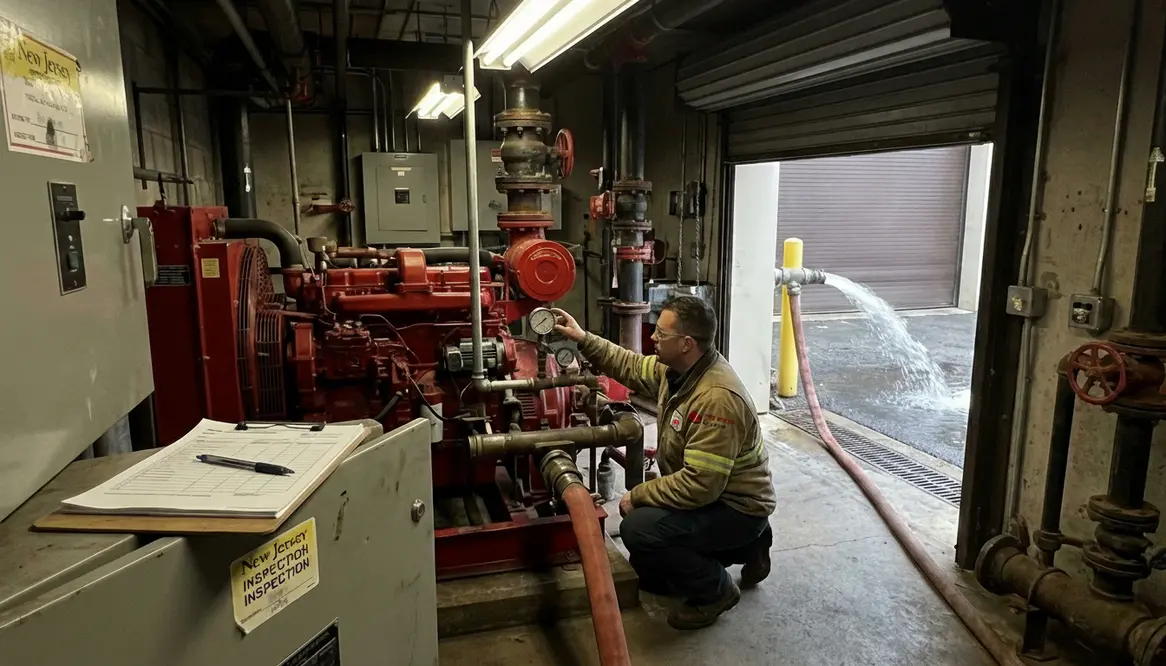
Fire Pump Testing Requirements New Jersey
I have spent enough time around commercial buildings in New Jersey to know one thing for certain. When it comes to fire protection, there is no room for guesswork. Fire pump testing requirements sit at the heart of that conversation, quietly ensuring that when everything else fails, water still flows with force and purpose. In fact, these requirements are not just a box to check. They are a system of discipline, timing, and precision that keeps large scale properties compliant, safe, and operational. And yes, while it may not sound thrilling, it is far more exciting than explaining to a fire marshal why your system did not perform. Trust me, that is a conversation no one wants to star in.
What Are Fire Pump Requirements for Commercial Buildings in New Jersey?
In New Jersey, I follow a clear framework shaped by NFPA 20 and NFPA 25 standards, along with state specific codes. These rules define how fire pumps must be installed, maintained, and tested in commercial and industrial buildings.
First, every fire pump system must deliver adequate pressure and flow to support sprinkler and standpipe systems. That means proper sizing is not optional. It is essential. A pump that looks impressive but cannot meet demand is about as useful as a superhero who forgets their powers at home.
Then comes ongoing compliance. New Jersey requires regular inspections, documentation, and adherence to fire pump testing requirements. These include weekly churn tests and annual flow tests. Each test confirms that the pump starts reliably and performs under real world conditions.
Moreover, all results must be recorded and available for review. Inspectors expect clean documentation. No scribbles. No guesswork. Just clear proof that your system is ready.
How Often Do I Need to Follow Fire Pump Testing Requirements?
I get this question all the time, and the answer is refreshingly straightforward.
Weekly, I run a churn test. This checks that the pump starts and operates without flowing water. It is quick, but it tells me whether the system is alive and responsive.
Annually, I conduct a full flow test. This is where things get serious. I measure performance at different flow levels to confirm the pump meets its rated capacity. It is the closest thing to a dress rehearsal before a real emergency.
Additionally, I keep an eye on monthly inspections and periodic maintenance tasks. While they may seem routine, they prevent small issues from becoming headline making problems. And nobody wants their building trending for the wrong reasons.
Key Components I Always Check in Commercial Fire Pump Systems
When I walk into a pump room, I do not just glance around and hope for the best. I follow a structured approach.
Mechanical Elements
- Pump casing and impeller condition
- Alignment between pump and driver
- Seal integrity and lubrication levels
Control and Power Systems
- Controller response and settings
- Power supply stability
- Backup systems for reliability
At the same time, I evaluate valves, gauges, and piping. Each component plays a role in delivering water where it is needed most. If one part fails, the entire system can suffer. It is a bit like a band. Even if the lead singer is amazing, the show falls apart if the drummer disappears.
Common Compliance Pitfalls I See in New Jersey Buildings
Despite clear regulations, I still see patterns of avoidable mistakes.
For example, some property managers delay testing because everything appears fine. However, fire pump testing requirements exist precisely because appearances can be misleading. A system that worked last year may not perform today.
Another issue is poor documentation. Missing logs or incomplete reports can trigger compliance violations. Inspectors want evidence, not assumptions.
Then there is improper installation or outdated equipment. Over time, buildings expand or systems change. If the fire pump does not keep up, performance suffers. It is like trying to stream a modern movie on dial up internet. Technically possible, but painfully ineffective.
How I Keep Large Commercial Properties Fully Compliant
I take a proactive approach. Instead of reacting to problems, I build a routine that prevents them.
First, I schedule all inspections and tests in advance. This keeps fire pump testing requirements on track without last minute stress. Consistency is everything.
Next, I work with certified professionals who understand complex commercial systems. Large facilities require expertise that goes beyond basic maintenance.
Finally, I review performance trends over time. By comparing test data, I can spot subtle changes before they turn into failures. It is a bit like reading tea leaves, except far more scientific and far less mystical.
If you manage a large commercial or industrial property, partnering with a team that handles design, maintenance, and fire pump testing requirements under one roof keeps your system aligned with current codes and real world performance demands.
FAQ: Fire Pump Requirements for Commercial Buildings in New Jersey
Below are some of the questions I hear most often when working with property managers, facility teams, and ownership groups across New Jersey.
Stay Ready Before It Matters Most
If there is one thing I have learned, it is this. Fire pump systems do not care about intentions. They respond to preparation. By staying ahead of fire pump testing requirements and maintaining your system with care, you protect your building, your occupants, and your investment. If you manage a commercial or industrial property in New Jersey, now is the time to act. Schedule your testing, review your system, and make sure everything performs exactly as it should when it counts.