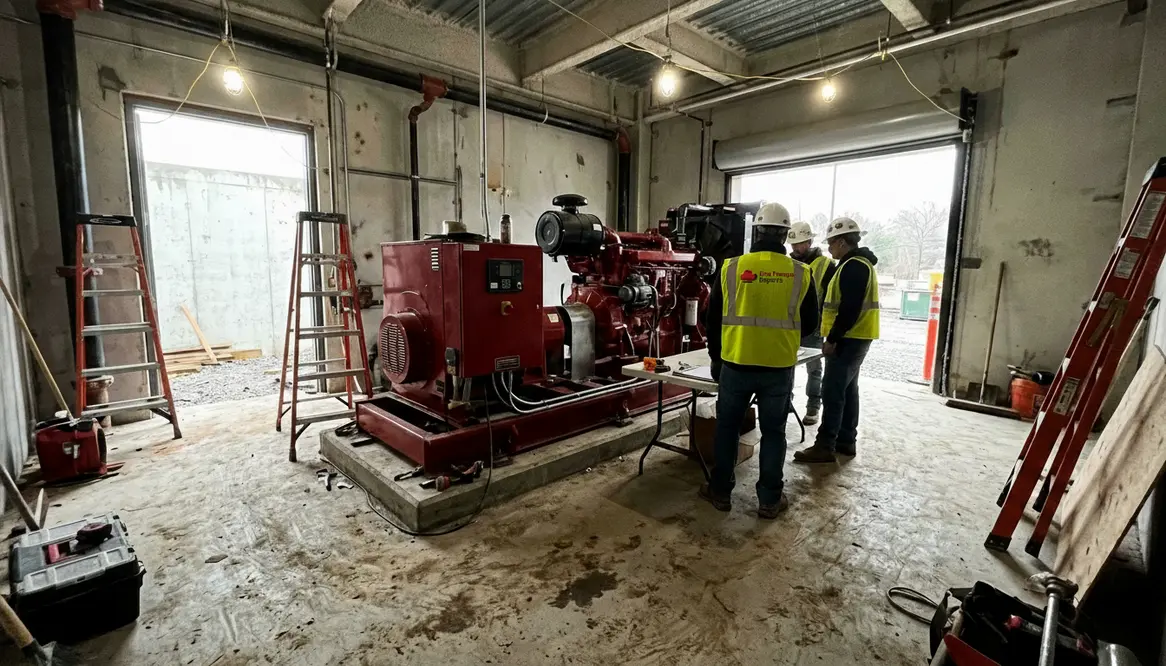
Fire Pump Requirements NJ Industrial Facilities Guide
I have seen how construction project delays creep in like an uninvited guest at a quiet dinner. One minute, everything is on schedule. The next, a missing component or a failed inspection slows the entire operation. In New Jersey industrial facilities, fire pump requirements are often at the center of these slowdowns. And while fire protection might not sound as thrilling as a summer blockbuster, trust me, it has more plot twists than you would expect. So let me walk you through it, calmly and clearly, with just enough humor to keep us both awake.
What fire pump requirements apply to New Jersey industrial facilities?
Right away, let me answer the question I hear most. In New Jersey, fire pumps in industrial buildings must follow NFPA 20 standards, local state codes, and municipal fire authority rules. However, that is just the beginning.
These systems must deliver reliable water pressure during emergencies. Therefore, engineers must size pumps based on hazard level, building height, and sprinkler demand. In addition, facilities often need backup power sources, typically diesel or generator driven systems, to ensure performance when the grid fails.
Now here is where things get interesting. If you think you can install a pump and call it a day, think again. Inspections, flow testing, and approvals must align perfectly. Otherwise, those small oversights can quickly snowball into schedule setbacks that rival a season finale cliffhanger.
Why fire pump design decisions impact construction timelines
I have noticed that early design choices can either keep a project moving smoothly or quietly set the stage for delays. Fire pump rooms must meet strict space, ventilation, and access requirements. Consequently, squeezing them into an already crowded industrial layout can create real challenges.
Moreover, coordination between mechanical, electrical, and fire protection teams must happen early. If not, conflicts arise. And when they do, they tend to show up late in the game, when changes are expensive and time is tight.
Picture this like assembling a superhero team. If everyone shows up with a different script, the mission fails. But when they coordinate, things run like a well directed Marvel scene, minus the explosions.
Common Planning Pitfalls
- Undersized pump capacity
- Improper room layout
- Late coordination with electrical systems
- Ignoring local code nuances
Smart Planning Moves
- Early hydraulic calculations
- Dedicated pump room design
- Cross trade coordination meetings
- Pre review with local authorities
How inspections and approvals influence project flow
Inspections are where theory meets reality. And in New Jersey, inspectors take their role seriously. As they should. After all, we are talking about life safety systems.
However, missed details during installation can trigger re inspections. Then, naturally, timelines stretch. What began as a minor oversight turns into a chain reaction that affects multiple trades.
In many cases, these inspection setbacks tie directly into broader construction project delays. Therefore, staying ahead of compliance is not just smart. It is essential.
I always say, inspections are like a final exam. You do not want to start studying the night before.
Key components every industrial fire pump system must include
Let me break this down into essentials. Every compliant system needs a few core elements working together seamlessly.
- Fire pump unit sized for the building demand
- Controller to manage automatic operation
- Reliable water source such as tanks or municipal supply
- Backup power to ensure operation during outages
- Pressure maintenance system to stabilize the network
Each component plays a specific role. And if one fails, the entire system can fall short. That is why precision matters. Not perfection for its own sake, but because lives and property depend on it. For a deeper look at how inspections, testing, and maintenance keep these systems ready when it counts, you can review this overview of routine fire pump inspections and their importance.
Avoiding construction project delays through proactive fire protection planning
Now we come full circle. Avoiding construction project delays tied to fire pump systems is not about luck. It is about foresight.
First, involve fire protection engineers early in the design phase. Next, coordinate with local authorities before finalizing plans. Then, schedule inspections strategically instead of treating them as afterthoughts.
Also, do not underestimate documentation. Clear submittals, accurate drawings, and organized records can shave weeks off approval timelines.
And yes, while paperwork may not be glamorous, it is far less painful than tearing out installed equipment because of a missed requirement. That kind of plot twist nobody enjoys. When fire pump requirements are planned early and checked often, they stop being a source of construction project delays and start becoming one of the reasons a project finishes on time.
FAQ: Fire Pump Requirements in New Jersey Industrial Facilities
Do all industrial buildings in New Jersey need fire pumps?
No. Fire pumps are required when water pressure cannot meet sprinkler system demands.
What standard governs fire pump installation?
NFPA 20 is the primary standard, along with New Jersey state and local codes.
How often are fire pumps tested?
They are typically tested weekly or monthly, with annual full flow testing.
Can delays happen during inspections?
Yes. Failed inspections or missing documentation often cause timeline setbacks, and they can easily grow into broader construction project delays if they affect multiple trades.
What power sources are acceptable for fire pumps?
Electric and diesel driven pumps are both common, depending on facility needs.
Closing thoughts and next steps
Fire pump requirements in New Jersey industrial facilities demand attention, coordination, and experience. When handled correctly, they support safety and keep projects moving forward. When overlooked, they quietly trigger costly disruptions. If you are planning a facility or navigating approvals, now is the time to act. Work with specialists who understand both compliance and timelines, so your project stays on track and your system performs when it matters most.