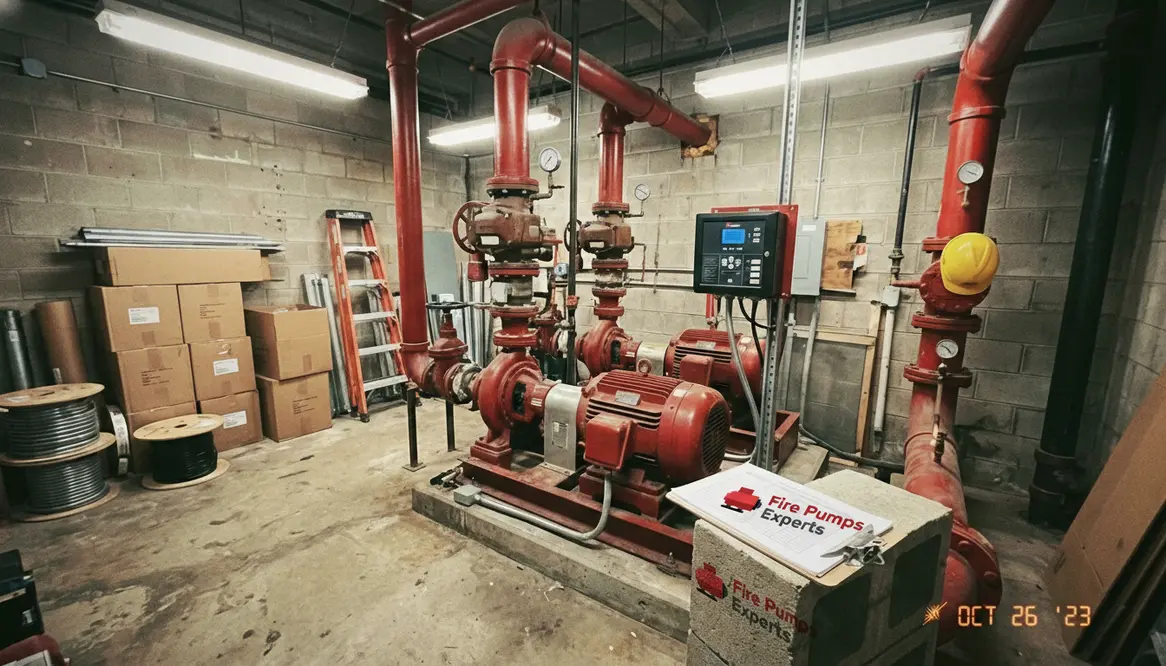
Fire Pump Design for Tenant Improvements Guide
I have spent enough time in mechanical rooms to know one truth. Fire pumps do not care about your construction schedule. They care about pressure, flow, and whether you respected older building fire pump needs when you started that tenant improvement project. Miss that, and the system will remind you at the worst possible moment. Usually during inspection. Or worse, during an emergency. So let’s walk through what actually matters, calmly, clearly, and with just enough humor to keep us all awake.
Understanding Fire Pump Design in Tenant Improvements
When I approach a tenant improvement project, I treat the fire pump as the heart of the building’s fire protection system. Change the layout, increase occupancy, or alter hazards, and suddenly that heart may need to beat harder. Therefore, I always begin by evaluating demand. Not guessing. Not assuming. Measuring.
Additionally, tenant improvements in commercial and industrial properties often introduce higher density storage, new manufacturing processes, or reconfigured floor plans. Each of these shifts water demand curves. As a result, the existing pump may fall short, even if it worked perfectly for the previous tenant.
And yes, this is where things get interesting. Because sometimes the pump is technically “fine,” but practically useless under new conditions. Like bringing a garden hose to a warehouse fire. It looks prepared, but it is not.
How Do I Evaluate Existing Fire Pump Capacity?
I start with data. Always. First, I review original design documents, then compare them against current fire protection requirements. After that, I conduct flow testing to verify actual performance. Because paper lies. Pumps do not.
Moreover, I look at:
- Current system demand versus pump curve
- Pressure losses from modified piping layouts
- Available water supply under peak conditions
However, the real insight comes when I overlay new tenant requirements. If the building shifts to higher hazard classifications, the margin disappears quickly. Consequently, what once passed inspection may now fail before the clipboard even hits the table.
And let’s be honest. No one enjoys explaining that to an owner who thought this was just a “simple remodel.”
Design Adjustments for Modern Tenant Demands
Once I confirm the gap, I move into design mode. This is where experience matters. Because upgrading a fire pump system is not just about installing a bigger pump. It is about balance.
Key Design Considerations
- Matching pump capacity to revised hazard levels
- Ensuring electrical infrastructure can support upgrades
- Maintaining code compliance with minimal disruption
Common Pitfalls I Avoid
- Oversizing pumps that cause pressure instability
- Ignoring suction supply limitations
- Forgetting long term maintenance access
Meanwhile, I also coordinate with other systems. Fire protection does not exist in isolation. HVAC, structural changes, and electrical upgrades all play a role. Think of it like assembling a band. If one instrument is out of tune, the whole performance suffers. And nobody wants a jazz solo in the middle of a fire emergency.
Navigating Older Building Fire Pump Needs Without Overengineering
Older systems bring character. They also bring surprises. Therefore, when dealing with older building fire pump needs, I focus on what must change versus what can stay.
For example, legacy piping may still function well, but control systems often need modernization. Similarly, pump housings might be structurally sound, yet inefficient compared to current standards. So, instead of tearing everything out, I take a targeted approach.
Additionally, I consider integration challenges. New controllers must communicate effectively with existing infrastructure. Otherwise, you end up with a system that technically works but behaves like it is stuck in a different decade. Think flip phone trying to run modern apps.
As a result, thoughtful upgrades save money, reduce downtime, and maintain compliance without unnecessary complexity. Respecting older building fire pump needs in this way turns “problem systems” into reliable, well-behaved workhorses instead of expensive headaches.
This is also where coordination with resources like https://firepumps.org and local authorities can clarify expectations, verify assumptions, and keep everyone aligned before equipment is ordered and installed.
Code Compliance and Inspection Readiness
Now, let’s talk about the moment everyone anticipates and quietly dreads. Inspection day. I prepare for it from the very beginning.
Because compliance is not a final step. It is a design philosophy. I align every decision with NFPA standards, local codes, and authority requirements. Furthermore, I document everything clearly, so there are no surprises.
Then, I verify:
- Controller functionality and alarms
- Flow and pressure performance under test conditions
- System integration with sprinklers and standpipes
Consequently, when the inspector walks in, the system speaks for itself. No improvisation. No crossed fingers. Just performance, backed up by testing data that accounts for both current tenant loads and older building fire pump needs that sometimes linger beneath the surface.
FAQ About Fire Pump Design for Tenant Improvements
Questions always come up once the drawings and pump curves hit the table. Instead of treating them as obstacles, I use them as a checklist to make sure older building fire pump needs and modern tenant demands are both covered without unnecessary upgrades.
Conclusion
If you are planning a tenant improvement in a commercial or industrial property, do not leave fire pump design as an afterthought. I help uncover risks, refine system performance, and align everything with real world demands. Reach out, and we will make sure your system is not just compliant, but dependable when it matters most. Because in this business, reliability is not optional. It is everything.