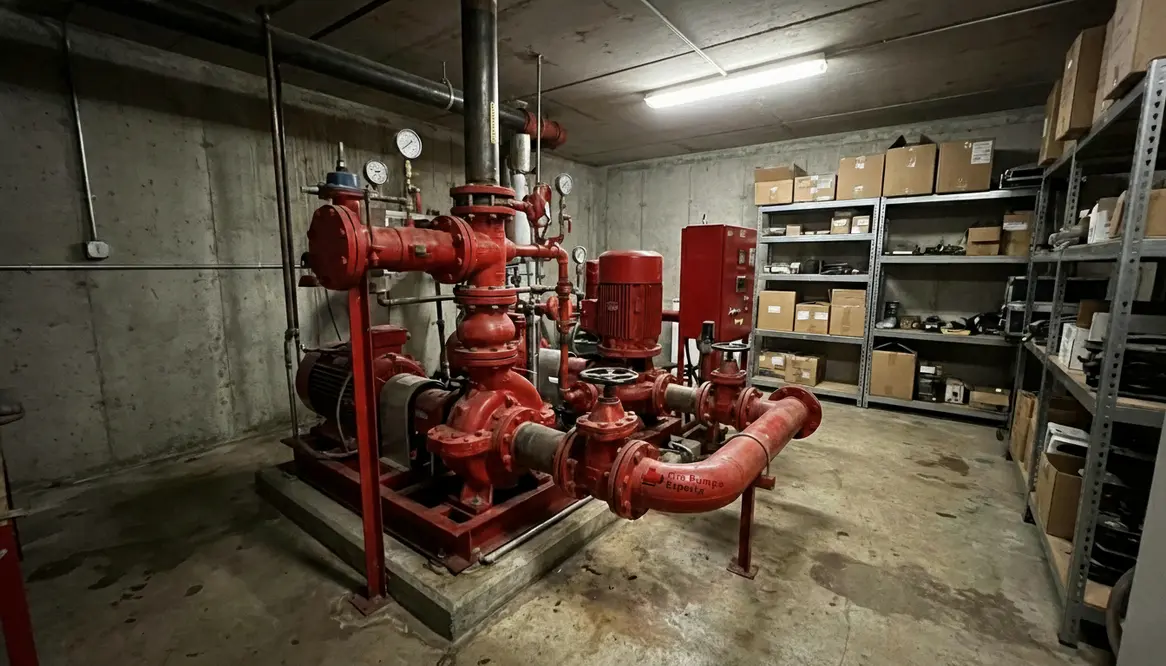
Fire Pumps for Commercial and Self Storage Safety
I have walked through more commercial campuses than I can count, from sprawling office parks to industrial complexes that hum like a well tuned orchestra. And somewhere behind the scenes, often overlooked yet quietly essential, sits the backbone of self storage fire protection and broader fire safety systems alike: the fire pump. It does not demand attention. It does not ask for applause. But when things go sideways, it becomes the hero of the story. Think of it as the Batman of building systems. No spotlight, all action.
What Role Do Fire Pumps Play in Commercial Fire Safety Systems?
At its core, a fire pump exists to move water with purpose and force. While city water supplies do a decent job on their own, they often lack the pressure needed for large scale facilities. Therefore, I rely on fire pumps to boost that pressure and ensure water reaches every corner of a building, from the lowest basement to the highest mechanical room.
Moreover, in environments where self storage fire protection is critical, consistent water pressure is not optional. It is essential. Fire pumps activate when the system detects a drop in pressure, usually triggered by a sprinkler head opening. From there, they deliver water at a rate that can actually suppress a fire instead of politely suggesting it reconsider.
And yes, unlike your gym membership, fire pumps do not skip their job.
How Fire Pumps Support Large Scale Campuses and Industrial Properties
Now, let me paint a picture. A commercial campus is not just one building. It is a network of structures, utilities, and operations that must work in harmony. Consequently, fire protection must scale accordingly.
Coverage Across Distance
Fire pumps ensure water travels long distances without losing strength. This matters when buildings spread across acres.
Support for High Demand Systems
Industrial facilities often require multiple sprinklers and hydrants to operate at once. Fire pumps handle that demand without hesitation.
Reliability During Emergencies
Even if municipal supply dips, pumps maintain consistent flow. That reliability can mean the difference between containment and catastrophe.
Adaptability to Complex Layouts
From warehouses to multi story offices, pumps adjust to different system designs with ease.
In other words, without fire pumps, large properties would be trying to fight a wildfire with a garden hose. That is a losing strategy every time.
Why Fire Pumps Matter for Compliance and Risk Reduction
Let us talk about something that tends to keep property managers up at night: compliance. Fire codes are not written for fun. They exist because fire does not negotiate.
Because of this, many commercial and industrial buildings must install fire pumps to meet required pressure and flow standards. I have seen facilities try to cut corners here, and it never ends well. Inspectors notice. Insurance companies notice. And unfortunately, fire notices too.
Additionally, integrating fire pumps into self storage fire protection strategies strengthens risk management. When water delivery is consistent and powerful, fires are controlled faster. As a result, damage decreases, downtime shrinks, and safety improves.
It is not just about passing inspections. It is about building a system that works when it matters most.
The Mechanics Behind the Muscle
Now, I know what you might be thinking. What actually powers these things?
Fire pumps typically run on electric motors or diesel engines. Electric pumps are efficient and reliable, provided the power stays on. Diesel pumps, on the other hand, bring independence. They do not care if the grid goes down. They just keep running, like a classic action hero walking away from an explosion.
Furthermore, controllers act as the brain of the operation. They monitor system pressure and trigger the pump when needed. Without them, the pump would just sit there, like a very expensive paperweight.
Each component plays a role, and together they create a system that responds instantly and effectively.
Design Considerations for Modern Commercial Facilities
When I approach fire pump design, I do not just think about today. I think about the next decade. Commercial campuses evolve, expand, and adapt. Therefore, fire protection systems must do the same.
Planning for Demand and Growth
First, I consider water demand. Different facilities require different flow rates, and guessing is not a strategy. Then, I evaluate redundancy. Backup systems ensure that if one component fails, another steps in without missing a beat.
Location, Protection, and Maintenance
Additionally, location matters. Fire pumps must be accessible for maintenance yet protected from environmental risks. A poorly placed pump can compromise the entire system.
And yes, maintenance is non negotiable. Even the best system will fail if neglected. Regular testing keeps everything ready for action, like rehearsing for a performance you hope never happens.
How Fire Pumps Elevate Self Storage Fire Protection Strategies
In facilities where stored goods represent significant value, fire protection must go beyond basic coverage. I have seen how fire pumps enhance self storage fire protection by ensuring that suppression systems operate at peak performance.
Because storage environments often involve dense layouts and varied materials, fires can spread quickly. However, with the right pump in place, water reaches the source faster and with greater force. That speed changes outcomes.
It is a simple equation. Better pressure equals better protection. And better protection keeps both property and reputation intact. If you are serious about self storage fire protection, treating the fire pump as a central asset instead of background equipment is a smart move.
FAQ
What does a fire pump do?
It increases water pressure so sprinkler and hydrant systems can effectively control fires.
When is a fire pump required?
When municipal water supply cannot meet the pressure or flow demands of a building.
Are fire pumps used in industrial facilities?
Yes, they are essential for large scale and high risk environments.
How often should fire pumps be tested?
Typically weekly or monthly, depending on regulations and system design.
Do fire pumps work during power outages?
Diesel powered pumps do, while electric pumps require backup power.
Final Thoughts and Next Steps
If you manage a commercial campus or industrial property, now is the time to take a closer look at your fire protection system. Fire pumps are not just equipment. They are your first line of defense when seconds matter most. Connect with experts who understand large scale systems and can tailor solutions to your needs. Because when it comes to fire safety, preparation is not optional. It is everything.