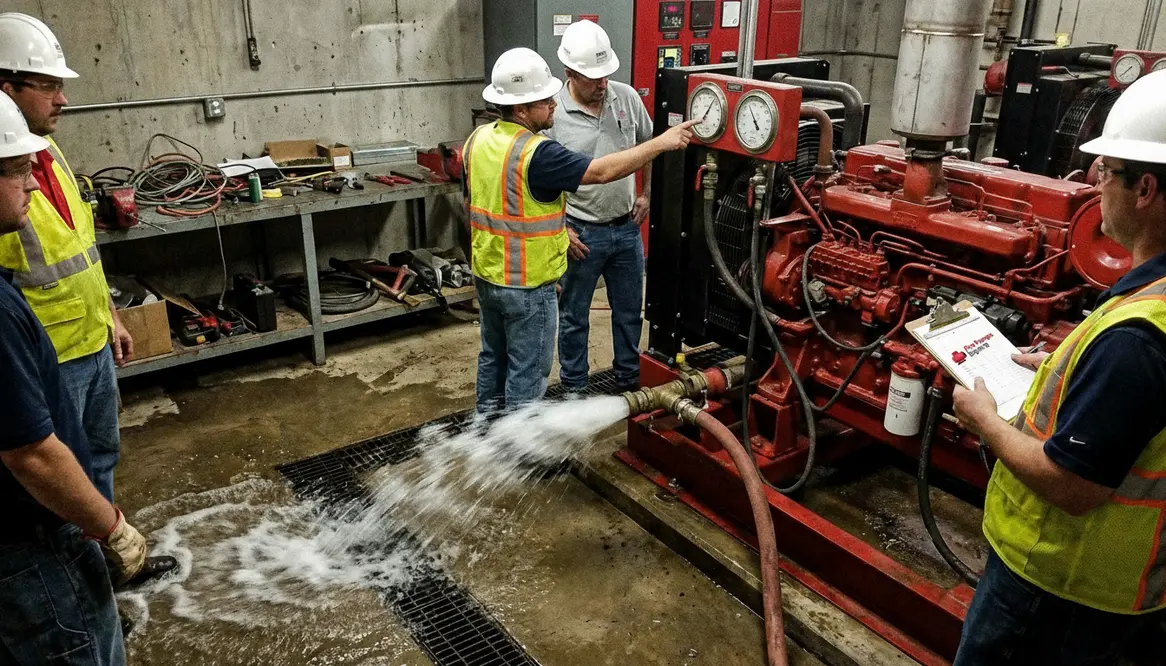
Fire Pump Acceptance Testing Guide for Developers
I have walked more pump rooms than I can count, and if there is one truth I keep coming back to, it is this: a fire pump is only as good as its acceptance test. That is where theory meets reality. Early on, I leaned heavily on a solid facility type fire pump guide to understand how expectations shift between a high rise office tower and a sprawling industrial plant. That guide still echoes in my head every time I watch a gauge needle rise. Today, I want to walk you through what actually matters during fire pump acceptance testing, without the fluff and without putting you to sleep.
What developers should expect during fire pump acceptance testing
Let me answer this the way I would on a job site, coffee in hand, slightly amused at how often this gets overlooked. Acceptance testing is not a formality. It is a performance exam, and the pump does not get partial credit.
First, the system must prove it can deliver the required flow and pressure. That means flowing water, not just spinning a motor and calling it a day. Then, inspectors verify churn pressure, rated flow, and peak demand. Meanwhile, every valve position, controller function, and alarm signal gets checked.
And yes, something usually goes wrong. It might be minor, like a sticky valve. Or it might be the kind of issue that makes everyone stare quietly at the floor. Either way, that is the point. You want problems now, not during a fire event when the stakes are a lot higher than a delayed certificate.
Understanding performance benchmarks in commercial systems
Now, let us slow things down. A fire pump in a commercial or industrial setting is not just about hitting numbers. It is about consistency and reliability under pressure. Literally.
Most systems must meet three key benchmarks:
- Churn pressure without flow
- 100 percent rated flow at design pressure
- 150 percent flow at reduced but acceptable pressure
However, what matters more is how smoothly the system transitions between these points. A pump that jerks, hesitates, or drops pressure too fast raises red flags. I have seen systems pass on paper but fail in spirit. And trust me, inspectors notice.
This is where a facility type fire pump guide becomes practical, not theoretical. A distribution warehouse, for example, often demands different flow characteristics than a hospital. The test must reflect that reality.
Key components developers often overlook
Here is where things get interesting. Developers tend to focus on the pump itself, like it is the star of the show. In reality, it is part of an ensemble cast, and every member matters.
Let me break it down in a simple side by side view:
Left column
- Pump assembly and driver
- Controller programming
- Flow meter accuracy
Right column
- Relief valves and check valves
- Power supply reliability
- Alarm and monitoring integration
Each of these elements plays a role in passing acceptance testing. If one fails, the whole system feels it. It is a bit like assembling the Avengers. You cannot just bring Iron Man and hope for the best. You need the full team working in sync.
How long does acceptance testing take and why timing matters
Short answer? Longer than you think, and usually at the worst possible time in your construction schedule.
Testing can take several hours, sometimes stretching across a full day depending on system size and complexity. More importantly, it requires coordination. Fire protection contractors, electrical teams, inspectors, and sometimes municipal representatives all need to be present.
Delays often happen because something upstream was rushed. Maybe a valve was installed backward. Yes, that happens more than you would expect. Or the controller settings were not finalized.
Therefore, I always advise planning acceptance testing as a critical milestone, not a last minute checkbox. It is the difference between a smooth approval and a very awkward project meeting.
Common pitfalls in industrial and large property systems
In large scale facilities, complexity multiplies quickly. And with complexity comes opportunity for mistakes.
One common issue is improper system balancing. Large properties often have extensive piping networks, and if those are not calibrated correctly, flow distribution suffers. Another frequent problem is inadequate power supply testing. A pump that works fine on primary power but fails on backup is not ready for approval.
Then there is documentation. Or rather, the lack of it. Inspectors want clear, complete records. Missing data slows everything down.
I have also seen teams underestimate the importance of trained personnel. A system might be technically sound, but if no one on site understands how to operate it, that becomes a liability.
Facility context and using a structured guide
Not every project plays by the same rules. A data center, a logistics hub, and a medical campus might all use similar hardware, yet the risk profile and performance expectations could not be more different.
This is where keeping a clear facility type fire pump guide in your back pocket saves time and arguments. Instead of debating test criteria on site, your team can point to a shared reference that spells out how acceptance testing should flex for high rise cores, wide low rise properties, mission critical facilities, and mixed use developments.
Over time, I have watched owners build their own internal facility type fire pump guide tailored to their portfolio. They standardize controller settings ranges, preferred test layouts, documentation templates, and post test sign off procedures. Once that framework exists, every new project feels less like reinventing the wheel and more like executing a proven pattern.
If you do not have anything like that yet, start small. Take notes from your next acceptance test, refine them into repeatable steps, and keep them in a shared location. Treat that evolving document as your own facility type fire pump guide, and your future self will thank you when deadlines close in.
FAQ about fire pump acceptance testing
Final thoughts and next steps
If you take one thing from me, let it be this: treat fire pump acceptance testing as a proving ground, not a formality. When you align your project with a thoughtful strategy and a trusted facility type fire pump guide, you reduce risk and avoid costly surprises. If you are planning a commercial or industrial build, now is the time to get ahead of it. Partner with experienced professionals, ask the right questions, and make sure your system performs when it matters most.
If you are looking for deeper technical frameworks, case studies, and example test plans, resources such as https://firepumps.org can be a useful reference alongside your own internal standards. Combine those external resources with your project specific requirements, and let your next acceptance test be the point where the system proves it is worthy of the building it protects.