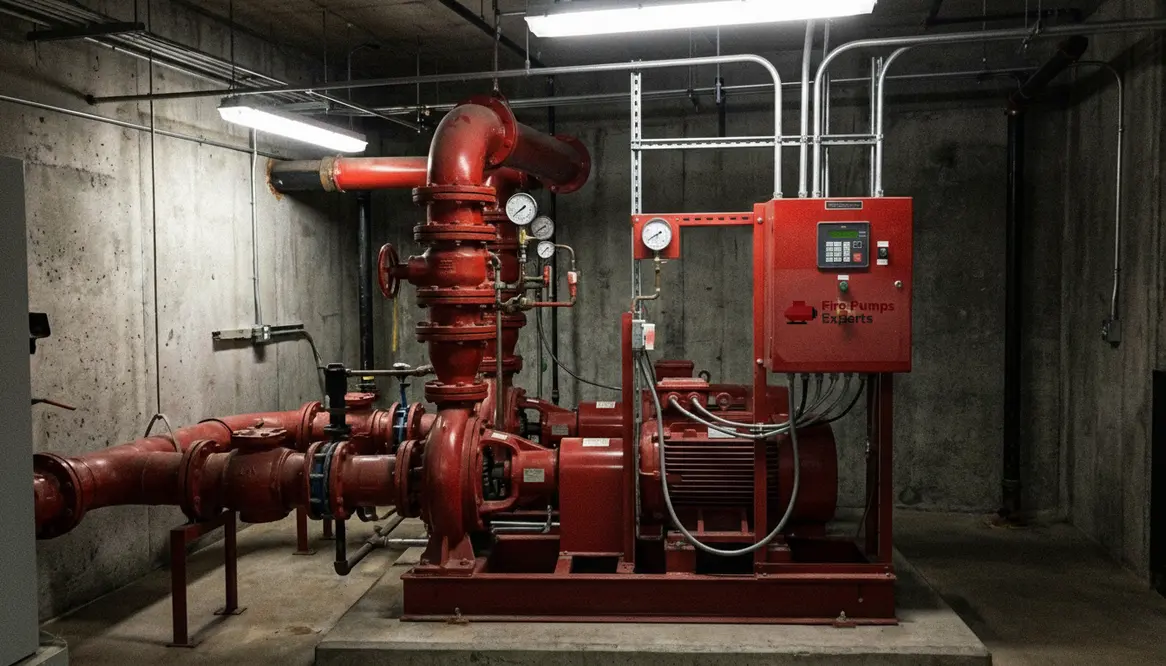
Fire Pumps in Shared Commercial Building Safety
I have spent enough time around mechanical rooms to know this simple truth. When everything is quiet, that is when safety is doing its best work. In the world of shared commercial building safety, fire pumps play that silent, steady role. They wait, patient as a night watchman, ready to move water with force the moment trouble knocks. And when it does, they do not hesitate. No drama, no applause. Just pressure, flow, and a system that works when it matters most.
What role do fire pumps play in commercial building fire protection systems
I like to think of fire pumps as the heartbeat of a fire protection system. Sprinklers are the hands, alarms are the voice, but the pump is what keeps everything alive under pressure. Without it, even the best designed system can fall short.
In large commercial and industrial buildings, water supply alone often cannot deliver the pressure needed across multiple floors or wide layouts. That is where fire pumps step in. They boost water pressure instantly, ensuring sprinklers and standpipes perform at full strength.
Moreover, they respond automatically. The moment pressure drops, the pump activates. No committee meeting required. It is faster than most of us reaching for our morning coffee.
Why shared commercial building safety depends on reliable fire pumps
In shared spaces, risk multiplies. Different tenants, different operations, and sometimes wildly different levels of fire load all exist under one roof. Because of that, shared commercial building safety demands consistency across the entire system.
Fire pumps provide that consistency. They do not care if the fire starts in a warehouse unit, a data center, or a commercial kitchen that got a little too ambitious with the lunch rush. They deliver the same pressure and reliability across every zone.
Additionally, they help maintain compliance with fire codes and insurance requirements. That might not sound exciting, but trust me, avoiding fines and keeping coverage intact is its own kind of thrill. Think less action movie, more quiet financial victory.
How fire pumps support large scale property operations
Operational continuity
I have seen how downtime can ripple through a commercial property. Fire pumps reduce that risk by ensuring fast suppression, which limits damage and keeps operations moving.
System integration
Modern fire pumps connect seamlessly with alarms, monitoring systems, and building management platforms. As a result, facility teams gain real time insight and faster response.
Coverage across complex layouts
Large properties often include multiple floors, underground spaces, and distant zones. Fire pumps maintain pressure across all of it without breaking a sweat.
Support for high demand hazards
Industrial tenants or high density storage areas require stronger suppression. Fire pumps rise to that challenge with steady, reliable output.
The mechanics behind dependable fire pump performance
Now, let me take you just a little deeper. A fire pump is not just a motor and a pipe. It is a carefully engineered system that includes controllers, drivers, and backup power sources.
Electric and diesel driven pumps each bring their own advantages. Electric pumps are efficient and easy to maintain, while diesel pumps offer independence from the electrical grid. And in safety planning, redundancy is not overkill. It is wisdom.
Furthermore, regular testing keeps everything in working order. Weekly churn tests and annual flow tests ensure the pump performs as expected. It is a bit like going to the gym. Not always exciting, but absolutely necessary if you want strength when it counts.
What building managers often overlook about fire pump systems
I have noticed a pattern. Many property managers assume installation is the finish line. In reality, it is just the beginning.
Maintenance, inspection, and documentation matter just as much as the hardware itself. Without them, even the best pump can fail at the worst time. And unfortunately, fire does not offer second chances or polite reminders.
Another overlooked factor is system aging. Components wear down, standards evolve, and building usage changes. Therefore, periodic evaluations help ensure the system still meets current demands.
Also, coordination between tenants is critical. In shared environments, one modification can affect the entire system. Communication keeps everyone aligned and protected.
How fire pumps quietly strengthen shared building resilience
There is something reassuring about a system that does not need attention to do its job. Fire pumps embody that principle. They sit quietly, yet they stand ready.
In complex commercial properties, resilience is not built on a single feature. It is layered. Fire pumps support those layers by delivering consistent pressure, adapting to system demands, and ensuring suppression systems operate without compromise.
And yes, they do all of this without asking for recognition. If they had personalities, they would be the calm character in every movie who saves the day while everyone else panics. You know the one. Probably played by someone with a very reassuring voice.
In shared commercial building safety, that calm reliability is exactly what you want sitting in the mechanical room, humming quietly in the background of every business day.
Practical steps for stronger shared commercial building safety
1. Treat the fire pump as critical infrastructure
If your building has chillers, elevators, or data rooms, they probably get lots of attention. Your fire pump deserves the same level of respect. In shared commercial building safety planning, that single piece of equipment often determines whether suppression systems perform as designed or fall short when a real emergency hits.
2. Bring tenants into the conversation
Shared systems can be quietly sabotaged by individual tenant changes. A new racking layout, added equipment, or a casual “we moved that wall” can stress the fire protection design. Regular coordination meetings, clear rules for modifications, and documented approvals go a long way toward protecting everyone who depends on the same pump, pipes, and sprinkler network.
3. Document, test, and verify
A modern approach to shared commercial building safety includes clean records of every test, repair, and upgrade. When auditors, insurers, or new owners ask, solid documentation turns what could be a stressful review into a straightforward conversation backed by data instead of guesswork.
FAQ
Conclusion
If you manage or operate a large commercial or industrial property, I would not leave fire protection to chance. Fire pumps bring strength, consistency, and quiet confidence to your system. They support safety across every tenant and every square foot. Take the next step and ensure your fire pump system is properly designed, tested, and maintained. Because when safety works this smoothly, everyone sleeps a little better at night.