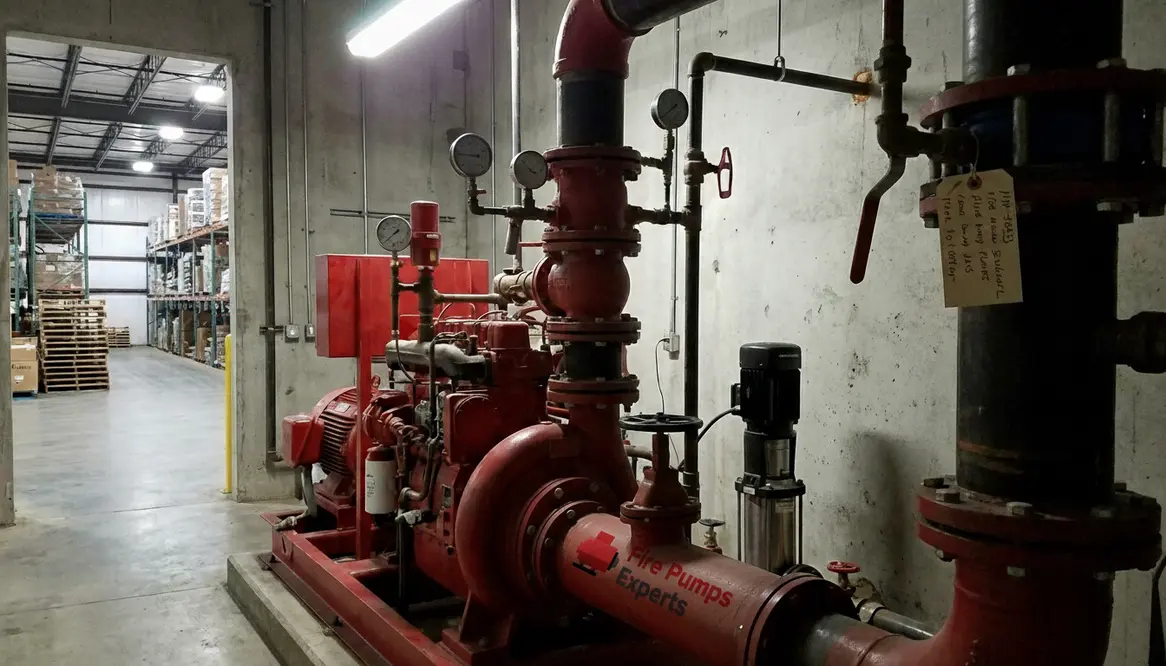
Warehouse Fire Pump Requirements for Buildings
I have spent enough time around mechanical rooms to know one thing for certain. When a fire starts in a large facility, there is no room for improvisation. That is where warehouse fire pump requirements for commercial buildings come into play. Within the first moments of an emergency, these systems decide whether a situation stays controlled or turns into a headline. So, I like to think of fire pumps as the quiet bodyguards of a building. They do not ask for attention, but when needed, they show up like a superhero who skipped the cape and went straight for the job.
What Are Warehouse Fire Pump Requirements for Commercial Buildings and Why Do They Matter
At the core, fire pump requirements exist to ensure that water moves with enough pressure and volume to control or extinguish a fire. However, in large warehouses and industrial facilities, the stakes rise quickly. High ceilings, dense storage, and hazardous materials create conditions where standard water pressure simply will not cut it.
Because of this, codes such as NFPA 20 set strict guidelines. These rules define how pumps must perform, how they are powered, and how they are maintained. In other words, the system is not just about pushing water. It is about delivering reliability under stress. And trust me, fire does not care if your pump is having a bad day.
Moreover, insurance providers and local authorities often demand compliance before approving occupancy. So, beyond safety, there is a financial and legal layer that keeps these requirements front and center.
Key Components That Drive Performance
When I walk into a facility, I do not just look for a pump. I look for a system working in harmony. Each part plays a role, and if one fails, the rest feel it.
Pump Unit
This is the heart of the system. Whether electric or diesel driven, it must deliver consistent pressure under peak demand.
Controller
Think of it as the brain. It monitors pressure and activates the pump when needed. Without it, the pump is just sitting there like a parked car with no driver.
Water Supply
A pump without water is like a coffee machine with no coffee. Technically functional, but completely useless. Reliable supply sources are critical.
Jockey Pump
This smaller pump maintains system pressure and prevents unnecessary starts. It is the quiet overachiever of the group.
Altogether, these components must meet strict design and installation standards. Otherwise, the system becomes a very expensive decoration.
How Do I Size a Fire Pump for a Large Warehouse
I get this question often, and the answer is both simple and layered. Sizing depends on hazard classification, building layout, and sprinkler demand. However, the process always begins with hydraulic calculations.
First, I determine the required flow rate and pressure based on the most demanding sprinkler zone. Then, I factor in elevation changes and friction loss within the piping. After that, I select a pump that meets or exceeds these requirements without overcompensating.
Because oversizing can cause pressure issues, balance is key. It is a bit like casting a movie. Too big of a star can overshadow the story, and too small will not carry the scene. The pump must fit the system perfectly.
Design Priorities for Modern Industrial Facilities
Today, design goes beyond simply meeting code. I focus on resilience and long term performance. While codes provide the baseline, real world conditions demand more thoughtful planning.
Left Column
- Reliable power sources, including backup diesel options
- Proper ventilation for pump rooms
- Easy access for maintenance teams
Right Column
- Protection against flooding or freezing
- Integration with alarm and monitoring systems
- Room for future expansion
Additionally, I always plan for the unexpected. Because if there is one thing warehouses are good at, it is evolving. Inventory changes, layouts shift, and suddenly your fire protection system needs to keep up.
Common Compliance Pitfalls I See Too Often
Even well intentioned projects can miss the mark. And yes, I have seen some things that would make a fire marshal raise an eyebrow.
First, improper installation tops the list. A perfectly selected pump can fail if installed incorrectly. Next, neglected maintenance quietly undermines performance. Systems that are not tested regularly tend to fail when needed most. It is almost poetic, in the worst way.
Another issue involves ignoring updated codes. Requirements evolve, and staying stuck in the past can lead to compliance gaps. It is like using a flip phone in a smartphone world. Technically functional, but not exactly ideal.
Finally, poor documentation creates confusion during inspections. Clear records make all the difference when proving compliance.
Warehouse Fire Pump Requirements for Commercial Buildings in Practice
When I apply warehouse fire pump requirements for commercial buildings in real projects, I focus on execution. Plans are great, but performance is everything.
I coordinate closely with engineers, contractors, and inspectors. This ensures every component aligns with both design intent and regulatory expectations. Additionally, I verify testing procedures before a system goes live. Because a system that has not been tested is just a theory.
In practice, success comes down to consistency. Every valve, every wire, every connection must support the same goal. Deliver water where it is needed, when it is needed, without hesitation.
Across different sites, I see how warehouse fire pump requirements for commercial buildings intersect with real-world constraints like aging infrastructure, tight capital budgets, and shifting insurance expectations. The projects that succeed long term are the ones where owners treat these systems as critical infrastructure instead of a check-the-box code item.
In some jurisdictions, verifying warehouse fire pump requirements for commercial buildings also means tying into regional water supply studies, seismic bracing standards, and risk engineering reports from insurers. Staying ahead of those expectations protects not just the building, but also operations, reputation, and insurability.
FAQ
Below are some of the questions that usually come up when teams start working through warehouse fire pump requirements for commercial buildings on real projects.
Conclusion
If you are managing a large facility, now is the time to take a closer look at your fire protection strategy. I encourage you to evaluate your system, confirm compliance, and invest in reliability before an emergency tests it for you. A well designed fire pump system does more than meet code. It protects people, property, and peace of mind. And honestly, that is a return on investment no spreadsheet can fully capture.