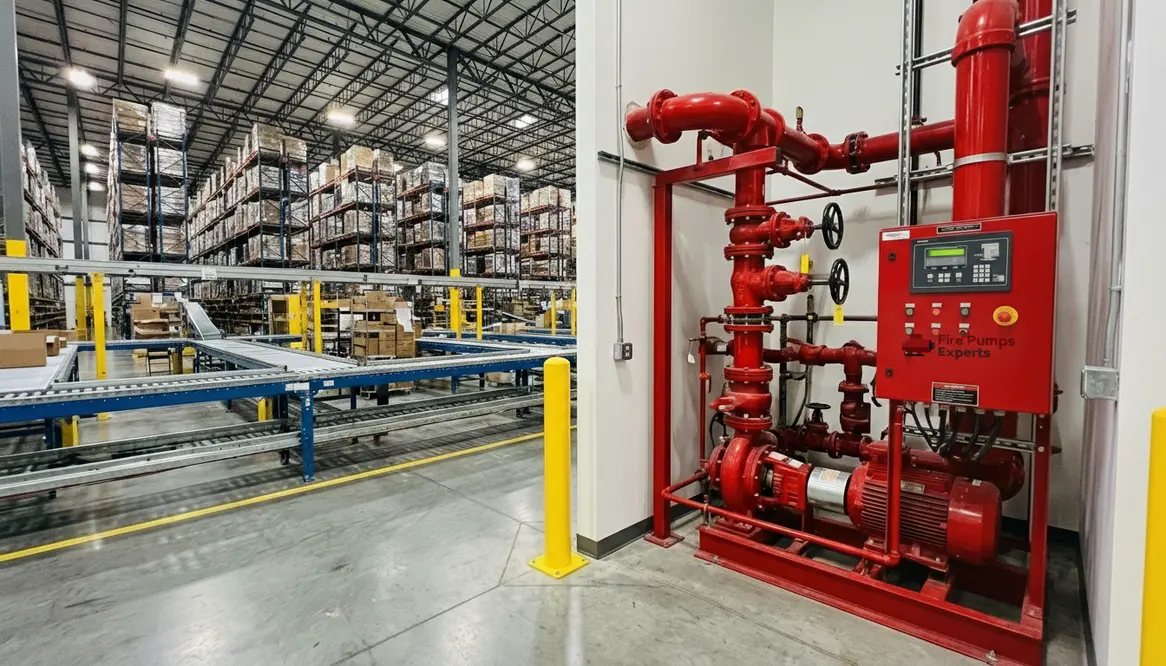
Fire Pump Needs in High Throughput Logistics Buildings
High-speed fulfillment centers deserve fire protection that can keep up with them. Here is a clear, practical look at what that really takes.
I have walked through more than a few fulfillment centers in my time, and let me tell you, these places move faster than a superhero sequel on opening night. Pallets fly, conveyors hum, and somewhere in the background sits a quiet hero waiting for its moment. I am talking about fire protection, specifically the Fire pump needs in high throughput logistics buildings. In facilities where speed rules and inventory stacks high, a properly designed fire pump system is not just helpful, it is essential. And yes, it is about as glamorous as reading a sprinkler manual on a Friday night, but it is far more important.
Why fire pumps matter more in high-throughput operations
When inventory climbs higher, orders move faster, and automation fills every aisle, fire events scale just as quickly. Fire pumps become the difference between a controlled incident and a catastrophic shutdown.
What fire pump systems do fulfillment centers actually need
Let me answer this plainly. You need a system that keeps up with the scale, speed, and density of your operation. High pile storage, automated retrieval systems, and massive square footage all increase fire risk. Therefore, I always look at flow demand, pressure requirements, and redundancy first.
Most U.S. facilities follow NFPA 20 for fire pumps and NFPA 13 for sprinkler systems. However, fulfillment centers often push those standards to their limits. Because of that, electric or diesel driven fire pumps must deliver high capacity flows, often exceeding 2000 gallons per minute.
Design focus for Fire pump needs in high-throughput logistics buildings
- Support extreme sprinkler demand during fast-developing fires
- Maintain pressure over long, complex pipe networks
- Include redundancy so a single failure does not shut down protection
- Perform reliably even with variable or weak municipal water supplies
Additionally, I make sure the system accounts for peak demand scenarios. During a fire event, sprinklers open fast, and pressure drops quickly. Without a strong pump, the system becomes about as useful as a screen door on a submarine.
Fire pump needs in high throughput logistics buildings explained simply
When people ask me to break it down, I say this. These buildings are not warehouses from the 1980s. They are living systems. Robots move inventory, racks reach impressive heights, and every square foot is optimized.
Core requirements these pumps must support
- High density storage which increases sprinkler demand
- Large footprint coverage which requires consistent pressure across long distances
- Automation risks where equipment can block or delay suppression
Moreover, I always recommend considering future expansion. Today’s fulfillment center can double its capacity in a few years. So, building a system that barely meets today’s needs is like buying shoes for a kid and expecting them to fit forever.
How do I size a fire pump for a large logistics facility
Good question, and I will not dodge it. I start with a hazard analysis. This includes commodity classification, storage height, and sprinkler design criteria. Then, I calculate the total system demand.
After that, I match the pump curve to the required flow and pressure. It is not guesswork. It is math backed by standards. However, I also factor in real world conditions like water supply variability and friction loss.
Practical sizing steps
- Complete a full hazard analysis of storage and processes
- Determine sprinkler system demand at the most remote point
- Evaluate available water supply and its variability
- Select a pump whose curve meets or exceeds the demand point
- Confirm that Fire pump needs in high-throughput logistics buildings are covered even under worst-case conditions
Furthermore, I always build in a safety margin. Because when a fire starts, that is not the time to discover your calculations were optimistic.
Key components that make or break performance
Pump driver
Electric is clean and reliable, but diesel offers independence during power loss.
Controller
This is the brain. It must comply with NFPA standards and respond instantly.
Water supply
Municipal, tank, or a combination. Reliability here is everything.
Jockey pump
Maintains pressure and prevents unnecessary pump starts.
Piping design
Reduces friction loss and supports consistent flow.
Testing systems
Ensures the pump performs under real conditions, not just on paper.
Each piece matters. Remove one, and the system weakens. It is like assembling a superhero team and forgetting the one person who actually has powers.
Code compliance and real world expectations
In the United States, compliance is non negotiable. NFPA 20 sets the baseline, while local authorities often add their own requirements. However, I have learned that meeting code is just the starting point.
Owners of major commercial and industrial facilities expect more. They want reliability, uptime, and systems that integrate with their operations. Therefore, I always design with both compliance and performance in mind.
Additionally, insurance carriers often impose stricter standards. FM Global, for example, may require higher flows or additional redundancy. Ignoring these guidelines can cost far more than the system itself.
Beyond minimum code for Fire pump needs in high-throughput logistics buildings
- Design for business continuity, not just life safety
- Coordinate with insurers early to avoid redesigns
- Integrate fire pump status with building monitoring platforms
- Ensure documentation and testing satisfy both AHJ and insurer expectations
Why maintenance matters more than installation
Here is a truth that does not get enough attention. Installing a fire pump is only half the job. Keeping it ready is the real challenge.
Testing and routine care
I always stress routine testing, including weekly churn tests and annual flow tests. Because without maintenance, even the best system can fail. And when it fails, it tends to do so at the worst possible moment. Timing like that would make a horror movie villain proud.
Monitoring and analytics
Moreover, I recommend digital monitoring where possible. Modern systems can alert teams to pressure drops, controller faults, or performance issues in real time. That kind of visibility turns surprises into manageable problems.
For operators who treat Fire pump needs in high-throughput logistics buildings as part of their critical infrastructure, maintenance and monitoring are handled with the same rigor as conveyors and automation.
Conclusion
If you operate a fulfillment center or manage a large logistics property, now is the time to take your fire protection seriously. I encourage you to evaluate your system, confirm it meets both code and operational demands, and plan for future growth. The right fire pump setup protects your people, your inventory, and your bottom line. Reach out to a qualified fire protection partner today and make sure your facility is ready before it ever needs to be.
If you want a useful technical reference point, you can review guidance at https://firepumps.org, then align it with your local codes, insurers, and on-site realities.