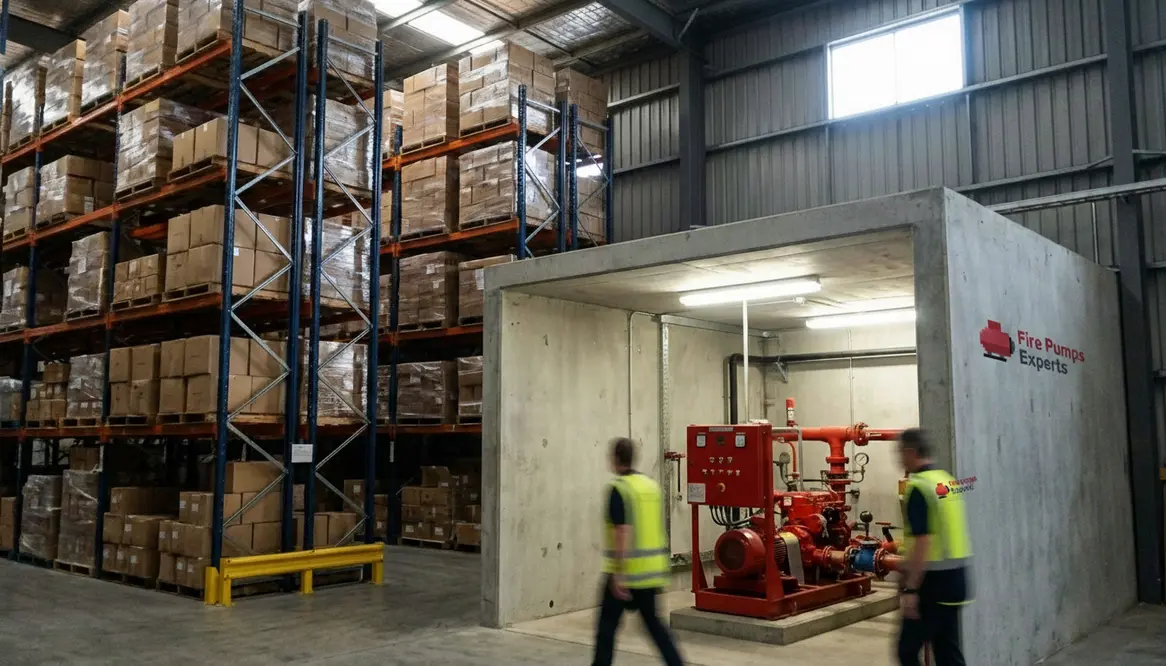
Fire Pump Design for High Piled Rack Storage
I have spent years around fire protection systems, and if there is one place where precision truly matters, it is inside rack storage warehouses. These buildings are not just big boxes with shelves. They are vertical mazes packed with fuel loads that can turn a small ignition into a towering inferno in minutes. That is exactly why Fire protection for high-piled storage configurations sits at the heart of every serious warehouse design. And yes, this is where fire pumps step in like the quiet hero in a movie who does not talk much but saves everyone anyway.
Rack storage changes the rules of fire dynamics. Height, fuel load, airflow, and access all twist together into a challenge that demands purpose built fire pump design, not copy paste solutions from light hazard offices or low bay storage. When the stacks climb and the aisles tighten, there is no margin for hesitation or for underpowered water supplies.
Why Rack Storage Changes Everything
At first glance, a warehouse might seem simple. However, once racks climb higher and commodities become denser, the fire behavior shifts dramatically. Flames do not just spread across a floor. Instead, they race upward, using vertical channels like a highway.
Because of this, I always treat rack storage as a different animal. The fire pump must deliver enough pressure and flow to reach the top tiers quickly. Otherwise, sprinklers become spectators rather than participants.
Additionally, codes such as NFPA 13 and NFPA 20 set strict expectations. They account for commodity type, storage height, and aisle width. Ignore those, and you are basically bringing a garden hose to a dragon fight. Not ideal.
In the context of Fire protection for high-piled storage configurations, these standards are not suggestions. They are the playbook for ensuring that suppression water actually reaches the heat, penetrates packaging, and holds the fire in check long enough for responders to finish the job.
How Do I Size a Fire Pump for a Rack Storage Warehouse?
Start with the hazard, not the hardware
I start with hazard classification. This step drives everything. High piled storage often falls into Extra Hazard Group 2 or specialized storage criteria. That means higher demand, both in gallons per minute and pressure.
Remote area and sprinkler demand
Next, I calculate sprinkler demand at the most remote area. Then I layer in hose allowances and system losses. Friction loss, elevation, and pipe configuration all matter. It is a bit like planning a road trip where every mile has tolls.
Balancing capacity and control
Finally, I select a pump that exceeds the calculated demand without overdoing it. Bigger is not always better. An oversized pump can cause system instability. Think of it as trying to fill a coffee cup with a fire hydrant.
The goal for Fire protection for high-piled storage configurations is a pump that hits the sweet spot: enough horsepower and flow to satisfy the toughest design area on your drawings, but tame enough to keep the system from hammering, chattering, or overshooting pressure ratings.
Do not forget the water supply
On paper, any fire pump can look impressive. In practice, it is chained to the available water supply. Static pressure, residual pressure, and available flow from the city main or tank dictate how hard the pump can push without collapsing the supply.
For tall rack buildings, I like to see a clear, conservative margin between what the supply can provide and what the demand curve calls for. That margin is what helps carry a real fire, not just a theoretical one on a hydraulic calculation sheet.
Fire Protection for High Piled Storage Configurations in Practice
Reliability is non negotiable
When I design for these environments, I focus on reliability first. That means electric or diesel driven pumps with redundant power considerations. Warehouses do not get to pause operations because the pump had a bad day.
Moreover, I look at system integration. Fire pumps must work seamlessly with early suppression fast response sprinklers or in rack systems. Timing is everything. Water needs to arrive fast and in the right volume.
Visibility and live feedback
In many modern facilities, I also coordinate with monitoring systems. Real time alerts ensure that any drop in pressure or performance gets immediate attention. Because in a rack storage fire, minutes matter more than meetings.
The more complex Fire protection for high-piled storage configurations become, the more valuable it is to have data: pump status, start events, alarm histories, and even trend logs that reveal slow declines in performance before they turn into outright failure.
Key Fire Pump Requirements at a Glance
Performance factors
- High flow capacity to meet dense storage demand
- Stable pressure across multiple sprinkler zones
- Quick start response time
- Compatibility with system hydraulics
Operational factors
- Reliable power source or backup
- Routine testing and maintenance access
- Clear compliance with NFPA standards
- Integration with alarms and monitoring
When these elements align, the system performs like a well rehearsed orchestra. When they do not, it sounds more like a middle school band on a Monday morning.
Common Mistakes I See in Warehouse Fire Pump Design
Assuming the storage never changes
One of the biggest mistakes is underestimating storage changes. Warehouses evolve. Tenants change. Inventory shifts. Yet the fire pump stays the same. That mismatch creates risk.
Testing in name only
Another issue is poor testing routines. A fire pump is not a decorative piece. It needs regular churn tests and flow testing. Otherwise, the first time it truly runs is during an emergency. That is not the moment for surprises.
Treating systems like silos
I also see coordination gaps. Designers sometimes treat sprinklers, pumps, and water supply as separate systems. They are not. They are a team. And like any team, they need to communicate.
For serious Fire protection for high-piled storage configurations, I want to see the pump curves, sprinkler design, storage plan, and water supply all reviewed together. That is where hidden weak points reveal themselves, usually long before they become headlines.
Designing for Long Term Performance
Thinking beyond day one
I always think beyond installation day. Warehouses operate around the clock, so the fire pump must keep up without constant intervention. That means selecting durable components and planning for easy maintenance.
Periodic reviews and hydraulic reality checks
Additionally, I recommend periodic system reviews. As storage layouts change, hydraulic demands shift. Keeping the fire protection system aligned with real conditions is essential.
Smart controls and monitoring
And yes, technology helps. Smart controllers and remote monitoring bring visibility that did not exist years ago. It is like upgrading from a flip phone to a smartphone. You suddenly wonder how you lived without it.
For facilities that take Fire protection for high-piled storage configurations seriously, these digital tools offer proof, not promises: clear histories of starts, alarms, and test results that can be shared with insurers, auditors, and authorities without breaking a sweat.
Where to learn more
If you want to go deeper into fire pumps, water supplies, and storage challenges, resources like https://firepumps.org and current NFPA standards can help connect design theory with field reality.
FAQ
Conclusion
When I look at rack storage warehouses, I see both opportunity and risk. The difference comes down to preparation. A properly designed fire pump system does more than meet code. It protects operations, inventory, and lives. If you manage a commercial or industrial facility, now is the time to evaluate your setup. Let us make sure your system is ready before it is ever needed. Because in this business, readiness is everything.