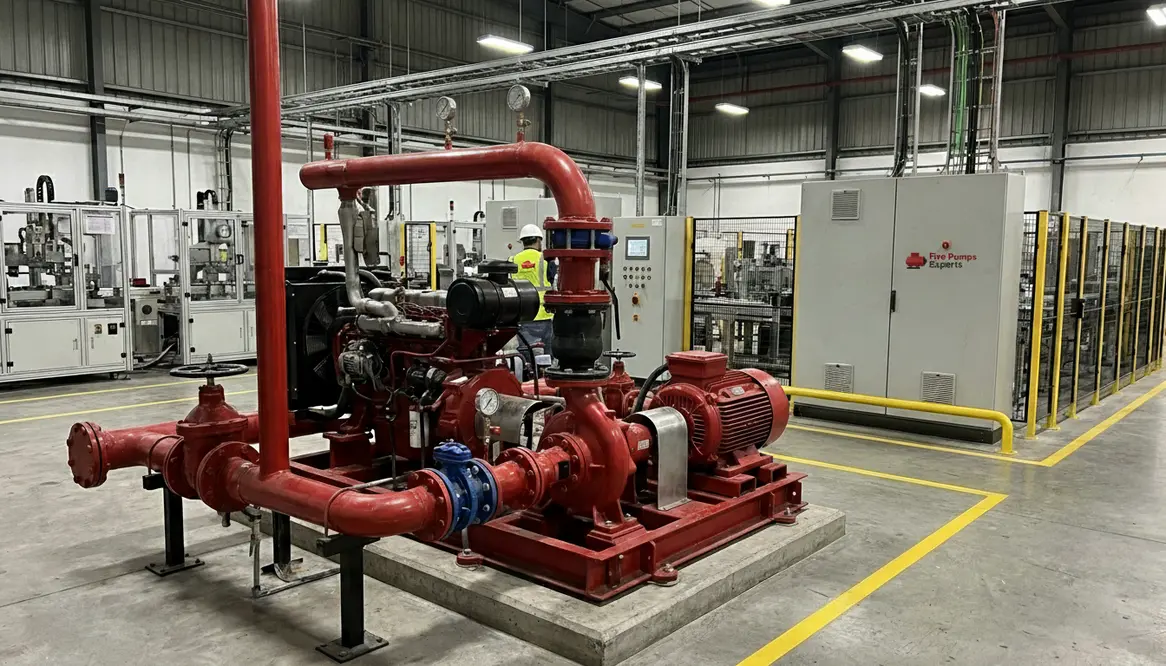
Fire Pump Planning for Battery Manufacturing Risk
I have walked through enough battery manufacturing plants to know one thing for certain. When energy is stored at scale, risk quietly scales with it. That is exactly where Fire pump planning for specialized manufacturing risk enters the conversation. In these facilities, we are not just protecting a building. We are protecting volatile materials, complex processes, and production lines that do not forgive mistakes. So I approach fire pump design with a steady hand, a clear plan, and just enough skepticism to question anything that looks “good enough.” Because in this world, good enough is how headlines get written.
Why Battery Plants Demand a Different Fire Pump Strategy
Battery manufacturing is not your average industrial setup. We are dealing with lithium compounds, electrolyte fluids, and tightly controlled environments. As a result, fire behavior changes. It spreads differently. It reacts differently. And unfortunately, it escalates faster than a popcorn kernel in a microwave.
Therefore, I design systems that anticipate thermal runaway events, not just standard ignition sources. Fire pumps must deliver reliable pressure and flow even when multiple suppression zones activate at once. Additionally, redundancy is not optional. It is expected. If one pump hesitates, another must step in without drama.
In my experience, the biggest mistake is underestimating demand. Engineers sometimes rely on baseline industrial standards. However, battery facilities often exceed those assumptions. So I calculate for peak scenarios, not average days.
How Do I Size Fire Pumps for Battery Manufacturing Facilities?
I start with hazard classification, but I do not stop there. Battery production areas often fall into high hazard categories due to flammable electrolytes and dense equipment layouts. Consequently, I evaluate water demand across multiple systems operating simultaneously.
I consider:
- Automatic sprinkler systems covering production lines
- Foam suppression in chemical storage zones
- Standpipe systems for manual firefighting
- Exposure protection for adjacent process areas
Then, I layer in real world complications. For instance, what happens if a fire starts during peak production? Or if suppression must run longer due to chemical reactions? That is where fire pump capacity needs a safety margin.
And yes, I always assume the worst timing possible. Fires have a strange sense of humor that way.
Fire Pump Planning for Specialized Manufacturing Risk in High Energy Environments
Battery plants are energy dense by design. So I match that intensity with equally robust fire protection infrastructure. This is where fire pump planning for specialized manufacturing risk becomes more than a design task. It becomes a strategy.
I prioritize electric and diesel pump combinations for reliability. If power fails, operations cannot. Additionally, I ensure controllers are protected from heat and moisture, because a pump is only as smart as the system guiding it.
Another key element is water supply stability. Municipal systems are not always sufficient for large scale facilities. Therefore, I often incorporate on site storage tanks sized for extended operations. Because when suppression starts, it cannot afford to stop halfway through the job.
What I Always Include
- Dual pump configurations
- Independent power sources
- Seismic bracing where required
- Remote monitoring systems
What I Never Assume
- Stable city water pressure
- Single point reliability
- Minimal fire duration
- Perfect human response time
System Integration with Manufacturing Operations
Fire pumps do not operate in isolation. They are part of a larger ecosystem that includes detection systems, alarms, and process shutdown protocols. So I work closely with facility engineers to align suppression with production workflows.
For example, certain battery processes cannot be abruptly stopped without causing additional hazards. Therefore, suppression systems must activate in stages, while fire pumps maintain consistent pressure throughout.
Moreover, I integrate monitoring systems that provide real time data. This allows facility managers to respond quickly and confidently. Think of it as giving your building a nervous system that actually talks back.
Testing and Maintenance That Actually Reflect Reality
A fire pump that works on paper but fails in practice is about as useful as a smoke alarm with no batteries. So I push for rigorous testing that mirrors real conditions.
Weekly churn tests are standard, but I go further. I recommend full flow testing under simulated demand conditions. Additionally, I verify that backup systems engage properly without manual intervention.
Maintenance teams must also understand the unique risks of battery facilities. That includes recognizing corrosion risks from chemical exposure and ensuring components remain clean and functional. Because even the best design can be undone by neglect.
Fire Pump Planning for Specialized Manufacturing Risk Without Overdesign
Now, let me be clear. More is not always better. Oversizing pumps can create pressure issues, system wear, and unnecessary costs. So I strike a balance.
I design systems that meet demand precisely, with room for realistic growth. Not hypothetical expansion that may never happen. This approach keeps systems efficient while still addressing fire pump planning for specialized manufacturing risk in a practical way.
It is a bit like cooking. Too little seasoning and the dish falls flat. Too much and you ruin it. The right balance makes everything work.
FAQ
The questions below come up constantly when planning fire protection for high energy production, especially when Fire pump planning for specialized manufacturing risk is on the table for a new or expanding facility.
Conclusion
When I design fire protection for battery manufacturing plants, I am not just checking boxes. I am building resilience into a high stakes environment. If your facility demands reliability, precision, and foresight, then it is time to take fire pump strategy seriously. Partner with experts who understand the nuances of industrial risk, and let us build a system that performs when it matters most. Because in this business, preparation is everything.