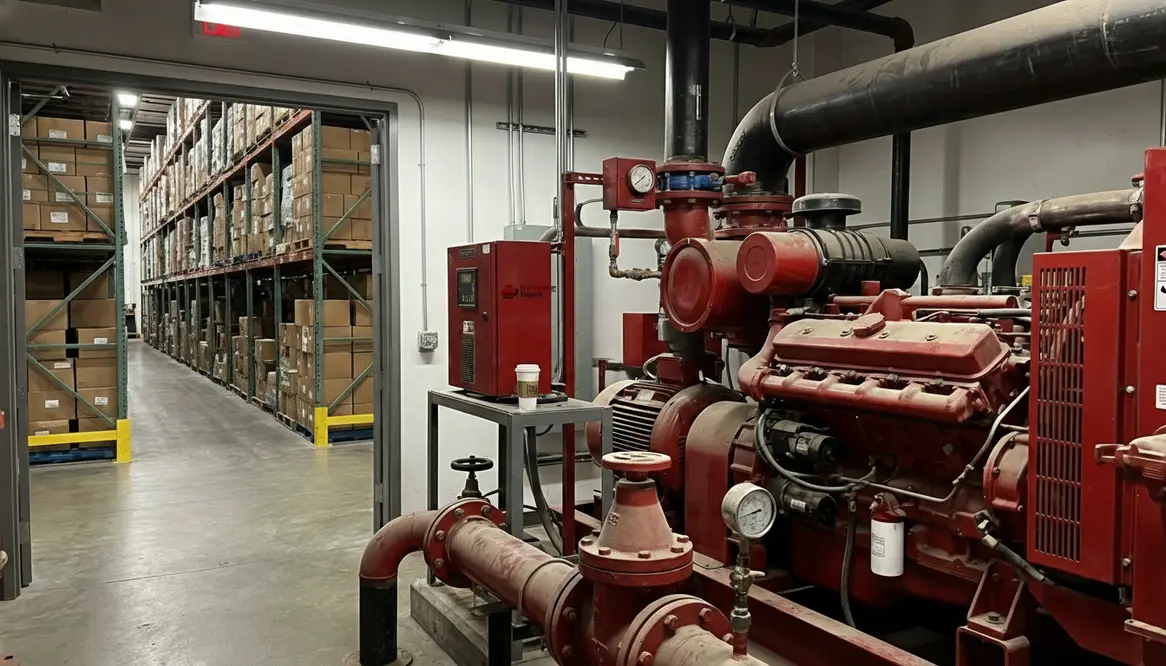
Fire Pump Needs in High Density Storage Occupancy
I have spent years around pumps that roar to life when everything else is falling apart. And when I talk about Fire pump needs in high-density storage occupancy, I am not talking about theory. I am talking about real systems that stand between a controlled incident and a warehouse turning into a scene straight out of an action movie. In large commercial and industrial storage environments, the stakes are high, the fuel load is higher, and the margin for error is almost nonexistent. So today, I will walk you through what really matters, without the fluff and without putting you to sleep.
What makes high pile storage fire protection different?
Let me answer this the way I would explain it standing in a mechanical room at 6 a.m. with coffee in hand. High pile storage means vertical stacking, dense commodities, and limited access for suppression. As a result, fire spreads faster, burns hotter, and challenges even well designed sprinkler systems.
Because of that, fire pump requirements in these environments are not just about meeting code. They are about overcoming friction loss, delivering higher pressures, and maintaining consistent flow across massive footprints. Additionally, modern storage facilities often include plastics and mixed commodities, which further increase fire intensity.
So while a standard system might perform fine in an office building, it will struggle in a high rack warehouse. And struggle is not a word you want associated with fire protection.
Fire pump needs in high-density storage occupancy explained simply
Now let me break it down in plain terms. When I evaluate Fire pump needs in high-density storage occupancy, I focus on three core factors. Pressure, flow, and reliability.
Pressure
Pressure ensures water reaches the highest storage levels and overcomes friction losses in long, complex piping networks.
Flow
Flow ensures enough water hits the fire to control it, especially when multiple sprinkler heads operate at once.
Reliability
Reliability ensures the system works every single time, not just on inspection day, even under harsh operating conditions.
However, these systems must also account for long pipe runs, elevation changes, and specialized sprinkler designs. As a result, fire pumps in these facilities are often larger, more robust, and paired with backup power systems.
Think of it like this. If a regular fire pump is a sedan, then a high pile storage fire pump is a heavy duty truck hauling uphill. Both move water, but only one is built for the job.
Key components that drive performance
Every fire pump system has parts, but not all parts carry equal weight. In high density storage environments, a few components deserve extra attention.
The pump
The pump itself must handle high demand without overheating or losing efficiency. Therefore, selecting the right type and size is critical.
The driver
The driver, whether electric or diesel, must provide consistent power. In large facilities, diesel drivers often add an extra layer of reliability during power loss.
The controller
The controller acts as the brain. It must respond instantly and operate without hesitation.
The water supply
The water supply must sustain extended operation. Because in these scenarios, a short burst of water simply will not cut it.
And yes, if any one of these fails, the entire system can fall short. It is a bit like assembling the Avengers and forgetting Iron Man. Technically still a team, but not the one you want.
Design considerations that actually matter in real facilities
Now we get into the part that separates a compliant system from a dependable one. In large commercial and industrial properties, design is everything.
First, I always consider system demand curves. These define how much pressure and flow are required at peak conditions. Next, I evaluate pipe sizing and layout, since poor design can choke performance before water even reaches the sprinklers.
Then there is redundancy. Because in high risk environments, a single point of failure is simply unacceptable. Therefore, backup pumps, secondary power, and monitored controls are often part of the equation.
Also, I never ignore testing and maintenance access. A system that cannot be easily tested is a system that will eventually fail quietly.
What I prioritize
- Accurate hydraulic calculations
- Strong and consistent water supply
- Durable pump construction
- Code compliance for industrial facilities
What I avoid
- Undersized pumps
- Complex layouts without purpose
- Ignoring future expansion
- Minimal testing provisions
Common mistakes I see in commercial and industrial projects
Even experienced teams make mistakes. However, in high pile storage, those mistakes can be costly.
One common issue is underestimating demand. Designers sometimes rely on outdated assumptions, which leads to insufficient pump capacity. Another frequent problem is poor coordination between fire protection and facility layout. As a result, obstructions or layout changes reduce system effectiveness.
Additionally, some projects treat fire pumps as an afterthought. That approach rarely ends well. The pump is not just another component. It is the backbone of the entire suppression system.
And finally, skipping thorough commissioning is like buying a parachute and never checking if it opens. Bold move. Not a smart one.
How I approach compliance and long term reliability
Meeting code is the baseline, not the finish line. Therefore, I focus on both compliance and durability when addressing fire pump requirements for large scale storage operations.
I align designs with NFPA standards, local regulations, and insurance requirements. Then, I go a step further by ensuring systems can handle real world conditions, including wear, environmental factors, and operational changes.
Routine testing, performance tracking, and preventive maintenance plans are also essential. Because a system that works today but fails in five years is not truly reliable.
In other words, I design for the long game. Not just the inspection checklist.
Why Fire pump needs in high-density storage occupancy demand specialists
Fire pump needs in high-density storage occupancy are not something to improvise around late in the project. These systems tie directly into storage configuration, commodity classification, racking heights, and even how the building will evolve over the next decade. Getting it wrong can mean redesigns, insurance headaches, or far worse if a fire ever tests the system.
When specialists design around Fire pump needs in high-density storage occupancy, they factor in available water supply, potential expansions, multi-level mezzanines, and how suppression interacts with ventilation and smoke movement. That is the level of thinking that turns a code-minimum install into a system that holds its own when the heat is literally on.
FAQ
Final thoughts and next steps
If you manage or design a commercial or industrial facility, you already know the risks are not theoretical. The right fire pump system protects assets, operations, and lives. So if you are evaluating your setup or planning a new project, now is the time to get it right. Work with specialists who understand large scale storage environments and demand real performance from every component. Because when the moment comes, your system should not hesitate.